Friday, 6 April 2012

William 111 - The Lonely Childhood of Prince William of Orange


 Birth

Princess Mary & Prince William II
William III, Prince of Orange, was the son of Charles I eldest daughter, Princess Mary. The nine year old Mary married William II Prince of Orange in 1641. In October 1650 William II died of a short illness, a month before his son & heir was born.

The head of the House of Orange was the ruler of the tiny principality of Orange in southern France, where many of the inhabitants were Protestant. The Princes of Orange also held the great offices of the Dutch republic, now in its second year of hard won independence from rule by the Spanish crown. The Dutch republic was made up of seven of the original provinces of the Spanish Netherlands. The remaining ten provinces were still ruled from Spain. The province of Holland, wherein lay the great towns of Amsterdam, Rotterdam & Leyden, was the most powerful & richest province, contributing 58% of the countries income from taxation. The offices of Stadtholder and Captain General were traditionally held by the Princes of Orange.

There were fears in the country that the Princes of Orange would attempt to turn the country into a monarchy. Such fears were not assuaged when in 1650 Prince William II attempted a military coup against the city of Amsterdam. The offices of Stadtholder & Captain General held by William II lapsed with his death in the October.
Infancy

Prince William
William III did not have a happy childhood. His mother and paternal grandmother were frequently at odds. Princess Mary did not like the Netherlands and felt that, as royalty, she was superior to all around her. Mary refused to attend William’s christening in January 1651, because Princess Amalia, widow of Prince Frederick Henry, would not let Mary call her son Charles in honour of her father & brother. The baby prince was called William after his father, a traditional House of Orange name.

William spent more time with his mother than was normal for royal families at the time. Her main interests however were not focussed on her son’s future, but on her brother’s. Mary believed that once Charles was restored to the thrones of England & Scotland[i] he would then assist his nephew attain his rightful position in the Netherlands. To this end Mary ‘loaned’ Charles monies that the House of Orange could ill afford and which Charles was not expected to repay.

At the age of two William was given his own court and his mother arranged for an English lady, Lady Stanhope, to be governess of his household. At the age of four William started making public appearances. Although an unhealthy, small child, who was subject to asthma all his life, William was extremely popular with the Dutch people, who saw him as the direct descendant of their hero of the fight for independence, William the Silent. When William was three there had been suggestions that the infant be named Captain General. But in 1654 the Dutch republic signed a peace treaty with the English Commonwealth agreeing that neither William nor his descendants would ever be appointed chief commander of the Dutch armies & navies[ii].

Princess Mary of Orange

In 1656 Princess Mary visited France. Her mother, Queen Henrietta Maria, had hopes of a marriage between Mary & her eighteen year old cousin, Louis XIV. The match did not come off, but Mary dallied in France until news reached her that William was seriously ill. When she arrived in Bruges Mary was told that William merely had measles and was making a good recovery, whereupon Mary stayed several further weeks in Bruges.[iii] There seems to be some difference of opinion as to whether Mary was fond of her child. Some sources claim that the two were estranged when William was relatively young, others that Mary was devoted to him and wanted to ensure that he inherited the position left vacant by his father.  

Education

William’s education was somewhat neglected, with the significant exception of his religious studies, which commenced when he was six, under the tutelage of Pastor Cornelius Trigland, a follower of Voetius[iv]. Calvinism is a dour religion and may have contributed to William’s reserved & cold demeanour. William had to read the bible every day and learn a psalm by heart daily.

William’s studies in other subjects did not begin until he was nine, .when he was enrolled as a student at the University of Leyden. One of the prince’s governor was his uncle Frederick Nassau de Zuylenstein, an illegitimate son of his grandfather Prince Frederick Henry. Zuylenstein was not cultivated and was lazy into the bargain, but intelligent. William’s domestic governor was Constantine Huygens, who had been secretary to his grandfather & his father. William was constantly made aware that gluttony & drunkenness were inappropriate for a person of honour, in contrast to the court in England. Not that William was ever in danger of being a glutton; indeed his tutors had to sit with him at mealtimes to persuade him to eat.

William spoke English, French, German and Spanish, along with his native Dutch & Latin although his grammar and spelling were both poor. He was however well tutored in military theory. William’s hunchback, asthma & general poor health precluded him from enjoying much sport.  

When William was nine, in May 1660 his uncle Charles was restored to the throne of England. Charles embarked for England from den Haag, which thronged with English visitors come to greet their new king.

‘About 10 at night the prince comes home, and we found an easy admission. His attendance very inconsiderable as for a prince. But yet handsome, and his tutor a fine man and himself a very pretty boy.’[v]

Along with most other acts passed by the Commonwealth, the Act of Seclusion, agreed with the Dutch in 1654, was declared void, by the English parliament in the frenzy of support for the new regime. Princess Mary & Princess Amalia attempted to persuade some of the provinces to declare William Stadtholder, but all declined.
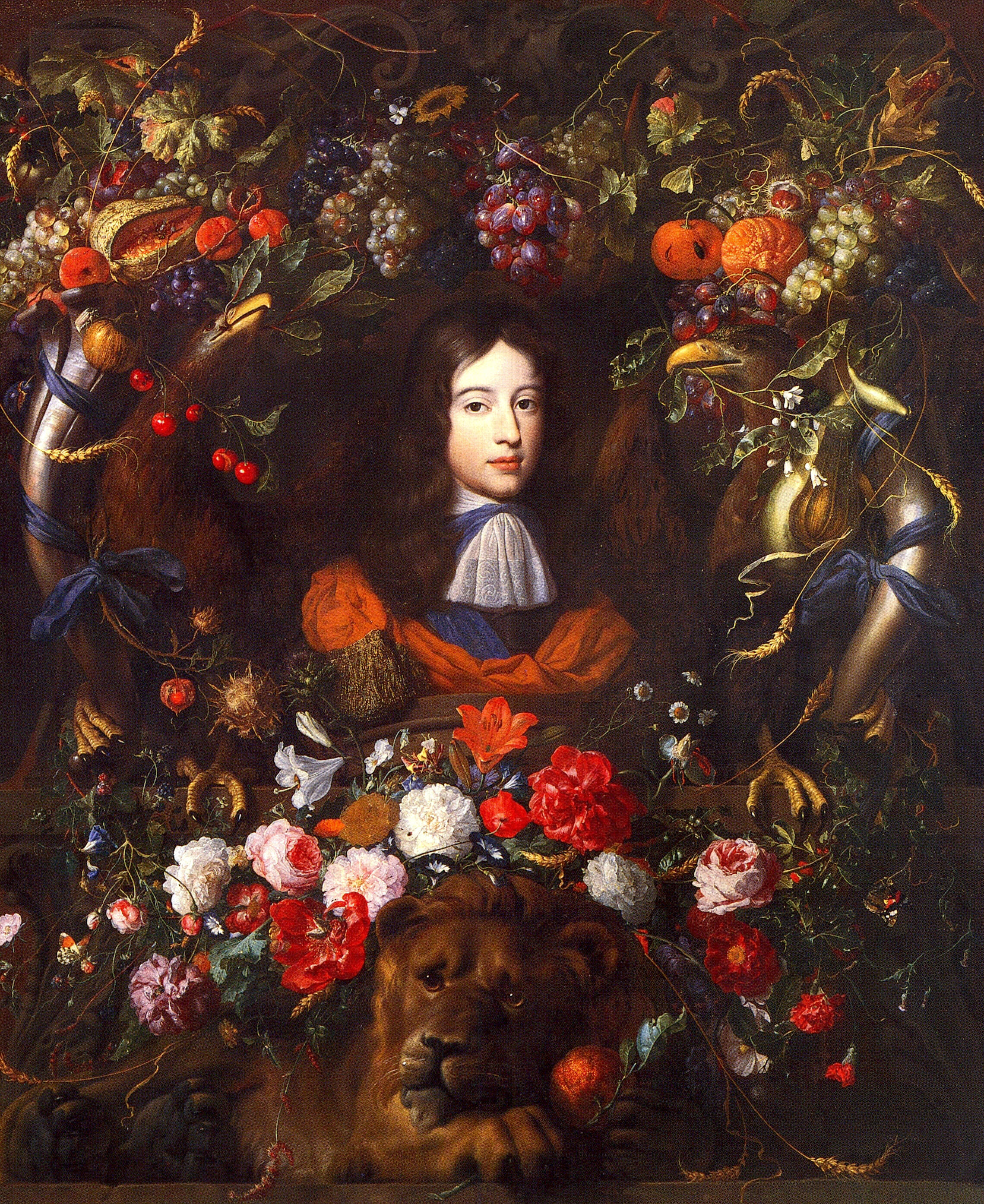
In September Princess Mary pawned her jewels and travelled to England to enjoy the restoration celebrations in September. Before leaving Mary asked the States General to provide Commissioners to supervise William’s education. In England Mary caught smallpox and died in the December, asking her brother to look out for the interests of her ten year old son, while begging the States General to take care of William

‘The being who is dearest to us in the world.’[vi]

Uncle Charles was the king of the Dutch republic’s greatest commercial rival and the young William was in an invidious position – the elevation of his uncle led to William being regarded as a valuable pawn by the Dutch States General. The supporters of the House of Orange and the advocates of a more republican Netherlands were at odds over the guardianship & education of the young prince. William’s French tutor, a close friend of his mother’s who had tried to comfort the orphan, was dismissed by his grandmother after his mother’s death. This may have been an act of spite against the dead woman, but hardly conducive to her grandson’s wellbeing.

Early in 1661 William was seriously ill; his asthma flared up badly combined with violent headaches & recurring fainting fits found the doctors fearing for his life. In April, as William was convalescent, Princess Amalia decided to take him to Cleves to visit their Brandenburg relations. For six weeks, with the Elector of Brandenburg and his wife and children, William enjoyed a family life he had never known, nor was to again. He played with his young cousins and learnt to ride and was introduced to the delights of hunting for the first time. In the future William was to find release from his troubles in hunting, wearing a special breastplate/cuirass as an adult, when on horseback. Being out in the open air relieved his asthma.

After this break William returned to his studies in Leyden, now in good health. The Elector’s physicians had decreed that William no longer needed the heavy the heavy corset he was forced to wear, as the risk of deformity was now low. Instead he wore a lighter corset. In the winter of 1661-2 William was ill again and his grandmother had him moved back to live in den Haag in June. By now William was finding pleasure not only in riding and hunting, but also in a flight of falcons, a present from the King of Denmark.

Adolescence
At the age of thirteen William found an interest in art and he appointed an agent to purchase the Italian paintings he coveted. Unfortunately William’s modest allowance was insufficient to buy the old masters he desired. He was soon in debt and his grandmother had to order his agent to cease his purchases. His court was a frugal one. In the winter months William was allowed two white wax candles a day and a night light, with a turf fire in the morning & evening. At the age of fourteen William was taking part in society, attending parties at the great houses of the republic. By the time he was fifteen William had a personal suite of thirty three, excluding servants. In 1666 William gave his first dinner party attended by 50 persons.

Grand Pensionary Johan de Witt
During the Second Anglo-Dutch War one of Charles’ demands was an improvement in William’s official position. In March 1666 Johan de Witt, the Grand Pensionary, made proposals to Princess Amalia about William’s future. Zeeland, the foremost supporter of the House of Orange among the states, was proposing that William be given command of Dutch troops under Turenne, the French general prosecuting the land war, which had been going badly for the Dutch and their allies. Eager to see her grandson receive the honours that had been his father’s, Princess Amalia agreed. In April the Dutch made William a ward of the state. All his pro-English courtiers, including his uncle de Zuylenstein were removed from his household, despite William’s pleas to de Witt asking for his uncle, one of the few remaining members of his family, to be allowed to stay.

De Witt took over the tutoring of the prince, who was always courteous to the elder man, despite the knowledge that de Witt was determined to block William’s attempts to inherit his father’s responsibilities & positions. In 1667 de Witt arranged for the States General to issue the Perpetual Edict declaring that Captain Generals or Admiral Generals could not act as Stadtholders. The province of Holland and four of the other provinces abolished the post of Stadtholder.

On the 17th September 1668 William made a triumphal entry into Middleberg, Zeeland, where the State had made him Premier Noble of the province some years previously. This trip had been arranged in secrecy by Huygens and others. The welcome he received was rapturous and William swore his oath as Premier Noble on the following day. The next month Princess Amalia declared William of age and gave him control of his own household.

By the age of nineteen William was self-possessed, with a maturity belied by his years; the French diplomat Pomponne viewed William thus:

‘He was naturally intelligent and his judgement seemed as great as his intelligence. He knew how to hide his feelings – dissimulation seemed to come naturally to him. His morals were extremely regular. His manner was virtuous, calm & polite. He had an application and a capacity for business remarkable in one so young. He knew where his interests lay and how to manage them skilfully.’[vii]
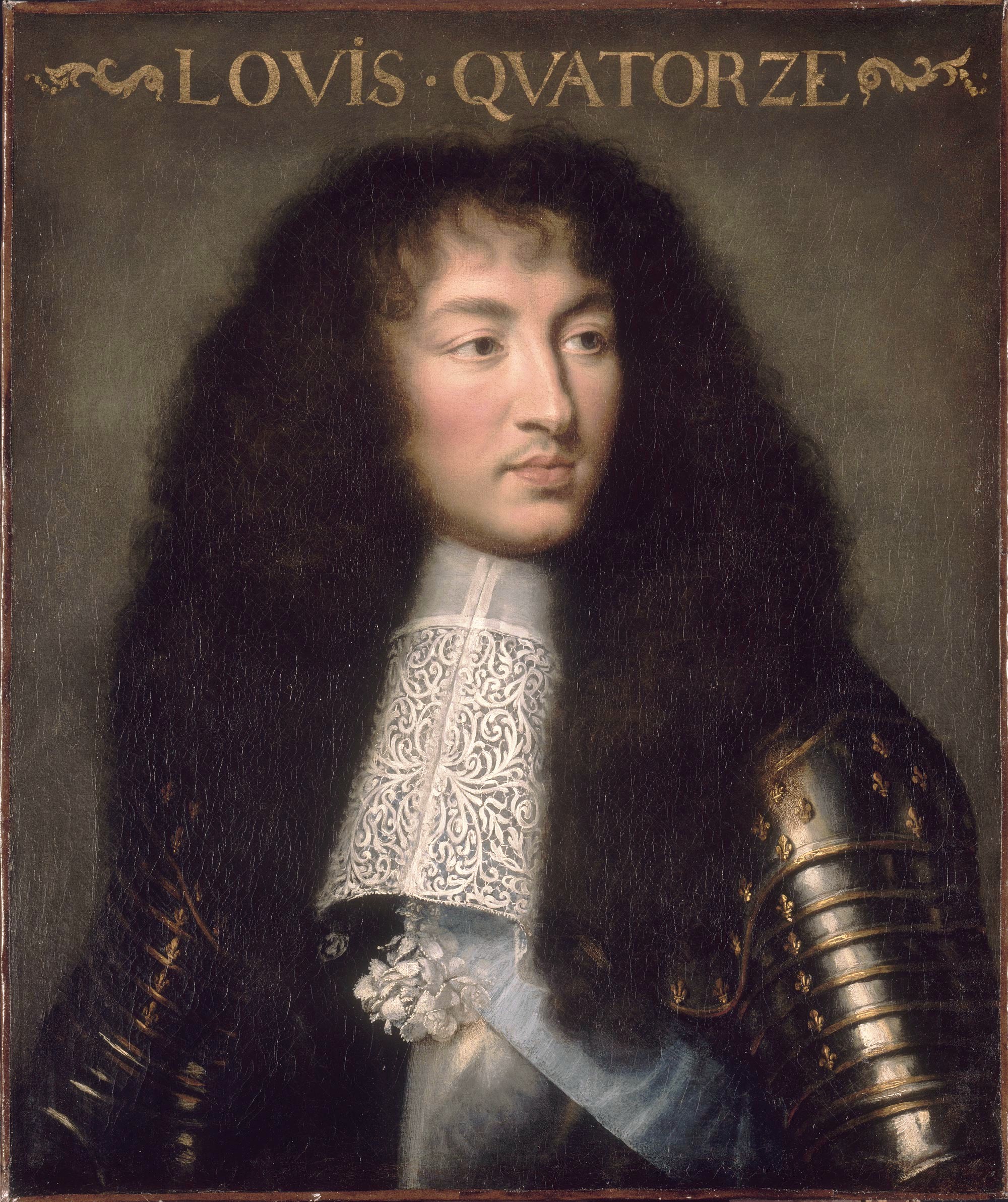
Louis XIV
In 1670 Louis XIV persuaded Charles II that it was in England’s interests to invade & partition the Dutch Republic. The two kings signed the secret Treaty of Dover, which was facilitated by Charles’ French mistress, the Duchess of Portsmouth - one of Louis’ agents. Charles planned to use William and his supporters to harass the States. He failed to recognise that, for William, Dutch interests were paramount and hoped to gain his support when William visited England in November. De Witt approved the visit, as William hoped for the return of some of the loans given to Charles by his mother. William travelled with his uncle de Zuylenstein, Huygens & his friend for life - Bentinck.

On this visit William was paid part of his mother’s dowry and he was acknowledged successor to the throne of England after James, Duke of York and his two girls Mary, now eight, & Anne. William was unimpressed by the debauchery of the Stuart court and in return was found to be priggish by his uncles, who got him badly drunk at one dinner. It took William several days to get over his hangover, for which he never seemed to forgive his uncle.

In 1672 the French preparations for war were fast becoming apparent. The supporters of the House of Orange renewed their demands for William to be made Captain General, to enable him to use his influence to keep England out of the war. De Witt and his party were determined to keep William out of power – they feared that he intended to make the Republic a monarchy and also felt he was his uncle’s pawn – a gross misreading of William’s character. William was unaware of the provisions of the Treaty of Dover and believed that he could persuade Protestant England to make common cause with the Protestant Dutch. In the spring William was made Captain General of the Dutch army.

The campaigning season began in April as Louis’s army marched against the tiny republic. Garrison after garrison fell before the colossus. In May de Witt ordered the breaching of the dikes and William’s tiny army of nine thousand withdrew behind this waterline. Peace negotiations were commenced, but Louis was convinced that the Dutch were in an impossible situation and kept raising the stakes. Eventually on 26th June the Dutch broke off the talks.

On the 4th July 1672, in view of the disasters staring the Dutch in the face, the States of Holland made William Stadtholder at last. At the age of twenty-one he had finally been given the honour that had been his father’s, with full voting powers, despite de Witt’s attempts to have William’s role limited to that of an adviser. On the 10th Charles’ envoys offered to make William sovereign prince of Holland if the Dutch capitulated. William told the English that he would defend Dutch soil to the last ditch. On the 17th Zeeland offered to make William their Stadtholder. William’s fight with his French and English enemies were now fully joined.

William was now a man in both age and temperament. The seeds of all his future successes and failings had been laid down during the sad childhood of this lonely man, who had few close confidants of his own age. The progression of this war, so vital to the future of the Netherlands, was now in William’s hands.

Bibliography

The Later Stuarts 1660-1744 – Sir George Clark, Oxford University Press 1985

William and Mary – John van der Kiste, Sutton Publishing 2003

The Shorter Pepys – ed. Robert Latham, Penguin 1987

William and Mary – John Miller, Weidenfeld & Nicholson 1974

The Life & Times of Charles II – Christopher Falkus, George Weidenfeld & Nicholson 1972

www.en.wikipedia.org


[i] Until the Act of Union in 1707 the Scots were, in theory, able to choose their own king. In practise they chose the new king or queen of England.
[ii] The English Act of Seclusion
[iii] Without modern immunisation measles can kill or leave serious complications, especially for children with ill-health or chest problems, as William suffered from & Mary must have known this.
[iv] A contra-Remonstrant theologian
[v] Samuel Pepys 14-15th May 1660
[vi] William and Mary – John van der Kiste, Sutton Publishing 2003
[vii] William and Mary – John Miller, Weidenfeld & Nicholson 1974

Saturday, 31 March 2012

Wherein the Dutch Navy Doth Singe the King of England’s Wig…


Attack on the Medway
The Attack on the Medway

In June 1667, in the later stages of the Second Anglo-Dutch war, the unthinkable happened. The Dutch navy sailed up the river Thames to London. They returned to the Low Countries with a royal prize in tow – the largest ship of the English fleet – the Royal Charles, which had carried Charles II back to England from exile on 23rd May 1660.

War broke out between the two countries in the winter of 1663-4, when an English squadron reached the west coast of Africa, to support the Royal African Company - headed by the king’s brother, the Duke of York, against the Dutch. The squadron took an island north of the Gambia River & Cape Coast castle on the Guinea Coast. The Duke of York & Lord High Admiral had been intriguing for a war with the Dutch for some time & this excursion was the prologue.

War with the Dutch co-religionists was very popular in England, as the Dutch had control of the majority of the spice trade from the east. The first war with the Dutch had been concluded while England was still a Republic & the peace treaty forbad the province of Holland from allowing any member of the House of Orange to be its Stadtholder. The current head of the House of Orange was Charles’ nephew William, whose guardian Charles was.  

Charles II attempted to ally England with France, while some of his ministers preferred an alliance with Spain. Neither country wanted to fight the Dutch & England had no inducements sufficient to overcome this inertia. Indeed the French were already party to a commercial & defensive alliance with the Dutch, signed in April 1662. France stood to gain if the English & Dutch weakened themselves in a mutual war. Louis XIV used his influence at the Spanish court to persuade Spain to remain neutral.

In June 1664 English ships attacked the Dutch colony in America – the New Netherlands – which was under English control by October. In December the Dutch, under Admiral de Ruyter had taken back control of their African colonies taken the previous winter.

‘At noon to the Change at the Coffee-house, and there heard Sir Rd Ford tell the whole story of our defeat at Guinny – wherein our men are guilty of the most horrid cowardize & perfidiousness, as he says it and tells it, that ever Englishmen were. Capt. Reynolds, that was the only commander of any of the King’s ships there, was shot at by De Ruyter, with a bloody flag flying. He, instead of opposing (which endeed had been to no purpose, but only to maintain honour), did poorly go on board himself to ask what De Ruyter would have; and so yielded to whatever Ruyter would desire. The King & Duke are highly vexed at it.’[i]

In the same month the English navy was ordered to attack the Dutch merchant fleet en route home from Smyrna. The attack near Cadiz in January was a virtual failure as most of the Dutch ships escaped to continue their homeward journey. Only three were captured & one Dutch ship & two English ships sunk.

Admiral De Ruyter
The Dutch admiral Opdam lost his life in an engagement off Lowestoft on 13th June 1665 – the worst defeat in Dutch naval history. Twenty five Dutch ships were lost, sixteen of them sunk. But the Dutch fleet returned to the fray a mere two months later. In August 1665 Admiral de Ruyter’s ships were guarding the spice fleet. The fleet took the northerly route home, around Scotland. The King of Denmark agreed to let the English attack the Dutch fleet in harbour at Bergen, in exchange for a share of the spoils. Due to a misunderstanding the Danish harbour forts fired on the English, who retreated with the loss of 400 men killed, including 6 captains. The Danish now joined the anti-English alliance being built up by the Dutch.

From the spring of 1665 until the end of 1666 the Great Plague was rampaging through England. As the plague waned a second catastrophe caused the English grief – the Fire of London in September of 1666. The following winter saw Englishmen rioting against unemployment & high taxes (paying for the war). Meanwhile the Dutch were finding the costs of their war loans heinous. Both sides were moving slowly towards thoughts of peace.

Eventually in January 1666, concerned that the Netherlands would fall to the Hapsburgs & in view of his fixed intention to invade the Spanish Netherlands, Louis XIV in belated accordance with the 1662 treaty, declared war on England. But French input into the war was minimal. Louis’ envoys harried the English, who put forward proposals for peace which included the demand of a position for Charles’ nephew William & for £200,000[ii] indemnities.

In June 1666 the Four Days battle saw the defeat of the English fleet, under the command of the Duke of Albemarle, primarily a soldier, who was fighting the Dutch genius of De Ruyter & Tromp. This longest of all sea battles ended with the loss of four Dutch ships for the price of ten English ships.

In 1667 the English government decided not to send a fleet to see, but to destroy Dutch commence with privateers, while relying on coastal defences. By June the peace negotiations were flagging & the Dutch decided to implement a long nurtured plan to push the English back to the negotiating table.

The Dutch fleet arrived at Harwich on the 8th June with 80 ships:

‘Up and to the office, where all the news this morning is that the Duch are come with a fleet of 80 sail to Harwich, and that the guns were heard plain’[iii]

James, Duke of York
By the 12th June the Dutch had reached Chatham & broken the chain protecting the English fleet. The Dutch burnt four English ships & towed away the Royal Charles, at 80 guns the largest vessel in the fleet. The Dutch then sailed home unharmed with their prize.

‘But his clerk Powell doth tell me that ill news is come to Court of the Dutch breaking the Chaine at Chatham, which struck me to the heart …. For the news is true, that the Dutch have broke the Chain and burned our ships, and particularly the Royall Charles.’[iv]

‘No sooner up but hear the sad news confirmed, of the Royall Charles being taken by them & now fitting by them.’[v]

The audacious raid had the desired effect on English procrastination. The peace treaty between the two combatants was signed on 31st July 1667. It brought the English one substantial new overseas possession – the New Netherlands, which filled in a gap on England’s eastern American seaboard. New Amsterdam was renamed New York, a compliment to the king’s brother, James, Duke of York & Lord High Admiral.

Bibliography

The Later Stuarts 1660-1744 – Sir George Clark, Oxford University Press 1985

The Shorter Pepys – ed. Robert Latham, Penguin 1987

The Life & Times of Charles II – Christopher Falkus, George Wiedenfeld & Nicholson 1972

www.en.wikipedia.org


[i] Samuel Pepys 24th December 1664
[ii] £340,000,000 as at 2010 using average earning – www.measuringworth.com
[iii] Samuel Pepys 8th June 1666
[iv] Samuel Pepys 12th June 1666
[v] Samuel Pepys 13th June 1666

Friday, 23 March 2012

The Life & Times of Anne of Austria, Queen of France Part 3


Children at Last

It was not until September 1638 that Anne finally gave birth to a Dauphin. Louis, later to be the fourteenth king of France of that name, was born on 5th September 1638. Anne & her husband had not had marital relations since her miscarriage in 1630, but allegedly due to inclement weather in December 1637 the king found himself at the Louvre, where only the Queen’s apartments were ready for habitation. Louis had planned to spend the night at St Maur, eight miles away, where his bed & furnishings awaited him. Louis was persuaded to spend the night with Anne & nine months later the longed-for heir was born.

Anne was passionately devoted to Louis Dieudonné (as he was Christened), she would play with him, wheel him in his carriage and spent most of her time with him. And at the age of 39 Anne was finally free of the fear of being returned to Spain for failing to provide an heir to the throne. Gaston d’Orleans, on the other hand, was stunned to realise that his position as heir to the throne had been taken by another.

Anne poured all her pent-up love into her first-born. Philippe, born on the 21st September 1640, always took second place in her heart. She often dressed Philippe as a girl, attempting to subvert the potential threat to Louis’ position, as Gaston had threatened his fathers. Even when Philippe was sick Anne failed to visit him.  

The Cinq-Mars Conspiracy

By summer 1639 Louis had a new favourite, introduced into his entourage by Cardinal Richelieu. The Marquis de Cinq-Mars was a beautiful young man, who quickly learnt that easiest way to get what he wanted was to deny the king his companionship. Louis made him Grand Ecuyer de France, paying off the current holder of this grand position at court. Eventually Cinq-Mars became so puffed up in his own conceit that he became embroiled in plots against Richelieu. To the king’s dismay he also had a mistress, Marion de Lorme.

In June 1640 France attacked Arras in the Spanish Netherlands & a siege of the town commenced. In turn the besiegers were surrounded by a Spanish army. Cinq Mars persuaded Louis to allow him to lead a contingent of 1200 nobly born soldiers to the relief of the besieged French army. The relieving force arrived in the middle of a battle, which the French won. Arras surrendered to the French on 9th August.

While the celebrations over the fall of Arras were in full force, Louis visited his son & wife at the palace at St Germain en Laye, in the company of Cinq-Mars. The Dauphin screamed at the sight of his father. Angered Louis wrote to Richelieu suggesting that the child be removed from his mother. However a few days later the king’s wrath was assuaged by the sight of his heir kneeling before him & begging forgiveness.

Cinq-Mars was by now working towards the downfall of Richelieu, his first patron. He joined the revolt of the Comte de Soissons in 1641, but was forgiven by Louis. Cinq-Mars began voicing the often heard view that Richelieu was keeping France involved in what became known as the Thirty Years War solely to retain power. He suggested to Louis that he should seek terms with the Spanish, through one of Cinq-Mars friends & may even have proposed Richelieu’s assassination.

By 1642 Cinq-Mars was again involved in a rebellion, even making an agreement with the king of Spain & Gaston, who was back at his old tricks. Anne apparently was shown the agreement. The agreement was signed by Philip IV on 13th March, as Louis decided to join his army besieging Perpignan, near the French-Spanish border. Cinq-Mars intended to kill Richelieu, as he travelled in the king’s wake, at Lyons. He failed to do so as his co-conspirator  Bouillon the Duke of Sedan, was not there, as he was in charge of the French army in Italy. Richelieu received a copy of the agreement, between Gaston & Philip IV, in mid-June. He may have been sent a copy by Anne, who was again being threatened with the loss of her children. She had been desperately bombarding Richelieu with letters on the subject since April.

On receipt of the agreement Louis immediately ordered Bouillon’s arrest & later in the day that of Cinq-Mars. As ever Gaston sold out his co-conspirators, informing his brother of all he knew of the plot. Gaston was pardoned but condemned to live as a private citizen, while Cinq-Mars & de Thou (another member of the conspiracy) were tried in September. Both were executed. Bouillon was freed in return for the cession of Sedan to France.

The Regency

Richelieu died on the 4th December 1642 & his royal master lived a bare six months longer, dying on 14th May 1643, thirty years to the day after his ascension to the throne. The last years of both men had been plagued with illness. Louis was only 42 when he died; worn out by the travails of his reign & the numerous illnesses he had suffered.

Louis had arranged for Anne to be regent in name only. But with the help of Cardinal Mazarin, formerly in the Papal service & latterly working for France under Richelieu, the king’s will was overturned. Anne now ruled, with the support & advice of Mazarin, in the name of her son Louis XIV.

The Fronde

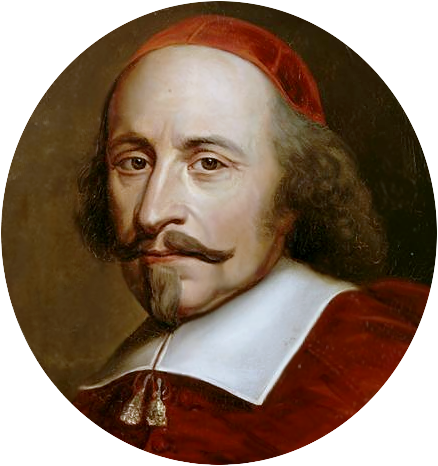
Cardinal Mazarin

Like Richelieu, Mazarin was not liked by the French. The continual need to raise money, to pay for the war against the Hapsburg encirclement of France, raised grievances to dangerous levels. In1648 the discontent in Paris erupted into open violence. The magistrates were affronted when Mazarin levied a tax against them in May 1648; while Parlement was outraged by Mazarin’s attempts to undermine its authority. In August Mazarin, strengthened by French victories abroad, had the leaders of the Paris Parlement arrested. Parisians barricaded the streets, while the nobles called for a meeting of the États Generals. With no troops to put down the insurrection Mazarin, Anne & the court left Paris.

On 24th October 1648 the Treaty of Westphalia was signed, ending the Thirty Years War. The return of the French armies, from their victories abroad, meant that Mazarin was able to have Paris besieged. The peace of Rueil was signed in March 1649, the Parisians having refused to ask for aid from Spain, as suggested by disaffected members of the nobility.

Since the Peace of Rueil the troublemakers of the previous reign - Prince de Condé, Gaston d’Orleans, the Duke de Bouillon & Madame de Chevreuse amongst others - had been intriguing against Mazarin, now Anne’s closest adviser. The second stage of the Fronde erupted in January 1650 when Mazarin, having come to terms with several of the plotters including Madame de Chevreuse, had Condé & two other leaders of the opposition arrested. The leader of the Fronde of the Nobles was led by the great French commander Turenne.

Turenne planned to rescue Condé using a Spanish army, but the countryside rose up against the invaders & there were sufficient other capable generals in the Royal forces to see off the attack. The Spanish then withdrew & Turenne was left with a motley crew. There were minor clashes throughout 1650 & 1651, until in December Turenne knelt before the king and was pardoned.

Mazarin had retired into exile in April 1651 but returned to France in December 1651 at the head of an army. The Fronde nobles again called on the might of Spain and now Turenne & Condé were pitted against each other. After various minor engagements throughout the first half of 1652 a battle was engaged outside the gates of Paris in July. The royal forces were winning the battle but Gaston’s daughter persuaded the guards to open the gates of the city and the Fronde army took control of the city, proclaiming Gaston Lieutenant General of France. Once again Mazarin went into exile.

The Parisians allowed Louis XIV to return to his capital on 21st October 1652. Mazarin returned from exile without opposition in 1653. However Condé was now fighting for the Spanish and it took until 6th November 1659 before peace was finally signed between the two countries. Mazarin’s death in March 1661 meant that Louis was finally able to govern France himself. His experiences as a child convinced him of the need for power to be held only by the king - himself.

Louis & Anne had always been close & Louis would visit his mother at least once a day or write to her if he were on campaign. During the Regency Anne had relied heavily on Mazarin’s advice & there were rumours that the pair were lovers. Indeed Anne’s daughter-in-law Elizabeth-Charlotte, Philippe’s second wife, claimed that Anne had secretly married Mazarin. Anne died in retirement on 20th January 1666, after a two year battle with breast cancer, at the convent of Val de Grâce.

Bibliography

Richelieu and His Age – Power Politics and the Cardinal’s Death – Carl J Burckhardt, 1971 George Allen & Unwin

Louis XIV – Vincent Cronin, 1965 The Reprint Society Ltd

Cardinal Richelieu and the Making of France – Anthony Levi, 2000 Constable

France in the Age of Louis XIII & Richelieu – Victor L Tapié, 1988 Cambridge University Press

Richelieu and the French Monarchy – CV Wedgewood, 1949 Hodder & Stoughton

Louis XIV – John B Wolf, 1970 Panther

http://en.wikipedia.org

Friday, 16 March 2012

The Life & Times of Anne of Austria, Queen of France Part 2


Anne & the Duke of Buckingham

In June 1625 the wedding of Louis’ sister Henrietta Maria to Charles I of England was celebrated. The English party, collecting the princess, was headed by the vainglorious Duke of Buckingham, a man addicted to conspicuous consumption. His gala wardrobe of 27 suits stunned the parsimonious Parisians. The pièce de resistance was a cloak with diamonds (at the time said to be worth £80,000, now worth £12.3 million[i]). Unfortunately the Duke decided that relations between the two countries would be assisted by his ‘falling in love’ with the French Queen. Buckingham spent a lot of time conversing with the lonely queen, much to her husband’s discontent.

On the ceremonial journey escorting Henrietta Maria to the coast the party stopped at Amiens. Buckingham took the opportunity to take a nocturnal, unescorted walk with Queen Anne in the garden of the palace where she was staying. The concerned courtiers were drawn to the scene by a cry for help. Buckingham disappeared in the resulting mayhem. Buckingham abandoned his new queen at Boulogne; returning to Amiens with a letter for the Queen Mother, from Charles I. After meeting with Marie; Buckingham then had a further meeting with Anne in her bedroom, informing her of his desperate love for her, before returning to Boulogne. Louis was kept up to date on this brief romantic entanglement by Richelieu. The result was the estrangement of the royal couple.

The Chalais Conspiracy

Gaston d'Orleans
In August 1626, encouraged as ever by the Duchess de Chevreuse, the Queen foolishly became involved in the Chalais conspiracy to unseat Richelieu & place Gaston, Louis’ brother, on the throne of France. Gaston had always been spoilt as he was the Queen Mother’s favourite child. The Comte de Soissons and Louis’ half brothers were also involved in the plot.

Anne asked Madame de Chevreuse to ensure that Gaston’s governor persuaded Gaston to refuse marriage with a rich heiress. Louis was concerned at Gaston’s refusal as he believed his brother wanted not only his throne but his wife as well; a concern that was increased by his brother’s demand to be given charge of the army. Louis had his brother’s governor Ornano arrested and his papers scrutinised.

Chalais, one of Marie de Chevreuse’s lovers, informed his uncle of the plot against Richelieu, who was to be murdered, and the king. The uncle reported the plot to Richelieu, confirming the plans discovered in Ornano’s papers. Louis had his half-brothers arrested & imprisoned, while Gaston got away with marrying his heiress. The unlucky Chalais was executed; as Richelieu believed that Gaston might be sufficiently shocked seeing a friend punished for his own conspiracy, to stop his further involvement in conspiring against the crown. Unfortunately Gaston was too much of an egotist & too firmly convinced that he, not his brother, should be ruling the country, to be affected by the death of a friend. The Duchess de Chevreuse was exiled to her estates.

The Day of Dupes

Cardinal Richelieu
By 1630 Marie de Medici had fallen out with her erstwhile adviser. Richelieu had the temerity to transfer his loyalty to the king. A new conspiracy was in the offing. Marie de Medici & her supporters had suborned the loyalty of Marillac, the Keeper of the Seals, who was jealous of Richelieu’s closeness to the king. Richelieu & Louis’ policy of making the security of France paramount, even when that was in opposition to the desires of the Catholic church, was unpopular among the Catholic nobility. The fall of la Rochelle in 1629 had brought the end of the Huguenot uprising. To ensure the loyalty of his Protestant subjects, Louis had been persuaded not to take severe reprisals against them.
In November 1630, Louis & the court returned to Paris at the end of a campaign in Savoy. Louis & Richelieu had both been ill & the king was slowly recovering from an abdominal abscess. His mother caused a set-back in Louis’ health by demanding that he dismiss Richelieu. In Paris a scene between the three protagonists ended without a decision by the king, despite an offer from Richelieu to resign. Marie de Medici believed she had won and so informed her supporters.

Louis XIII
The next day the Cardinal’s antechambers, usually full of supplicants, were empty as the credulous flocked to visit the Queen Mother at the Luxembourg Palace. The following day Louis summoned Richelieu to a meeting. He confirmed Richelieu in his position as the king’s chief adviser. Louis believed that his mother had been led astray by the cabal supporting her. In any event Richelieu’s support & advice was more essential for good governance of the country, than his mother’s. Marillac was removed as Keeper of the Seals & the post given to a Richelieu supporter, Chateuneuf; who was later suborned by the woman who became his mistress - Madame de Chevreuse.

In early 1631, having failed to receive the rich rewards he felt due to him as heir to the throne, Gaston left France for Spanish ruled Besançon. Louis decided to make his mother governor of Moulins. She prevaricated, and finally made a dash for the Spanish Netherlands. She never returned to France, from whence Louis cut off her allowances. From Brussels Marie accused Richelieu of subverting the king’s power. Louis had to attend court in August to deny his mother’s accusations.

Gaston meanwhile was fortifying Orleans, against which Louis marched. Gaston fled to Lorraine and Louis had both Marie’s & Gaston’s supporters found guilty of lèse-majesté. Peace between Lorraine & France was signed in January 1632. Gaston had already joined his mother in Brussels, where they were plotting to lead an army provided by the Spanish and the Duke of Lorraine. Montmorency, one of the Marshall’s of France and governor of Languedoc, was persuaded to join the rebellion, the failure of which cost him his head. Anne was one of those who pleaded with Louis for Montmorency’s life.

By January 1633, following the campaigns of the previous year, Richelieu was seriously ill and many believed he was on his death bed. Chateauneuf was corresponding with the Duchess de Chevreuse and anticipating taking over from Richelieu in the king’s council. Louis had Chateauneuf arrested and his correspondence with his mistress was seized, while Madame de Chevreuse was again exiled.

Letters to Spain

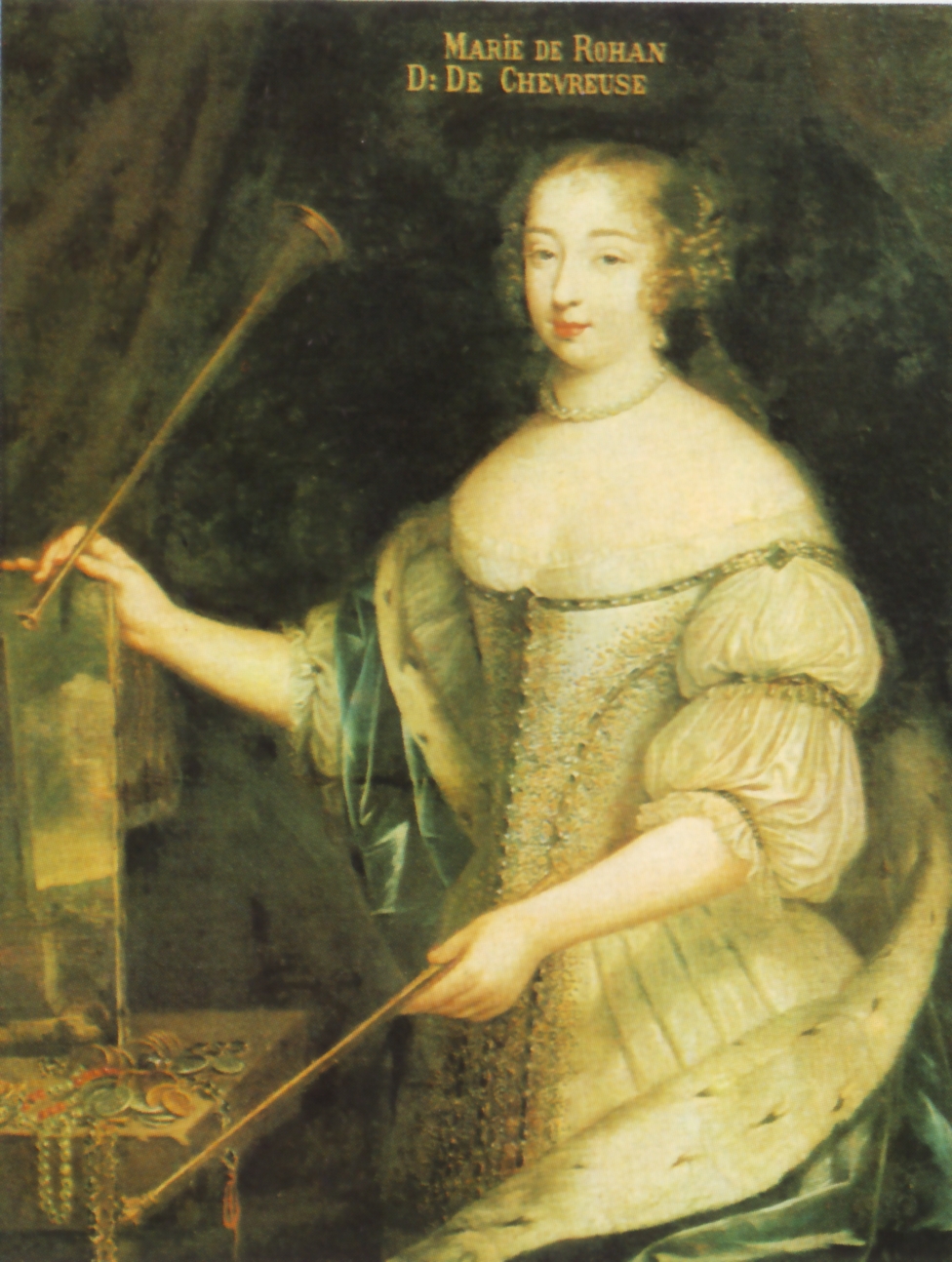
Duchess de Chevreuse
In 1637 Anne was discovered to be in secret correspondence with the former Spanish ambassador in Paris, Mirabel. Anne was a deeply religious woman, influenced by her parents. So there was little surprise at her frequent visits to the convent at Val de Grâce, where the abbess was a Spaniard. The convent served as a clearing house for Spanish news and was kept under surveillance. Following the discovery of a letter from Anne to Mirabel, one of Anne’s servants, de la Porte, was arrested. The abbey was searched & the abbess removed from her post by the Archbishop of Paris.

Confronted by Richelieu, Anne confessed to corresponding with the Spanish authorities in an attempt to prevent a Franco-British alliance, which would have been detrimental to Spain. Anne had been advised throughout by her evil genius Madame de Chevreuse, who now took the opportunity to escape to England, with the aid of the Spanish. Very few restrictions were placed on the queen, whose confession was made on 17th August, beyond having members of her household approved by the king & cessation of any correspondence with the Duchess de Chevreuse.

Bibliography

Richelieu and His Age – His Rise to Power – Carl J Burckhardt, 1967 George Allen & Unwin

Richelieu and His Age – The Assertion of Power and the Cold War - Carl J Burckhardt, 1970 George Allen & Unwin

Richelieu and His Age – Power Politics and the Cardinal’s Death – Carl J Burckhardt, 1971 George Allen & Unwin

Cardinal Richelieu and the Making of France – Anthony Levi, 2000 Constable

France in the Age of Louis XIII & Richelieu – Victor L Tapié, 1988 Cambridge University Press

Richelieu and the French Monarchy – CV Wedgewood, 1949 Hodder & Stoughton

http://en.wikipedia.org


[i] Using RPI - Information from www.measuringworth.com

Saturday, 10 March 2012

The Life & Times of Anne of Austria, Queen of France - part I

Childhood
The Infanta Anna Maria was born on 22nd September 1601, the eldest child of Philip III, king of Spain. Brought up at the Alcazar Palace, in a strongly religious but close family, Anna Maria lost her mother at the age of eleven, becoming a surrogate mother to her siblings. In the same year Anna Maria was engaged to marry Louis XIII of France. Her dowry of 100,000 crowns & expensive jewellery was to be returned to Spain with her in the event of Louis’ death. At the same time Louis’ sister Elisabeth was pledged to Anna Maria’s brother the Infante Don Phillipe.

Queen of France

The wedding, part of the Queen Mother Marie de Medici’s policy of appeasement towards Spain, did not take place until November 1615. The couple were married by proxy in Burgos & the exchange of brides took place on the isle of Pheasants between Hendaye & Fuenterrabia. The Bishop of Luçon, Armand Jean du Plessis de Richelieu, was appointed the new queen’s Almoner. The new bride was ignored by her husband and France’s new queen Anne d’Autriche (as she was known to her husband’s subjects) remained fiercely loyal to country of birth. The homesick queen kept portraits of her Spanish family in her bathing chamber.

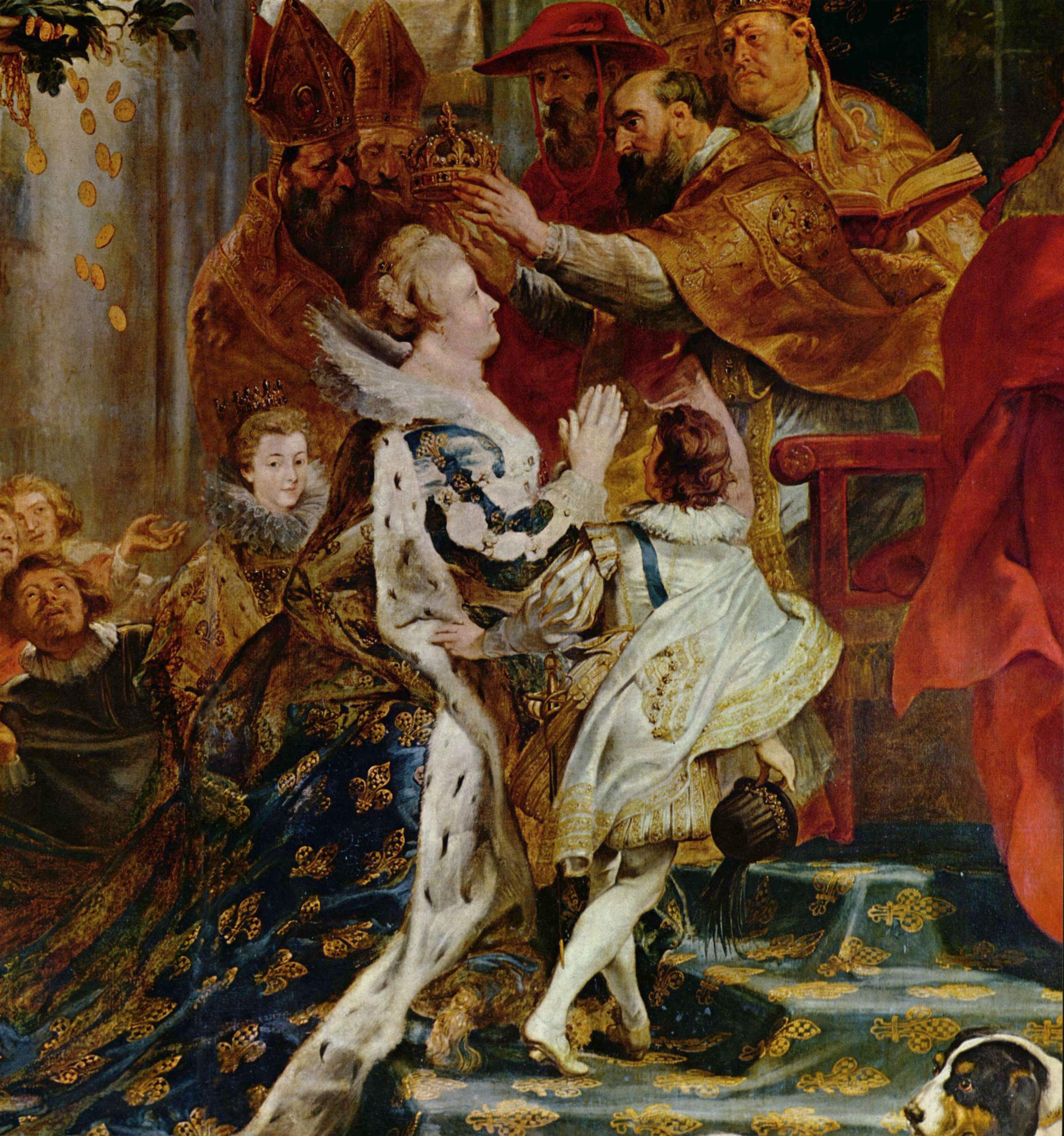
Coronation of Marie di Medici
All power remained in the hands of the Queen Mother & her Italian favourite Concino Concini – husband of her maid. Marie was able to control her unhappy, sulky son by the force of her personality. It was not until 1617 that Louis, with the assistance of his favourite, the Duke de Luynes (Louis was believed to be homosexual in leaning if not in fact), took control of his kingdom, after the assassination of Concini on 24th April 1617 (his wife was later beheaded for witchcraft). The Queen Mother was exiled to Blois.

Louis overturned the pro-Spanish policies of his mother, but the well-meaning de Luynes was not a capable politician. However he did try to thaw the relations between Anne & her husband. Anne’s ladies in waiting were returned home to Spain & French ladies took their place, including the Duchess de Luynes, who was to become Anne’s greatest friend & supporter. Anne began to dress in French fashion. She became pregnant giving birth to a child who only lived a short period in December 1619

The Queen Mother’s Rebellion

Louis XIII
Marie de Medici escaped from Blois, in 1619. By the following year she was the figurehead of a rebellion by the nobility angered by de Luynes incapacity as a politician. In August 1621 Louis had become reconciled with his mother after her Spanish funded rebels were seen off by Louis’ troops. The Treaty of Angers that followed amnestied Marie & her followers. The negotiations were conducted for the Queen Mother by the Bishop of Luçon.

The royal army marched for Montauban held by the Huguenots; they had joined Marie’s uprising, but now continued their own rebellion. In December de Luynes, who had been made Constable of France, despite having no military experience, died during the siege of Montauban. Large numbers of the royal troops also died from swamp fever contracted in the marshes surrounding the city. After three months the siege was abandoned. But the fight between the crown & the French Huguenots rumbled on.

Within three months of her husband’s death Marie de Luynes was married to her lover, the Duc de Chevreuse. In May 1622 a miscarriage caused the rift between Anne & Louis to widen, as she had been playing with her ladies immediately before the sad event & Louis blamed the miscarriage on this. Anne’s friend, the Duchess de Chevreuse, was banished from court for a period as a result.  

In April Marie de Medici’s chief counsellor, Richelieu, was made a cardinal. The Queen Mother was a member of the king’s council along with the Chancellor – de Brûlart & his son the Foreign Secretary. The Brûlarts, father & son, managed royal policy making. However they were up against an opponent of extraordinary political acumen. Even so it took Cardinal Richelieu another two years before Louis named him his foreign minister on 29th April 1624, the post for which he had been angling for so long.

Bibliography

Richelieu and His Age – His Rise to Power – Carl J Burckhardt, 1967 George Allen & Unwin

Cardinal Richelieu and the Making of France – Anthony Levi, 2000 Constable

France in the Age of Louis XIII & Richelieu – Victor L Tapié, 1988 Cambridge University Press

Richelieu and the French Monarchy – CV Wedgewood, 1949 Hodder & Stoughton

http://en.wikipedia.org


Monday, 5 March 2012

Murder Most Royal – Part IV


Henry VI murdered 21st May 1471

 Henry came to the throne in 1422, as a nine month old baby; following the death of his hero father Henry V, while on campaign in France. Henry was afflicted by the madness inherent in the French royal dynasty through his mother, Katherine. At the age of eleven months he became king of France, upon the death of his grandfather, Charles VI, as agreed in the 1420 Treaty of Troyes. The treaty was drawn up after the success of the battle of Agincourt (Azincourt in France). Henry’s senior Regent was his uncle John Duke of Bedford, who was in charge of the ongoing war in France. The Duke of Gloucester, Henry’s other uncle was appointed Protector & Defender of the Realm. The earl of Warwick was appointed Henry’s tutor in 1428.

Jeanne d'Arc
In 1429 the French armies were energised by the leadership of the Maid of Orleans, Jeanne ‘dArc. Her victories led to the crowning of Charles de Valois as king of France in Reims cathedral on 17th July 1429. The English were stung into action. Henry was crowned King of England at Westminster Abbey on 6th November 1429, It took a further two years to arrange his coronation as King of France at Notre Dame on 16th December 1431[i]. By then Joan had been captured by the Burgundians, sold to the English & burnt at the stake for heresy in May 1431.

In 1440 Henry founded Eton College, as a charity school to provide free education for poor boys. The following year he founded King’s College in Cambridge. A man who preferred religion over politics, Henry favoured making peace with the French, a position that was not acceptable to most of the nobility. 

Henry moved into the camp of his father’s half brother, Henry Beaufort, Cardinal Bishop of Winchester. Henry was persuaded to marry Marguerite d’Anjou, a niece of Charles VI’s wife. For the privilege of marrying Marguerite in April 1445, Henry gave the counties of Maine & Anjou back to the French, a secret part of the Treaty of Tours, the details of which became known in 1446 and created much public bitterness.
In 1447 Humphrey, Duke of Gloucester, was arraigned on the charge of treason and was placed in custody in Bury St Edmunds, where he died. Richard, the Duke of York, now Henry's heir presumptive, was sent to govern Ireland away from the centre of power; while his opponents, the Earls of Suffolk and Somerset were promoted to Dukes[ii]. The new Duke of Somerset was sent to France conduct the war, which was going badly for the English. By 1450 the French had retaken Normandy.

The monarchy was becoming increasingly unpopular due to:

·         a breakdown in law and order, caused in the main by the return of unpaid troops from France

·         the increase of corruption

·         the distribution of royal land to the king's court favourites, which exacerbated  

·         the troubled state of the crown's finances

·         the steady loss of territories in France.

In 1447, this dislike of the regime resulted in a Commons campaign against the Duke of Suffolk, the most unpopular of the King's entourage and viewed as a traitor. Henry had to send him into exile, but Suffolk's ship was intercepted in the English Channel and his body was found on the beach at Dover.

In 1450 Jack Cade led a popular rebellion in Kent, the rebels ending up occupying London after ambushing the king’s army at the battle of Solefields. The Londoners themselves re-possessed their city and the rebellion fizzled out after the battle at London Bridge. Despite promised pardons & reforms many of the rebels were declared traitors; Jack Cade was killed in a skirmish on the 12th July.
In 1451 Guyenne was lost to the English and the following year the Duke of York returned from Ireland, having been persuaded to do so to regain his place on the king’s council. He raised an army at Shrewsbury, and marched them to London where the king’s army was based. York demanded the arrest of Somerset, to which Henry originally agreed. He was over-ruled by Queen Margaret.

By the following year Somerset’s ascendancy was again paramount & the queen announced that she was pregnant. Prince Edward was born in October 1453, three months after the news of the loss of Bordeaux brought on the first of Henry’s bouts of madness. This first bout lasted over a year, during which the Duke of York was named Regent, following an alliance with Richard Neville, earl of Warwick. Henry’s sanity was restored on Christmas day 1454, but York had made good use of his time as Regent and now had many supporters, who believed that he should take the throne.

For the following six years the country was divided on sectarian lines, some supporting the king – known as the Lancastrians & others supporting the Duke of York and his ally the earl of Warwick – the party of the Yorkists. The lines were drawn up for the Wars of the Roses, referring to the emblems of the two parties – the red rose of Lancaster & the white rose of York.   

Edward IV
In July 1460, after capture at the battle of Northampton by the Duke of York, Henry VI was forced by the Yorkists to disinherit his son by the Act of Accord. Queen Margaret was not prepared to accept her son’s disinheritance & the War of the Roses spiralled on. Richard, Duke of York was killed at the battle of Wakefield in December & was succeeded by his son Edward. Margaret took Prince Edward to France seeking support from her cousin Louis XI of France; while Henry was kept prisoner in the Tower of London. The new Duke of York, now Edward IV, reigned in his stead.

For eleven years this remained the status quo, but on 13th October 1470 Henry was restored to the throne by the earl of Warwick, following Edward’s flight into exile as a result of the rebellion organised by Warwick. Queen Margaret had married Prince Edward to Warwick’s daughter, following Warwick’s falling out with Edward. Warwick then declared war on the Duke of Burgundy, who responded by assisting Edward to reclaim his throne.
The earl of Warwick dies at Barnet


The earl of Warwick died at the battle of Barnet on the 14th April and Prince Edward died at the battle of Tewkesbury on 4th May 1471. Three weeks later his father was murdered in the tower, as the last direct heir of the Lancastrian dynasty. Margaret was imprisoned at Wallingford and then the Tower of London. Her cousin King Louis XI ransomed her in 1475.

In an era when strong, not good or nice, was a characteristic viewed as essential for kings by the people, Edward II, Richard II & Henry VI were not seen by the English as having the necessary strength to defend the country. Their successors felt the need to remove the ‘fallen’ kings from the scene, in an attempt to avoid rebellion.

If William Rufus was indeed murdered then the reason behind the killing was to secure the throne for his brother Henry, who had been left with a financial inheritance; rather than the kingdom or dukedom left to his brothers. 

Bibliography

The Wars of the Roses – John Gillingham, Wiedenfeld & Nicholson 1990

The Reign of King Henry VI - RA Griffiths, Sutton Publishing 1998


[i] All kings of France are crowned in Rheims, at the time in French hands.
[ii] A title normally reserved at the time for members of the royal family