Showing posts with label Tudor England. Show all posts

Monday, 1 May 2017

The Spare Prince II

 
Clement VII
Freedom

In 1529, in part thanks to his mother’s foreign policy while he was imprisoned François was able to forge a new anti-Hapsburg alliance with those who felt that Charles V was becoming too powerful; joining the alliance was the pope Clement VII[i], the Republic of Venice, the Duke of Ferrara and de’ Medici ruler[ii] of Florence. Last but not least was the newly reinstated Duke of Milan, Francesco II Sforza[iii] who was wary of Charles’ ambitions in Italy[iv]. Henry VIII was also becoming wary of Charles and was not best pleased that the emperor had turned down the offer of his daughter Mary in marriage[v].

While the king of France and the Holy Roman Emperor were locked in increasing intransigence Louise of Savoy and Charles aunt’ Margaret of Austria[vi] were able to negotiate the Treaty of Cambrai, signed in August 1529. The treaty gave Charles two million écus[vii] in exchange for the return for the two French princes.

Louise of Savoy
Louise of Savoy sent her usher to visit François and Henri to inform them they were coming home. Monsieur Bodin arrived at Pedraza in September 1529 and was horrified to find the two boys in a small dark cell, with one small window high up in the walls and two straw mattresses for furnishings. According to the guards the only pleasure the boys had was two small dogs[viii]. The guards also informed Bodin;

‘You see how the sons of the king your master are treated, with no company but that of the soldiers….and neither exercise nor education[ix].’[x]

Short of money François had to raise his sons’ ransom from his richer subjects. He charged Anne de Montmorency, Grand Master of France, with the task of handing over the gold and bringing his sons back to France.

Back Home

Mont de Marsan
François’ new queen accompanied his sons return to their homeland. Henri’s treatment in Spain led to him to hate both his father and more particularly Charles V, the controller of his and François’ deteriorating imprisonment in Spain. Father and sons met on 6th July 1530[xi] at Mont de Marsan.

Their imprisonment had changed the two boys; François returned more Spanish than French, wearing only sombre colours, speaking very little and drinking only water. Henri returned, changed from a bright intelligent child to an awkward, taciturn, morose and unsociable boy rarely heard laughing. This change was to last the rest of his life, François was displeased in the change in his sons and was unable to hide his displeasure. Never one to put himself out he commented that;

‘He did not care for dreamy, sullen, sleepy children’[xii]

Anne de Pisseleu
And henceforth bestowed his affection solely on his youngest son Charles. Henri vented his frustration in a frenzy of hunting, tilting, wrestling and other wild exercise. He threw himself into becoming an excellent Real Tennis player. He gathered round him a tight-knit band of friends including Jacques d’Albon[xiii] and François de Guise[xiv]. Henri was to idolise the older Jacques for the rest of his life.

Henri also found much to admire in the prince’s new head of household Anne de Montmorency. The estrangement with his father led to Henri becoming devoted to Montmorency who carried with him the aura of a successful soldier as well as being a chivalrous and learned man.

The Dauphin and Henri were reunited with their siblings at Amboise and in March 1531 Henri was involved in the coronation of his stepmother at St Denis. François had no interest in his wife and failed to hide his feelings for his latest mistress Anne de Pisseleu, Duchesse d’Étampes[xv]. He publically indulged in sexual behaviour with Anne, embarrassing Eleanor. During the summer the court went on a progress around the country to thank the French for their efforts in obtaining the return from durance vile of the two older princes.

An Arranged Marriage
Henry Fitzroy
François came of age in 1532 and was now old enough to come into his inheritance, from his mother, as Duke of Brittany. His father had administered the duchy since the death of Queen Claude. At the same time King Henry VIII was attempting to browbeat the pope into granting him a divorce from his queen to marry his new love Anne Boleyn. Unfortunately for Henry his wife’s nephew was Charles V.

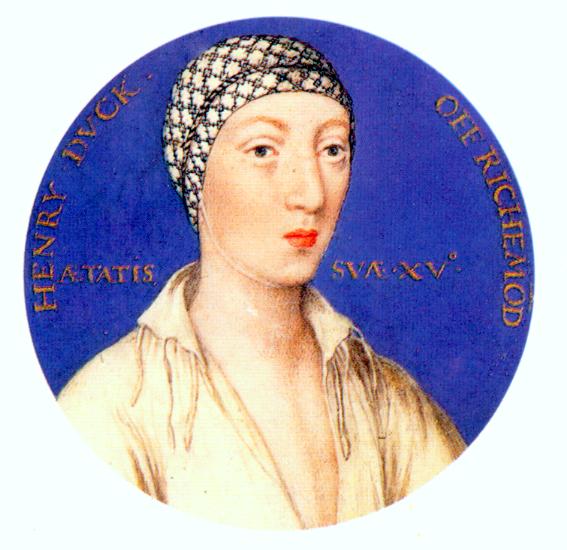
In late 1532 Henry VIII met with François in Calais and the two men agreed that François would try and persuade Clement VII to grant Henry his divorce. In the meantime Henry sent his bastard son Henry Fitzroy to François’ court[xvi], along with Henry Howard, the son and heir of the Duke of Norfolk, to gain some French polish. The two boys got on well with the French princes, being as sports mad as Henri and Charles.

As a Son of France Henri was never going to be able to choose his own wife and so it was that the pope had a niece to dispose of; Catherine de’ Medici[xvii]. Clement offered Catherine as a bride for Henri to cement the alliance between the papacy and France[xviii]. The young couple had something in common as Catherine had also been a prisoner of the Hapsburgs.

Catherine and Henri's wedding
In January 1533 Clement agreed to meet with François to discuss the matter of a marriage between the two young people and confirmed Thomas Cranmer[xix] as Archbishop of Canterbury. By the time the two men met to discuss Henri’s marriage to Catherine, Henry VIII had lost patience and had Cranmer declare him divorced and married Anne. Clement tried, unsuccessfully, to force Henry to give up his new wife and return to the staid and aging former queen. Despite pressure from Henry François refused to bully the pope, afraid that if he did so Clement would turn to Charles V for support and weaken the League against the emperor.

Catherine sailed from la Spezia with the papal fleet on 1st September and the fleet collected Clement from Villefranche, arriving in Marseille on 11th October. François prostrated himself before Clement the following day and Catherine and Henri were wed on 28th. Catherine’s dowry[xx] was 130,000 gold eçus[xxi]; she also had jewellery to the value of 27,900 gold eçus. From her new father-in-law Catherine was to receive an annual income of 10,000 livres[xxii]. As a memento the pope apparently gave François a unicorn’s horn[xxiii]

‘Pope Clement VII gave him [François] a gift of a unicorn’s horn, which expels poisons, to make him understand that he should keep his kingdom safe from heresy.’[xxiv]

On 12th November François and his court departed for Avignon and Clement returned to Rome.

Bibliography

Martyrs and Murderers – Stuart Carroll, Oxford University Press 2009

Catherine de Medici – Leonie Frieda, a Phoenix Paperback 2003

Charles V – Harald Kleinschmidt, Sutton Publishing 2004

French Renaissance Monarchy – RJ Knecht, Longman Group 1996

The Rise and Fall of Renaissance France – RJ Knecht, Fontana Press 1996

Catherine de’ Medici – RJ Knecht, Pearson Education Ltd 1998

A History of France – David Potter, The MacMillan Press 1995

Prince of the Renaissance – Desmond Seward, MacMillan Publishing 1973

Emperor Charles V – James D Tracey, Cambridge University Press 2010

Henri II – H Noel Williams, Methuen and Co 1910 (reprint 2016)

www.wikipedia.en


[i] Who had been taken prisoner by the emperor during the sack of Rome in 1527; he escaped to Orvieto in December 1528
[ii] Cousin of the pope
[iii] Upon payment of 900,000 ducats; in 2015 the relative: historic standard of living value of that income or wealth is £500,300,000.00 labour earnings of that income or wealth is £6,033,000,000.00 economic status value of that income or wealth is £16,790,000,000.00 economic power value of that income or wealth is £238,700,000,000.00 www.measuringworth.com
[iv] Known as the League of Cognac
[v] Charles was to marry his cousin Isabella of Portugal; the close and continual intermarriages of the Hapsburg family were to end with the unhappy Carlos II, while Mary was to marry Charles’ son Philip
[vi] Governor of the Spanish Netherlands on her nephew’s behalf
[vii] In 2015 the relative: historic standard of living value of that income or wealth is £1,112,000,000.00 labour earnings of that income or wealth is £13,410,000,000.00 economic status value of that income or wealth is £37,310,000,000.00 economic power value of that income or wealth is £530,400,000,000.00 www.measuringworth.com
[viii] The dwarf seems to have been sent away (or died) by this time
[ix] This is not the only time that Charles V has been accused of ill-treatment of prisoners by neglect; he treated his mother similarly see http://wolfgang20.blogspot.co.uk/2015/11/reanaissance-europe-juana-la-loca-v.html
[x] Catherine de Medici - Frieda
[xi] Much of the intervening time had been spent raising the ransom and then raising the deficit after some of the treasury officials charged with gathering the monies, clipped the coins which were found to be under value
[xii] Henri II - Williams
[xiii] Son of his governor
[xiv] Son and heir of Claude, Duc de Guise
[xv] The king’s sister informed the Duke of Norfolk that François could not bear to share Eleanor’s bed
[xvi] See Henry Howard III
[xviii] François saw the marriage as a route back into winning back Milan
[xix] Architect of the royal divorce
[xx] 30,000 eçus of which was in exchange for her rights to the Medici patrimony
[xxi] In 2015 the relative: historic standard of living value of that income or wealth is £71,240,000.00 labour earnings of that income or wealth is £790,800,000.00 economic status value of that income or wealth is £2,391,000,000.00 economic power value of that income or wealth is £32,640,000,000.00 www.measuringworth.com
[xxii] In 2015 the relative: historic standard of living value of that income or wealth is £5,480,000.00 labour earnings of that income or wealth is £60,830,000.00 economic status value of that income or wealth is £183,900,000.00 economic power value of that income or wealth is £2,511,000,000.00 www.measuringworth.com
[xxiv] Catherine de’ Medici - Knecht

Monday, 20 February 2017

A Tudor Poet – Henry Howard VIII

Henry Howard
A Poet of Renown

Henry blamed the Seymours for his cousin’s downfall and early in 1542 wrote a vitriolic allegorical poem directed at Anne Seymour, Edward’s second wife, who may have snubbed Henry when he asked her to dance. It was also a hit at the new men at court and makes reference to the brave Howard clan, many of whom were still locked up the Tower. The poem made specific reference to Henry’s uncle Thomas who died in the Tower for love of Margaret Lennox.

Henry has been credited with bringing the Renaissance style of poetry to England, introducing the sonnet form. Poetry was an acceptable pastime at the Tudor court and courtiers were expected to have some skills in writing ballads and poems. Henry used allegory to complain about what he saw as the injustices of life. Often these injustices were matters that Henry brought on his own head by his ‘foolish pride’ and arrogance.

Henry had lived his life weighed down by the expectations of others, in particular his father who had very rigid expectations of how the future fourth duke of Norfolk should behave. In his poetry Henry was able to represent himself as a noble and isolated hero of his dreams. It was this façade that he presented to his fellow nobles,

‘That then stir up the torment of my breast

          To curse each star as causer of my fate.

          And when the sun hath eked the dark represt

And bought the day, it doth nothing abate

          The travail of my endless smart and pain.’[i]


When Sir Thomas Wyatt died not long after Catherine Howard’s execution Henry wrote an elegy in heroic quatrains to his friend and fellow poet. Wyatt’s poetry was less explosive than Henry’s; Henry wrote with a disregard for the consequences, much as he lived his life. Henry was a man out of place in the Tudor court where one mishap could end you up on the block.

Wyatt and Henry translated Petrarch’s sonnets. Henry also translated Virgil’s second and fourth books of the Aeneid into blank verse in rhyming meter and it is believed that he was the first English poet to do use the form.

Fighting Up North

The Fleet
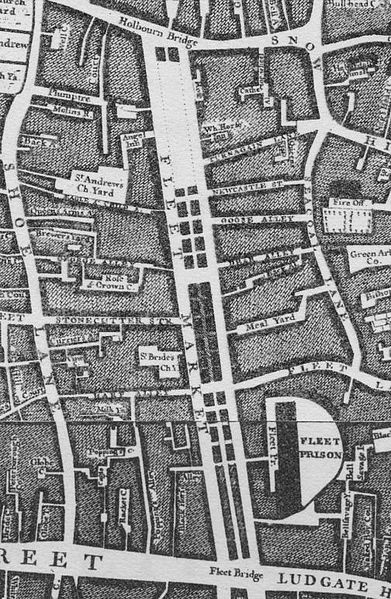
July 1542 saw Henry in the Fleet for quarrelling with one Jhon a Legh[ii]; it is possible that Henry assaulted the victim or challenged him to a duel[iii]. Henry immediately sent his servant to demand of the council that he be released with immediate effect. In early August Henry was released on his own recognisance of ten thousand marks[iv].

The following month saw Henry on the road to Scotland to fight incursions from Scottish raiders, owing allegiance to King James V, Henry VIII’s nephew. Henry VIII declared war on the Scots, knowing that their French allies were embroiled on the continent fighting Charles V. The Duke of Norfolk was made Lieutenant General of the army and Henry travelled in his father’s wake.

The English army of 20,000 crossed the border at Berwick on Tweed on 21st October with orders from the king to perform ‘some notable exploit’. The appalling weather forced the army back into England having done little more than sack Kelso Abbey and the nearby town. The king was not amused writing to Norfolk about;

‘The loss of this enterprise [which was] not of such sort as we did trust and desired.’[v]

But the king’s amour propre was soothed when Sir Thomas Wharton[vi] won the Battle of Solway Moss in November[vii]. The Howards and their men were not involved in the fighting and Henry returned to London more restless than ever, his aggression un-blunted by what little action he had been caught up in.

Fighting at Home and Abroad

Arms of Sir John Wallop
Back from Scotland found Henry setting up home in London, but he quartered himself in Cheapside and a number of his servants and braggarts ran amok. His father’s connections got him off the charges only for Henry to fall foul of Bishop Gardiner’s fasting laws. In April 1543 he was interrogated by four privy councillors who were sympathetic but Surrey found himself back in the Fleet. Once again he took up his pen to rage against unkind fate.

Henry was out of prison by May 1543[viii] and back at court in time to see Henry VIII sign a peace treaty with the Holy Roman Emperor. The two powers planned a joint invasion of France. Sir John Wallop led the English force across the Channel and Henry begged the king for permission to march with them.

Henry arrived at the English camp outside Landrecy in October 1543. Henry immediately set about orientating himself to the approbation of Sir John who wrote an approving letter back home. The siege of Landrecy was lifted by the arrival of François with an army which camped at Cateau-Cambrésis. The English were lured away from Landrecy which François immediately re-victualised before decamping with his army. Henry returned home.

Henry was back in France the following year with another invasion force; Norfolk was Captain of the Vanguard and his son and heir was Marshall of the Field. The weather conspired against the English who planned to besiege Montreuil. The choice of town was not a happy one and both Norfolk and the imperial generals inveighed against going ahead; but from far away in England Henry VIII overruled them.

The armies were subjected to a series of attacks by the French which reduced their effectiveness, especially when Henry VIII changed his mind and insisted that the priority was Boulogne. The king actually crossed the channel to impose his priorities upon the joint armies and Henry and his uncle William were present when Boulogne surrendered to Henry VIII.

Ramparts of Montreuil
It was too late for the army at Montreuil; the French Dauphin Henri came to the town’s relief and on 28th September 1544 the English decamped. Henry, as Marshall of the Field, was responsible for the army’s evacuation. They arrived at Boulogne relatively safe and sound on 30th September thanks to Henry’s masterminding of the evacuation.

In April 1544 there were rumours that François intended to regain Boulogne and invade England with an army of 40,000 men. Henry was appointed responsible for the defence of the town. And on 3rd September 1545, after a series of deaths among senior military men, Henry was made Lieutenant General of the King on Sea and Land for all English continental possessions. Norfolk wrote to Henry advising him not to encourage Henry VIII’s desire to permanently extend the Pale of Calais;

‘Have yourself in await, that ye animate not the King too much for the keeping of Boulogne, for whoso doth, at length shall get small thank. I have so handled the matter, that if any adventure be given to win the new fortress at Boulogne, ye shall have charge thereof.’[ix]

Henry ignored the warning, as he did all good advice. But eventually the cost of holding Boulogne meant that even the king came to his senses and ordered the evacuation of the town. Henry returned to England.

Proud Foolish Boy

Tower of London
Henry Howard has been described as;

‘An extravagant roistering soldier-poet….a brilliant, indiscreet young man who loved to flout conventions both trivial and important, ostentatiously refusing to eat meat in Lent, complaining openly about the power given to low-born men like Wolsey and Cromwell and, worse, boasting about his own descent from the Plantagenets.’[x]

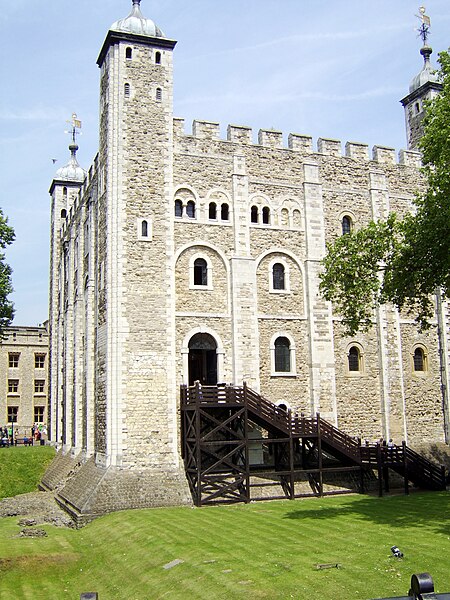
It was this arrogance which was to bring Surrey and his father to the Tower. The two Seymour brothers, Edward in particular, were looking forward to a long period of power during their nephew’s minority and the Howards were an irritant in their rosy vision of the future.

On 12th December 1546 both Surrey and his father were arrested and taken to the Tower. A plot had been uncovered; at Surrey’s instigation his sister Mary was to romance the king;

‘That she might rule as others have done.’[xi]

St Michael's Framlingham
Upon being questioned Mary incriminated both her brother and her father[xii]. Henry VIII was more than happy to rid himself of the Howard family and their pleas for mercy were ignored. To compound his arrogance Surrey had quartered his arms with those of Edward the Confessor. Edward Seymour and John Dudley, Viscount Lisle were more than happy to use the plot and Surrey’s arrogance to topple their rival Norfolk

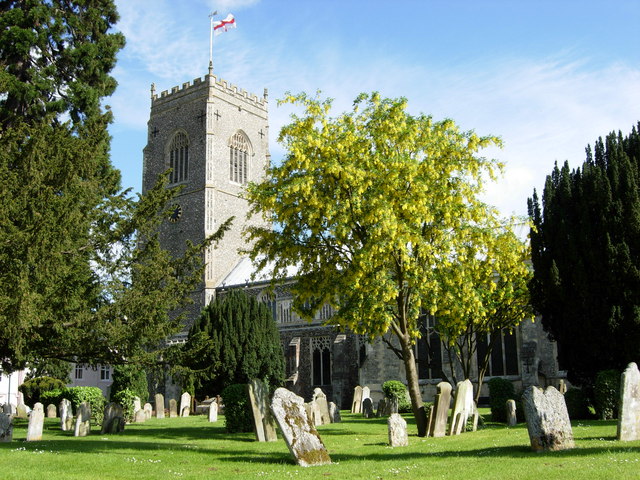
On 7th January Parliament passed an act of Attainder against both Surrey and Norfolk. Surrey was tried at the Guildhall on 13th, found guilty and condemned to death. Surrey was executed on 19th January 1547[xiii] and was buried at the church of St Michael the Archangel, in Framlingham. Norfolk’s writ of execution was signed by the king on 27th January. Norfolk’s execution was set for the following morning but it was Henry who was to die instead.

Bibliography

Thomas Wyatt – Susan Brigden, Faber and Faber 2012

Henry VIII’s Last Victim – Jessie Childs, Vintage Books 2008

The Ebbs and Flows of Fortune – David M Head, University of Georgia Press 2009

House of Treason – Robert Hutchinson, Phoenix 2009

Henry VIII – Robert Lacey, Weidenfeld & Nicholson & Book Club Associates 1972

The Earlier Tudors – J D Mackie, Oxford University Press 1992

Rivals in Power – David Starkey, MacMillan London Ltd 1990

The Six Wives of Henry VIII – Alison Weir, Pimlico 1992

The Lost Tudor Princess – Alison Weir, Vintage 2015

A Tudor Tragedy – Neville Williams, Barrie & Jenkins 1964

www.wikipedia.en


[i] Henry VIII’s Last Victim - Childs
[ii] Possibly John Leigh of Stockwell, Queen Catherine’s half-brother
[iii] Illegal within the confines of the court
[iv] In 2015 the relative: historic standard of living value of that income or wealth is £5,559,000.00 labour earnings of that income or wealth is £54,490,000.00 economic status value of that income or wealth is £194,100,000.00 economic power value of that income or wealth is £2,427,000,000.00 www.meeasuringworth.com
[v] Henry VIII’s Last Victim - Childs
[vii] James V died within the month to be succeeded by his newly born daughter Mary, Queen of Scots who was to embroil Henry’s son Thomas in her web of deceit – see http://wolfgang20.blogspot.co.uk/2013/10/a-fatal-lust-for-power-iv.html and http://wolfgang20.blogspot.co.uk/2013/10/a-fatal-lust-for-power-v.html
[viii] In July the king married his sixth wife Katherine Parr.
[ix] Rivals in Power - Starkey
[x] Henry VIII - Lacey
[xi] The Six Wives of Henry VIII - Weir
[xii] It is believed that Mary was angry that neither father nor brother had helped in her fight for some of her dower from Fitzroy; she was poor and reduced to living in her father’s home, with only her title as a remnant of her marriage
[xiii] The last person to be executed in Henry’s reign