The Road to Poltava
 |
| Stanisłaus Leszczyński |
By now
Charles’s army was in a dreadful state,
‘After several small
skirmishes, and some disadvantages, the King’s army was reduced in April to
eighteen thousand Swedes. Mazeppa alone, the Prince of the Cosaques, supplied
them with the necessaries of life, and without his assistance the army must
have perished through hunger and want.’[i]
But Charles
himself seemed not to notice, writing on April 11th to Stanislaus,
his client king of Poland;
‘I and the army are in very
good condition. The enemy has been beaten and put to flight in all the
engagements.’[ii]
But Count
Piper[iii] wrote to his wife;
‘The campaign is so difficult
and our condition so pitiful that such great misery cannot be described and is
beyond belief.’[iv]
On one thing
Piper and Charles were in agreement on; the Swedish army should vacate the
Ukraine and make its way westwards towards Poland, to obtain new supplies and
recruits from King Stanislaus. Charles ordered his commander in Poland to join
with the Polish army and then march the united forces to Kiev and then down to
join the beleaguered Swedish forces.
The overly
optimistic Charles then intended to join up with dissident Cossacks and to persuade
the Ottomans to break their treaty with Peter; the parties would march on
Moscow and divide Russia up amongst the allies. Mazeppa was able to persuade
the Zaporozhsky Cossacks[v] to join the mad
enterprise; Charles promised to remove his army from Ukraine as soon as it was
militarily sensible to do so. Charles was so optimistic about the future that
he rejected a Russian offer of peace.
Russian Preparations
Devlet Gerey
Meanwhile
the Russians took the Zaporozhsky Cossacks’ base; razing their town and burning
all their boats. This victory gave any tribe considering joining the rebellion
against Peter cause to think again. But Devlet Gerey, Khan of the Crimean Tartars, was also attempting to
persuade the Sublime Porte to overturn the armistice with Russia.
Aware of
these machinations Peter’s ambassador in Constantinople, Peter Tolstoy was directed to thwart the Swedish ambitions. Tolstoy
ensured that the Porte was aware of the miserable state of the Swedish army and
disseminated the news that the Russian navy at Taganrog was being strengthened.
Rumours of an imminent peace between the Swedes and Russians were set in
motion, backed up by lavish bribes of Turkish officials. Tolstoy’s hard work
was effective and the Sultan forbad the Russophobe Gerey from allying with the
Swedes.
Count Tolstoy
One of
Peter’s main pre-occupations during the winter and spring of 1709 was to stop
reinforcements reaching Charles. In December 1708 a large mobile force was sent
to patrol the Polish border; but Peter intended to sail his fleet to sail on
the Black Sea in the hope of discouraging any attempts to relieve the beleaguered
Swedish army from the south.
Peter
inspected the ships at Vorozneh and, discovering that many were rotted beyond
saving, personally assisted in breaking them up to save rigging and other
salvageable materials. He was joined by Catherine and Alexis.
In April,
once the river ice had melted, Peter sailed down to Azov where the fleet was
being readied for sea. He was unable to sail with the fleet as he was once
again struck down by illness. Peter was recovered in time to receive the news
from Tolstoy that the Ottomans would not be allying with the Swedes.
The Siege of Poltava
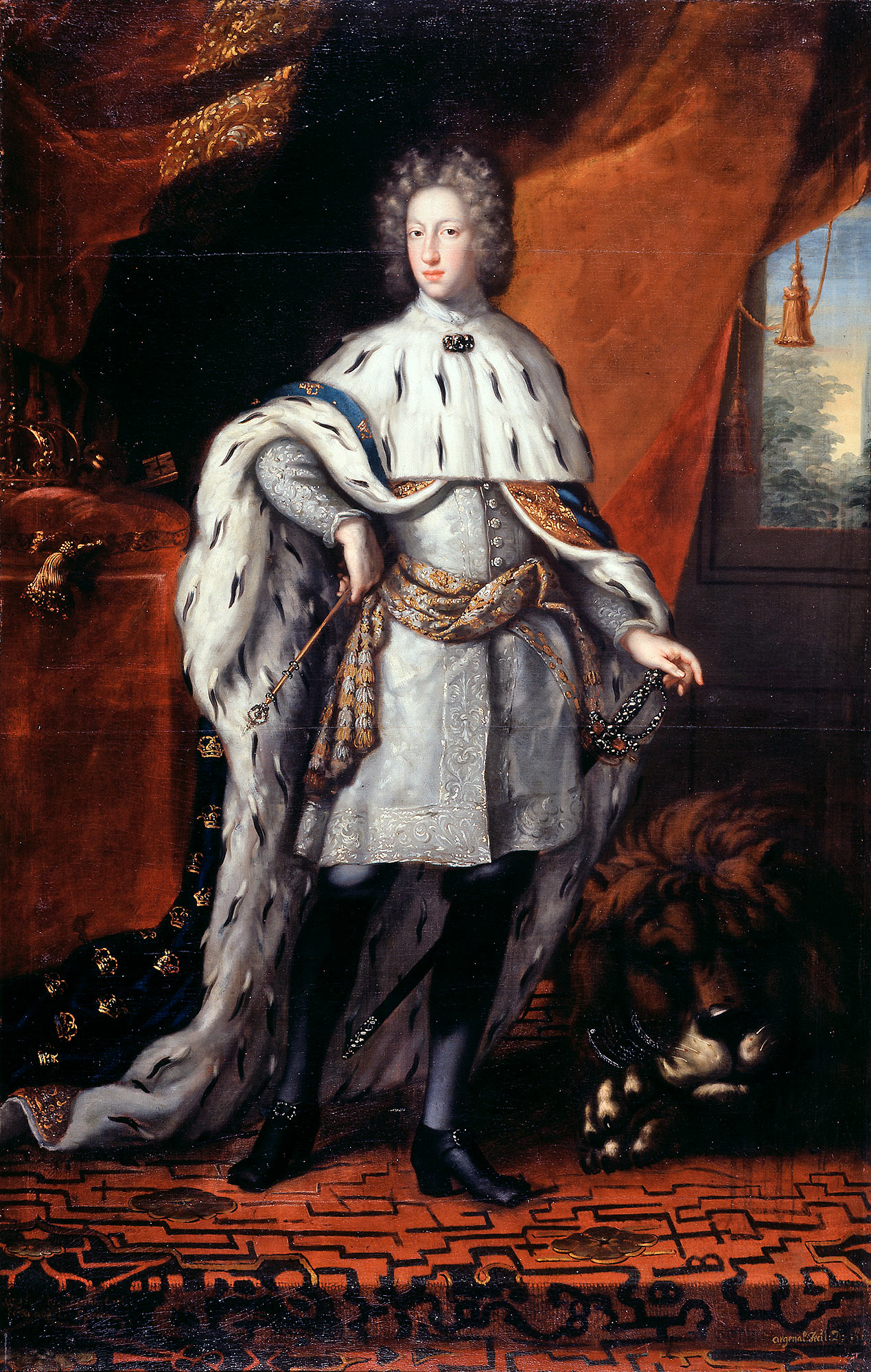
Charles XII
In the
spring Charles decided to move south, nearer to where he could expect to meet
up with the reinforcements from Poland. His aim was to take the town of Poltava; the Russians had spent
the winter reinforcing the defences. The wooden walls were defended by 91
cannon, 4,182 soldiers and 2,600 armed townsmen.
‘Charles…..had not laid
aside the design, or hopes of penetrating as far as Moscow. Towards the end of
May he went to lay siege to Pultawa, upon the river Vorsklat, on the borders of
Ukrainia eastward, abut thirteen long leagues from the Borysthenes, where the
Czar had made a magazine. If the King took it, it would open him the road to
Moscow.’[vi]
The Swedes commenced
the siege of Poltava on 1st May, but were short of gunpowder. This
led to Charles ordering a halt to the bombardment on the first day and
thereafter only five shots a day were to be fired. This order confused his
senior staff and Rehnskjold observed;
‘The King wishes to have a
little amusement until the Poles come.’[vii]
The siege
continued for six weeks and the besiegers ran short of food; having already
stripped the region; the only food available was horsemeat and black bread. The
seriously low supplies of gunpowder were deteriorating and musket balls were so
scarce that foraging parties were sent to collect stray Russian balls.
The Russians
inside Poltava were able to communicate with Menshikov[viii], by means of firing
hollow cannonballs into and out of the town over the river. At the end of May
Menshikov’s cavalry were joined by Sheremetev and his infantry. The commander
of Poltava informed them that his supplies of gunpowder were dangerously low
and that the Swedes had completed their undermining of the walls.
Peter
arrived on 4th June, much to the relief of his generals, who were
unwilling to act without him. The Russians had twice the strength of the Swedes
and another army waiting across Charles’s line of retreat back to Poland. On 17th
June[ix], while inspecting the
river defences, Charles was shot through the foot; the bullet entering his heel
and exiting via his big toe.
‘When the King, having rode
into the river to take a nearer view of some f the works, received a shot from
a carbine, which pierced through his boot, and split in pieces a bone of his
heel’[x]
Charles continued his inspection and, when the wound was inspected, it was
discovered that several bones had been smashed. Until now Charles’s soldiers
had always viewed their king as invincible; Charles, realising this, assured
his staff that the wound was slight. But it began to fester. 
Carl Rehnskjold
For two days
from 19th June Charles was close to death; he’d given Rehnskjold
authority for major decision making. Rehnskjold decided not to make the attack
to the north that Charles had been planning.
On hearing
of Charles’s incapacitation Peter ordered his army across the Vorskla River and
the crossing was uncontested. The Swedes offered battle, but Peter did not
choose to accept it; he had gained his point by relieving the pressure on Poltava.
The Battle
And then
Charles discovered that fresh troops from Poland and Stanislaus would not be
forthcoming. He decided to risk all on a battle that would take the Russians by
surprise. He hoped that, in the event of a Swedish victory, the Turks and
Tartars would be happy to join the Swedes in a march on Moscow.
Charles’s
irreplaceable troops were being killed and wounded on a daily basis, in minor
skirmishes. The heat was badly affecting the men and food and artillery
supplies were extremely low.
On the 26th
Peter established a camp only four miles north of Poltava and the troops threw
up earthworks. On the same day Peter issued a proclamation to his army;
‘Soldiers: the hour has
struck when the fate of the whole Motherland lies in your hands. Either Russia
will perish or she will be reborn in nobler shape. The soldiers must not think
of themselves as armed and drawn up to fight for Peter, but for stardom,
entrusted to Peter by his birth and by the people.’[xi]
The
following day the greatly diminished Swedish army[xii] prepared to give battle
to an army 42,000 strong. Charles ensured that 2,000 infantrymen were left at Poltava,
to stop the garrison attacking their rear, resulting in 19,000 men facing the
enemy.
‘The King conducted the
march, carried in a litter at the head of his foot. A party of horse advanced
by his order to attack that of the enemy. The battle began with this engagement
at half an hour after four in the morning.’[xiii]
The Swedish
senior officers were at loggerheads; Rehnskjold[xiv] did not get on with
Piper, nor did he like Lewenhaupt[xv]. Charles’s plans, as
agreed with Rehnskjold, were not communicated to Lewenhaupt, as Rehnskjold
could not even bear to speak to his deputy.
‘He [Charles] ranged what troops
were left him in two lines; his foot were posted in the center, and his horse
made up the two wings. The Czar disposed his army in the same manner; he had
the advantage of numbers, and of seventy cannon, whilst the Swedes had no more
than four, and began to want powder.’[xvi]

The Battle of Poltava
The poor
relations between the Swedish commanders continued to cause problems, and the
Swedish line was broken. Peter, conspicuous by his height was hit three times,
but was not wounded[xvii]. Rehnskjold was taken
prisoner; 21 of Charles’s 24 litter bearers were cut down by a Russian barrage.
Charles was taken from the field on a horse belonging to one of his officers.
By noon the
survivors from the battle had been collected together and the tattered remnants
of the Swedish army limped into camp; Mazeppa’s men were posted to ward off
Russian pursuit. Meanwhile Peter had attended a battlefield service of thanks
for his victory and dined.
The Russian
losses were relatively slight[xviii], even so the
disorganised infantry did not pursue the retreating Swedes. After dinner Peter
questioned the Swedish officers, including Rehnskjold, politely and with
consideration. During the afternoon Count Piper too was brought in and seated
next to Peter. That evening Peter wrote to his wife;
‘I declare to you that the
all merciful God has this day granted us an unprecedented victory over the
enemy. In a word, the whole of the enemy’s army is knocked on the head.’[xix]
The balance
of power in Europe had permanently shifted. The courts of Europe had
confidently expected to hear of a Swedish victory and the installation of a
puppet Czar in Moscow. Now a new power had to be taken in consideration.
Surrender
During the
afternoon the stragglers and wounded struggled into the Swedish camp; where the
decision was made to leave before the Russians regrouped and wiped out the
21,000 Swedes and Cossacks now left to Charles. The only road open to the defeated
army was south. 
Vorskla River
Reaching the
junction of the Vorskla and Dnieper rivers the bedraggled army found there were
too few boats to ferry them across before the Russian pursuit could catch up.
Charles was persuaded to escape. As a prisoner Charles would be a liability to
the Swedes in any peace negotiations. It was decided to take the wounded and
Mazeppa’s Cossacks with Charles and his household staff across the steppes and
the Bug River to take sanctuary in the Ottoman Empire.
On the 9th
July Charles crossed the border, there were insufficient boats to carry all the
men under his command across the river and 600 Swedes and Cossacks were
captured by the pursuing Russians.
The
remainder of the army, under Lewenhaupt’s command, turned north. The next
morning the disgruntled, tired and fractious troops came face to face with
Russian troops under Menshikov. On the morning of July 1st the
Swedes surrendered. The Swedes were made prisoners of war, but the 5,000
Cossacks who remained were hunted down and hung.
Bibliography
Natasha’s
Dance – Orlando Figes, Penguin Books Ltd 2002
Russia and
the Russians – Geoffrey Hosking, The Penguin Press 2001
Peter the
Great – Robert K Massie, Abacus 1992
The History
of Charles XII of Sweden – Mr de Voltaire, C Davis & A Lyon 1732
[i]
The History of Charles XII of Sweden – Voltaire
[ii]
Peter the Great - Massie
[iii]
Charles’ senior civilian adviser
[iv]
Peter the Great - Massie
[v]
Living on a series of islands in the Dnieper River; these Cossacks were
brigands preying on the river traffic
[vi]
The History of Charles XII of Sweden – Voltaire
[vii]
Peter the Great - Massie
[viii]
Menshikov had been ordered to observe the Swedes, but not attack
[ix]
Charles’s birthday
[x]
The History of Charles XII of Sweden – Voltaire
[xi]
Peter the Great - Massie
[xii]
Just over half the numbers that had marched out of Saxony two years before
[xiii]
The History of Charles XII of Sweden – Voltaire
[xiv]
A superior cavalry general
[xv]
After Charles the best infantry commander
[xvi]
The History of Charles XII of Sweden – Voltaire
[xvii]
Once his hat was blown off, another bullet hit his saddle and the third hit an
icon worn on Peter’s chest.
[xviii]
1,345 killed and 3,290 wounded out of 42,000
[xix]
Peter the Great - Massie