Wednesday, 14 May 2014

The First Stuart King - The Wisest Fool in Christendom IV


The Succession
Edward Bruce
In 1601, convinced that an uprising against Elizabeth’s unpopular government was imminent, James sent the Earl of Mar and diplomat Edward Bruce to assist the Earl of Essex in his revolt against Elizabeth. By the time Mar and Bruce reached England Essex was already dead. Bruce and Mar approached Cecil, who made it clear that he backed James as heir to the throne of England.
A secret correspondence was set up between James and Cecil, who insisted on absolute secrecy.
If Her Majesty had known all I did…..her age and orbity, joined to the jealousy of her sex, might have moved her to think ill of that which helped preserve her.’[i]
James required that Cecil work with two Englishmen that he trusted; Lord Henry Howard[ii] and the Earl of Worcester[iii]. Cecil organised Worcester’s elevation to the Privy Council in the summer of 1601; alongside came the Earl of Shrewsbury[iv] and Sir John Stanhope[v].

Cecil worked to train James in the art of ruling England; while his mistress was declining. Elizabeth said of herself
‘I am not sick, I feel no pain and yet I pine away.’[vi]
On 24th March 1603 Elizabeth died in her 70th year never having nominated a successor for fear that her people would worship the rising sun rather than the setting one. A scramble northwards on the part of politicians and courtiers began.

A Hard Act to Follow
Three hundred knighthoods were sprinkled about those who had rushed north to inform the new king of Elizabeth’s death and James now travelled down to his new kingdom;

‘Like a poor man wandering about forty years in a wilderness and barren soil and now arrived at the land of promise.’[vii]
James visited the mansions of the English nobility as he travelled south. He did not appreciate the crowds and his indifference to ceremonial and his impatience became subjects of public gossip. The contrast with Elizabeth, who was well aware that her subjects needed an object of devotion, was marked. Anne on the other hand was made for the cheering English;

‘With great mildness……never leaving [off] to bend her body this way and that, that men and women wept for joy.’[viii]
James was able to indulge his taste for hunting in new surroundings and later in his reign would be accused of neglecting affairs of state to gratify this passion.

Ludovic Stuart
There was also the inevitable issue of money; the Crown was heavily in debt and James was not good with money. James was handing out pensions and grants of money with abandon; one recipient being Ludovic Stuart[ix], the second Duke of Lennox.
The English parliament was a very different kettle of fish to the Scottish parliament that James was used to. Parliament laid claim to controlling the grants of money to the Crown. The Puritan members had already started flexing their muscles in the dying years of Elizabeth’s reign and the Millenary Petition[x], demanding a return to purer forms of religious ceremony, was handed to James en route for London[xi].

Plotting Against the King
James did have one peerless servant; the incomparable Cecil who was made Baron Cecil on 20th August[xii]. Another servant was Lord Henry Howard[xiii], an exceptionally avaricious noble who joined with Cecil in intriguing against Sir Walter Ralegh[xiv] and Lord Cobham. Cecil had already blackened their names to James long before he became king of England. His antipathy was well known; Sir John Harington wrote to John Still, Bishop of Bath and Wells

‘I much fear for my Lord Grey[xv] and Ralegh……..Cecil doth bear no love to Ralegh as you well understand.’[xvi]
Lord Cobham
In July 1603 Ralegh and Cobham were arrested for plotting to replace James with his cousin Arbella. The plot had been uncovered during the investigations into the Bye Plot, a Puritan and Catholic conspiracy aimed at increasing religious toleration and removal of some of the king’s ministers. The Bye plotters intended to kidnap James while he was still en route to London.
The Bye plot was exposed by three of the plotters John Gerard and Henry Garnet[xvii] and George Blackwell[xviii]. Cecil was already aware of the plotting and the main conspirators were arrested and questioned and tried under the auspices of Sir John Popham[xix]. Ralegh and Cobham’s fall from grace ended with a thirteen year stay in the Tower of London; a number of the Bye plotters were executed. And by an edict on 22nd January 1604 James ordered that all Roman Catholic clergy leave the kingdom by 19th March.

Church and State
At the Hampton Court Conference, convened in January 1604, James met with leading Anglican clerics and Puritans. Always one for the middle way, James was pleased to be able to agree with all but the more extreme Catholics and Puritans. The most significant result of the conference was the commissioning by James of an authorised version of the bible, known as the King James’ Version[xx].
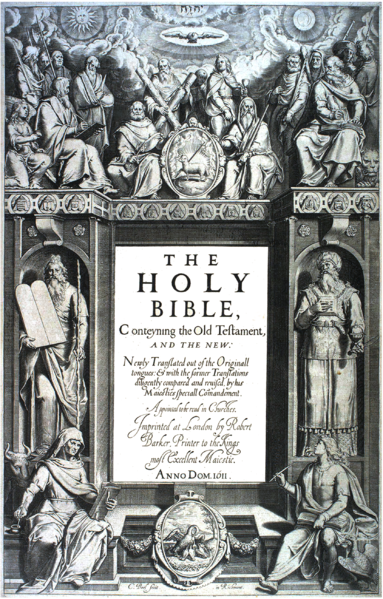
The conference ended without the extreme Puritans getting what they wanted and James declared;
‘I shall make them conform themselves, or I will harry them out of the land.’[xxi]
And thereafter the Puritans came to be identified with the party of dissent, even as James’ political opponents leaned towards Puritanism.

Not long after the conference the Archbishop of Canterbury, John Whitgift died and James appointed the anti-Puritan Richard Bancroft[xxii] in his place. It was Bancroft who oversaw the production of James’ new bible.
James was not anti-Catholic and told Cecil that;

‘I will never allow in my conscience that the blood of any man shall be shed for diversity of opinions in religion.’[xxiii]
Cecil was not prepared to allow the relaxation of the laws that the Catholics were expecting from James. Instead stricter measures were enacted against priests and recusants.
Remember, Remember the Fifth of November

Despite its resonance down the ages, the Gunpowder Plot was hardly a well planned conspiracy. The plotters wanted England ruled by a Catholic monarch but were unable to gain the interest or support of Philip III of Spain, nor of the Governors of the Spanish Netherlands, Philip’s daughter Isabella and her husband Albert.
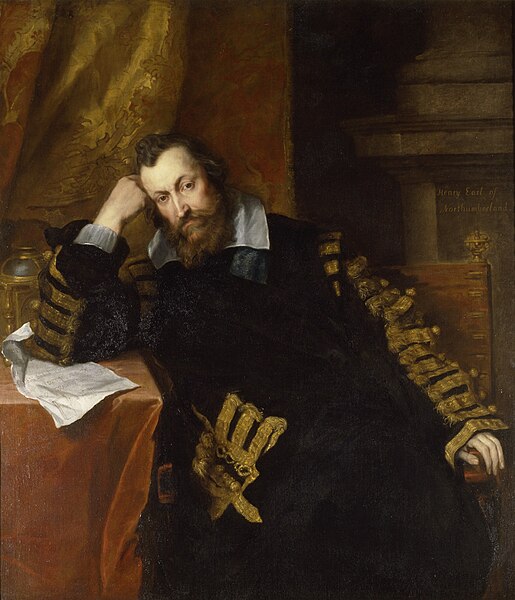
Earl of Northumberland
From relatively early on Cecil was aware of the plotting and he planned to use it to ensure that he remained essential to James, to crush Jesuit activity in England and to bring down the Earl of Northumberland[xxiv], a Catholic sympathiser[xxv].
The plot was organised by the charismatic Robert Catesby, who decided that the best way to rid the world of the moderate James was to blow up parliament when it met. James was to be replaced by his infant daughter Elizabeth. Catesby’s tool, the not so bright Guido Fawkes,  was tasked with the mechanics of the projected explosion.

The anonymous note sent to Lord Monteagle, warning him to stay away from the opening of parliament, was probably written at Cecil’s direction by forger Thomas Phelippes[xxvi]. The search of the undercroft at the palace of Westminster produced Guido Fawkes.
Lord Mounteagle
James reaction to the plot was one of a man who in youth had worn padded doublets to foil an assassin’s knife; he compared this plot with the Gowrie conspiracy;
‘I may justly compare these two great and fearful doomsdays[xxvii] werewith God threatened to destroy me…….thereby to teach me that it was the same devil that still persecuted me, so it was one and the same God that still mightily delivered me.’[xxviii]
Once James had calmed down he demanded an Oath of Allegiance, which required that all Catholics who attended Anglican services should also take the sacrament. But he was more interested in the power secular and that the Catholics should recognise him as their sovereign and repudiate the right of the Pope to depose heretical monarchs.

Bibliography

The Early Stuarts – Godfrey Davies, Oxford University Press 1987
The Gunpowder Plot – Antonia Fraser, BCA 1996

King James – Antonia Fraser, BCA 1974
Robert Cecil – Alan Haynes, Peter Owen Publishers 1989

After Elizabeth – Leanda de Lisle, Harper Perennial 2006
www.wikipedia.en


[i] After Elizabeth – de Lisle
[ii] Younger brother of the Duke of Norfolk executed in 1572
[iii] Leader of the English Catholics
[iv] Arbella Stuart’s uncle
[v] An enemy of Shrewsbury following a dispute over river rights on the Trent
[vi] King James - Fraser
[vii] King James - Fraser
[viii] Ibid
[ix] Son of James’ reputed lover Esmé Stuart
[x] Allegedly signed by 1,000 members of the clergy
[xi] Possibly at the home of Oliver Cromwell, uncle of the Cromwell who was to become Lord Protector of England
[xii] The following year he was made Viscount Cranborne and in 1605 was made Earl of Salisbury
[xiii] Made Earl of Northampton the following year
[xiv] Cecil’s brother-in-law
[xv] Involved in the Bye plot
[xvi] After Elizabeth – de Lisle
[xvii] Both Jesuits; Garnet was a major player in the Gunpowder Plot
[xviii] Archpriest of England; he died in 1613 in the Clink
[xx] Which stayed in use in Anglican churches until the 1960s when it was replaced by the New English Bible
[xxi] King James - Fraser
[xxii] Formerly Bishop of London
[xxiii] Robert Cecil - Haynes
[xxiv] The aristocratic Henry Percy looked down on the nouveau riche Cecil; suspected of being a plotter Percy was imprisoned in the Tower for 17 years and was fined £30,000, to compare the value of a £30,000 0s 0d Income or Wealth , in 2011 the relative historic standard of living value of that income or wealth is £5,404,000.00 economic status value of that income or wealth is £156,800,000.00 economic power value of that income or wealth is £1,124,000,000.00 www.measuringworth.com  
[xxv] It was fairly standard practise in Elizabethan times for the government to assist plotters on to their destruction
[xxvi] Spy, forger and cryptographer who worked on the Babington plot
[xxvii] Both taking place on Tuesday and the 5th of the month
[xxviii] King James - Fraser

Wednesday, 7 May 2014

The First Stuart King - The Wisest Fool in Christendom III


Marriage
Frederick II of Denmark
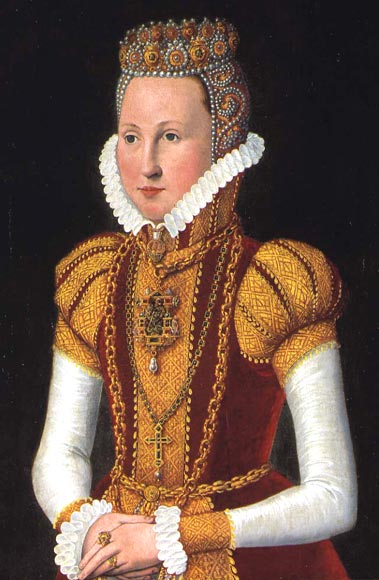
Although James did not enjoy the company of women, perhaps the dour Lady Mar had put him off, he knew that it behoved him to marry and produce children. He said of his bachelorhood;
‘This my nakedness made me to be weak and my enemies strong, and the want of succession bred disdain.’[i]
The English party in Scotland were desperate to avoid a marriage with France and been pushing for James to marry one of the two daughters of Frederick II of Denmark and his wife Sophie of Mecklenburg-Güstrow; the girls had the advantage of being Protestant. Another prospect was Arbella Stuart[ii], daughter of the Earl of Lennox and a possible rival claimant to the throne of England.

In the event James chose Anne, the 14 year old princess of Denmark who came with a very useful dowry of £150,000[iii]. When Anne became marooned in the winter snows in Norway en route to her new home, James travelled to Oslo to meet her, he wrote a poem for her;
‘The seas are now the bar

Which make us distance far

That we may soon win near

God grant us grace.’[iv]
Queen Consort of Denmark
Anne and James had to converse in French, while James spoke to the Norwegians in Latin. The wedding was performed in Oslo and James travelled to Denmark with Anne where they over wintered following a second wedding. The couple arrived in Scotland on 1st May 1590.
Anne’s coronation was a source of conflict; the Kirk wished to purge the ceremony of all Catholic rituals, in particular the anointing. But James was adamant on this point; for him the anointing reflected his view that kings were kings by the grace of God, not the people. A witness recorded that;
‘The Countess of Mar went up to the queen and bared a little of the queen’s right arm and shoulder. Robert Bruce[v] immediately poured the queen’s oil onto her bare arm and shoulder.’[vi]
Anne had been promised that she could freely exercise her Lutheran religion, but the Kirk was to pressurise her to accept their version of Protestantism. The Kirk was much dismayed to discover that Anne loved dancing and she encouraged the Scottish court to become more formal.

Anne's coat of arms as Queen Consort of Scotland
James was happy to encourage Anne and he indulged her love of clothes and jewellery. In return Anne joined him on his hunting expeditions. He called her ‘my Annie’. Anne quickly learnt to write and speak Scots and by the age of 18 had become politically active. Her friends were not James’ friends, but James was prepared to listen to Anne’s opinions even if he did not agree with her.
By the Pricking of My Thumbs

The Danish admiral, who escorted the Queen on her journey to Scotland, blamed the storms that marooned them in Norway on the wife of a Copenhagen burgess, with whom he had quarrelled. She confessed under torture that she was a witch and was burned in September 1590. In Denmark James was introduced to new European beliefs on witches and he used these in his treatise Daemonologie[vii] that he later published in support of persecuting witches. 
The Kirk had long been interested in searching out witches and covens but until his return from Denmark had been unable to interest James in the hunt. All that changed when a coven was unearthed in Berwick which was allegedly planning to kill the king.

‘That another might rule in his Majesty’s place and the government might go to the Devil.’[viii]
Francis Bothwell[ix] was reputed to be involved in this Demonic pact. The witches had cast cats and dead body parts into the sea to raise storms while James was sailing to meet Anne. James attended the trials and was amazed to discover that the witches knew of conversations between himself and Anne in Norway; a wave of persecution followed.

16th century
Bothwell was incarcerated in Edinburgh castle but escaped and, on 27th December 1591 with an unruly bunch of followers, bearded James at Holyrood; James was saved by Edinburgh’s citizens. Bothwell managed to escape again and in 1592 the Scottish Parliament forfeited Bothwell’s lands and possessions[x].
Children
Prince Henry was born in February 1594 and Anne was shocked to discover that the child was to be brought up at Stirling Castle by the Earl of Mar, who would become Regent in the event of anything happening to James. He told Anne;

‘If some faction got strong enough, she could not hinder his boy being used against him, as he himself had been used against his unfortunate mother.’[xi]
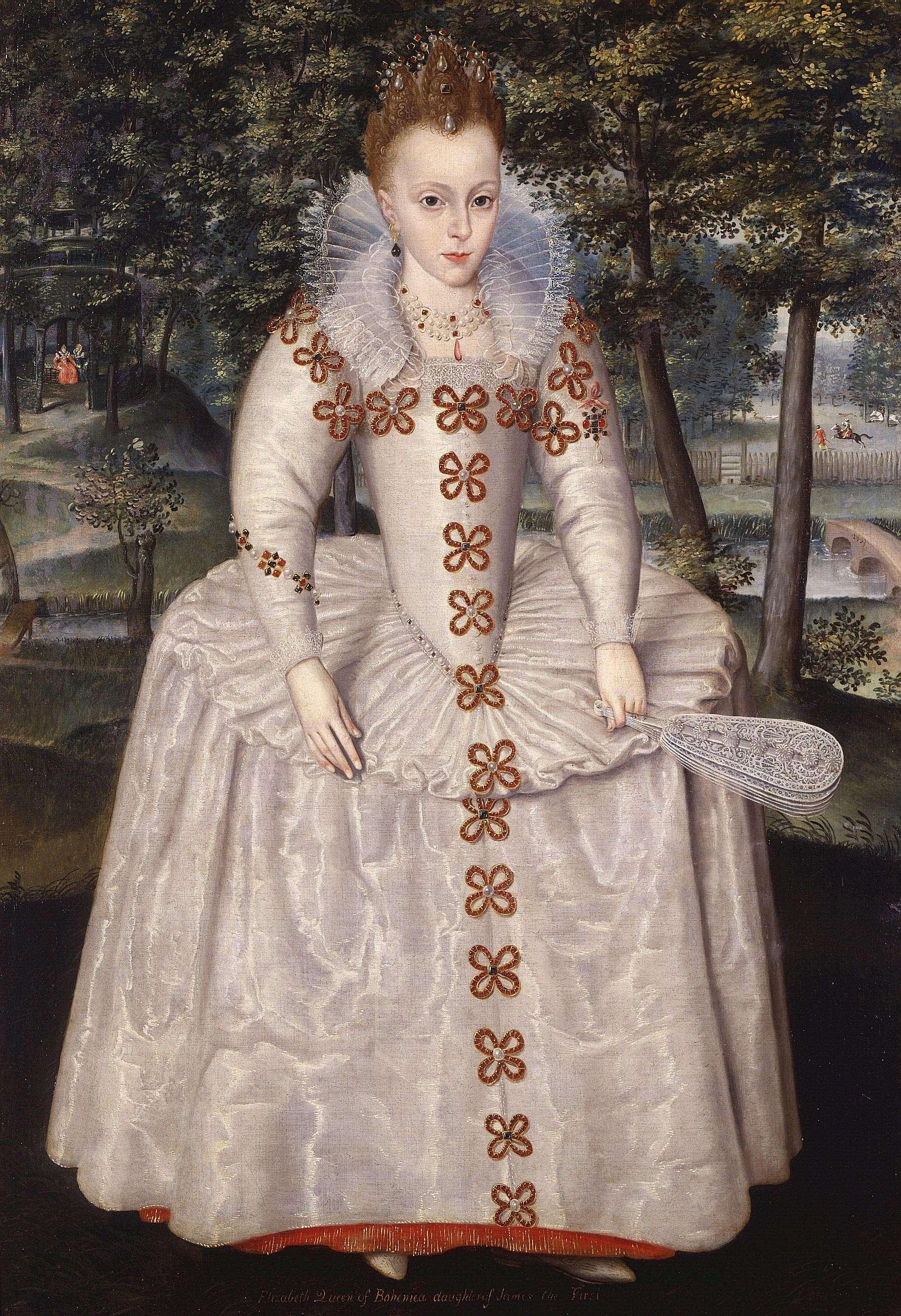
Elizabeth age 7
In August 1596 Anne gave birth to Elizabeth who had as her sole Godmother the Queen of England. Elizabeth was sent to live with Lord and Lady Livingstone along with her younger sister Margaret who died at the age of two in 1598. Prince Charles was born in November 1600 and the sickly child was placed under the care of Lord Fyvie, one of James’ friends.
Robert was born in January 1602 but died four months later. There were two further children; Mary born in April 1605. Mary’s birth was celebrated throughout England as she was the first child born to a reigning English monarch for 68 years. Mary died in 1607, and finally there was Sophia born in June 1606 and lived one day. She was buried in Westminster Abbey in a cradle shaped tomb.

Over the years the marriage gradually changed and the initial love between James and Anne died. As Godfrey Goodman, Bishop of Gloucester said;
‘They did love as well as man and wife could do, not conversing together.’[xii]
But Anne and James did feel a companionship towards one another, despite their disparate tastes.

The Throne in Peril
Earl of Essex
In 1599 James was deeply concerned that his premier place as successor to Elizabeth was in peril. His main supporter at the English court, the Earl of Essex, was in prison[xiii]. And the previous year James had been accused of arranging an attempted assassination of Elizabeth by an English Catholic.
In 1585 a statute was enacted to bar those who plotted against the monarch from inheriting the throne[xiv] and James feared that Robert Cecil[xv] had manufactured the confession. Elizabeth told James that she believed in his innocence but would not state this assertion publicly. James was ready to turn to arms and aid Essex’s supporters. James was

‘Not certain how soon he should have to use arms but whenever it should be, he knew his right and would venture crown and all for it.’[xvi]
To fund the army James had to raise taxes and debase the coinage; unpopular moves. There was also the chance that the Kirk, angry at James’ proposals to reintroduce bishops, would take advantage of the growing public anger.

The Master of Grey wrote to Cecil;
‘There was in men’s breasts such a desire of reformation that nothing lacked save one gallant man for uniting grieved minds.’[xvii]
The ministers of the Kirk had already settled on the young Earl of Gowrie[xviii] who travelled to England, arriving at court on 3rd April 1600. The young Gowrie met with Cecil and Elizabeth before returning to Scotland in May, where he immediately joined the opposition to raising taxes.

On 5th August he and his brother Alexander were dead; James said that Alexander lured him to Gowrie House claiming that his brother had captured a man carrying a large amount of gold. James was separated from his men and Alexander attempted to stab James who called for help. In the ensuing mêlée Alexander and Gowrie were killed.
Robert Bruce refused to accept the king’s account making it clear his belief that James had plotted to kill the two brothers because he hated the family or because Anne was having an affair with Alexander. James was most displeased;

‘I see, Mr Robert, that ye would make me a murderer. It is known very well that I was never blood-thirsty. If I had taken lives, I had causes enough; I need not to hazard myself so.’[xix]
Bruce was sent into exile and the Ruthven sisters were thrown out, over Anne’s protests when James returned home. James asked Elizabeth to exile the two remaining Ruthven brothers, both schoolboys, and she did so.

Bibliography
The Early Stuarts – Godfrey Davies, Oxford University Press 1987

King James – Antonia Fraser, BCA 1974
Arbella – Sarah Gristwood, Bantam 2004

Robert Cecil – Alan Haynes, Peter Owen Publishers 1989
Walsingham – Alan Haynes, Sutton Publishing 2004

After Elizabeth – Leanda de Lisle, Harper Perennial 2006
Bess of Hardwick – Mary S Lovell, Abacus 2006


[i] King James - Fraser
[ii] Granddaughter of Bess of Hardwick her daughter Elizabeth married Charles Stuart, Earl of Lennox
[iii] In 2011 the relative: historic standard of living value of that income or wealth is £34,010,000.00
economic status value of that income or wealth is £1,248,000,000.00 economic power value of that income or wealth is £9,922,000,000.00 www.measuringworth.com
[iv] King James - Fraser
[v] A Privy Counsellor Bruce had helped keep the peace during James’ absence
[vi] After Elizabeth – de Lisle
[vii] Published in 1597
[viii] King James - Fraser
[ix] Earl of Bothwell, Lord High Admiral and Privy Counsellor. Francis was James’ cousin and Bothwell’s nephew
[x] Bothwell eventually died in exile in Naples in 1612
[xi] After Elizabeth – de Lisle
[xii] King James - Fraser
[xiii] For interrupting the queen as she was dressing
[xiv] Aimed at Mary
[xvi] After Elizabeth – de Lisle
[xvii] Ibid
[xviii] Three of his sisters were ladies in waiting to the queen and his brother Alexander was a favourite of both James and Anne.
[xix] After Elizabeth – de Lisle