Wednesday, 8 October 2014

The Ottoman Empire - Mehmet the Conqueror V


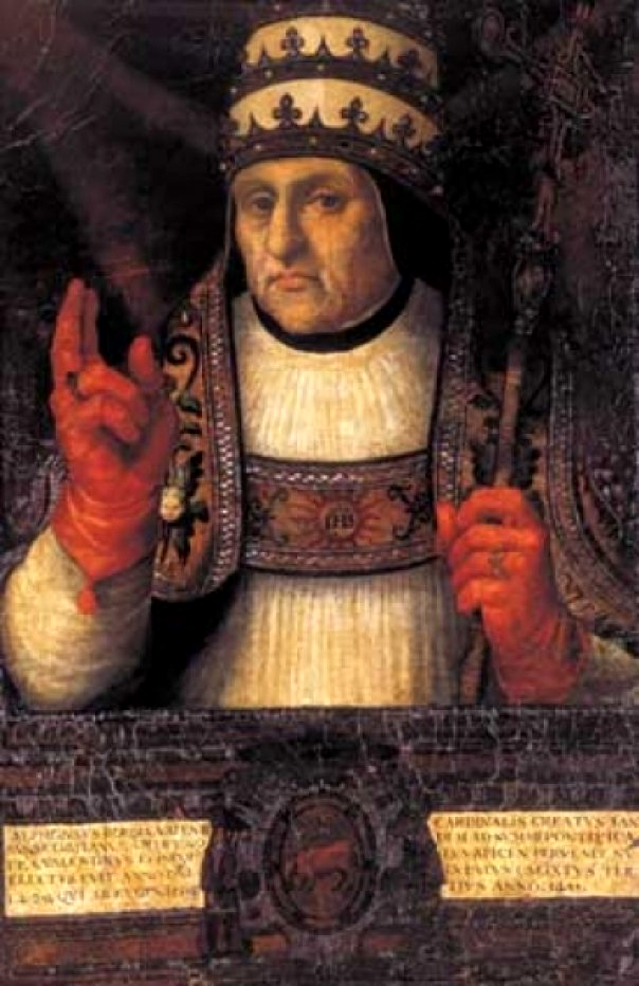
Calixtus III
More Trouble in the Balkans
In 1451 Durad Branković seized the Kruševac region, with the assistance of the Hungarians; Mehmet was determined to undermine Hungarian influence in the Balkans; but his first attempt ended in failure. The Pope, Calixtus III[i], called for another crusade against the Turks and set 1st March 1456 as the date for departure for;

‘All the Christian princes and peoples’[ii]
for a holy war. Calixtus was the owner of a slave who was allegedly one of Mehmet’s brothers; smuggled out of Adrianople when their father died. Bayazid Osman[iii] was baptised and the Pope planned to use his pawn in the event of a Christian victory over the infidel.
At a diet in Buda a Franciscan monk, Giovanni da Capistrano[iv] presented the Pope’s appeal and on 6th April the assembly decided to march against the Turks. The following day they received notice that the Ottomans were already on the warpath.
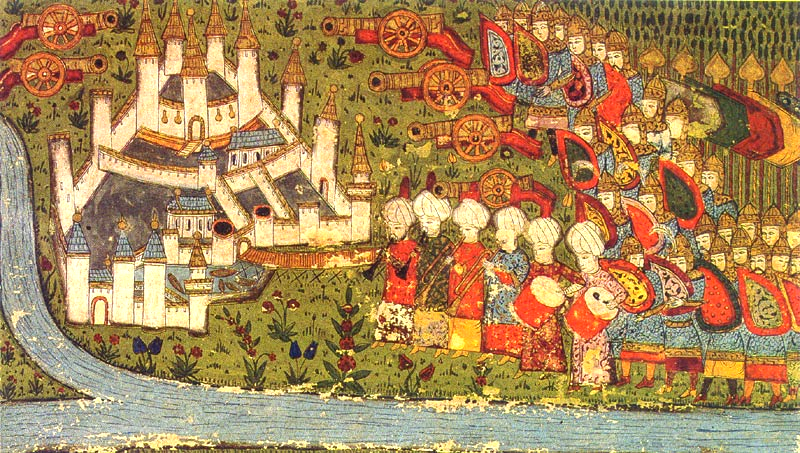
Siege of Belgrade
July 1456 saw the siege of Belgrade; Mehmet assembled a force of some 150,000 men and a flotilla of light vessels which sailed up the Danube. The heavy artillery was sailed up too, while the lighter guns were constructed on site, mostly by imported western labour. Upstream of the fortress Mehmet placed a boom of boats chained across the river, but Hunyadi’s boats were able to outsail the clumsy Turkish boats.
Following an unsuccessful assault on 21st July; the following day after a five hour battle Mehmet’s troops were routed, despite Mehmet taking part in the fighting. Large amounts of guns, ammunition and supplies fell to the jubilant defenders. Mehmet’s troops retreated; not long thereafter a plague swept over the lands, leaving Hunyadi as one of its victims.
The Aftermath
Mehmet stayed in Adrianople while a new palace was built in Istanbul. During a break from campaigning and no doubt marshalling his resources following the Belgrade debacle, in 1457 Mehmet had his two young sons Bayezid and Mustafa circumcised. The ceremony took place before an assembly of foreign ambassadors and men of religious, legal and literary distinction from all over the Ottoman empire and was followed by four days of celebration.
Lazar Brankovic
Durad Branković died in May 1457 and his daughter Mara, fearful of her brother Lazar, fled to her stepson’s court[v]. Mehmet launched an expedition into Serbia in 1458 following the death of Lazar and the failure of a pro-Ottoman revolt. As Mehmet was campaigning in the Peloponnese, the expedition was led by Mahmut Pasha, whose brother had been taken prisoner during the revolt and handed over to the Hungarians. The Ottomans took a number of towns in an inconclusive campaign.
The following year saw another campaign in Serbia; Mehmet captured the town of Smederevo on 20th June 1459 and all the fortresses of northern Serbia surrendered to the invaders. By the end of the year all of Serbia was under Ottoman rule and some 200,000 Serbians were enslaved. Bosnia was taken in 1463 and northern Albania was finally subdued in 1469.
In 1454 the Ottoman fleet sailed into the Black Sea and compelled all the Genoese colonies and the Comnene kingdom of Trebizond and Moravia to pay tribute. Mehmet established the Danube as a border for his empire, refusing to allow any foreign state to establish a foothold in the Balkan peninsula below the Danube.
Another Crusade Against the Infidel
Cardinal Trevisano
A fleet of sixteen galleys, commanded by Cardinal Ludovico Trevisan, sailed from Naples on 6th August 1456; the Pope hoped that this would be the first step in a campaign to recover Istanbul for Christendom. Trevisan captured Lemnos, Samothrace and Thasos in the northern Aegean. In the following August the crusaders defeated the Ottoman navy off Lesbos[vi] capturing twenty five Turkish ships. This did nothing but irritate Mehmet who soon retook the area.
August 1458 saw the death of Calixtus and the new Pope was consecrated Pius II on 3rd September. One of his first actions was to call for a fresh crusade against the infidel. The following year at a congress in Mantua the Emperor Frederick III and some of the German princes agreed to provide 32,000 infantry and 10,000 cavalry for the crusade.
On 14th January 1460 Pius II declared a three year crusade against the Turks. He promised plenary indulgences for those who fought or supported those who did. He even promised to fight himself if his health permitted.
Looking  Eastwards
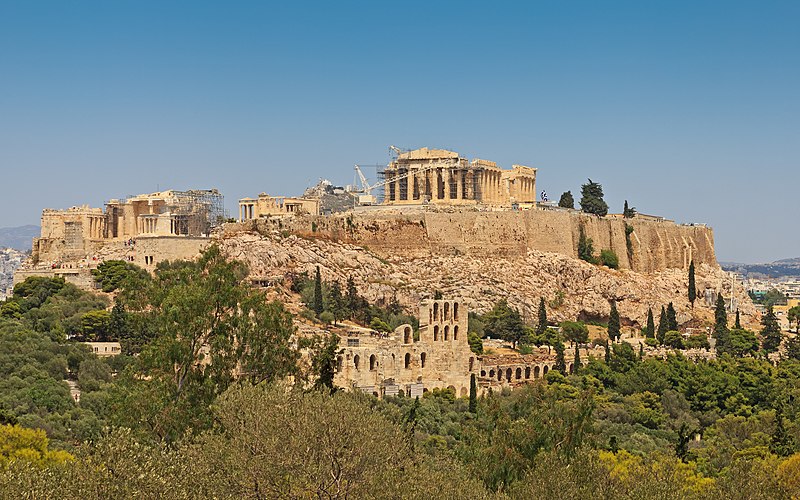
Acropolis
In 1458 Athens surrendered to an army led by Őmer Bey[vii] and Mehmet paid a visit to the city, admiring the Acropolis and treating the Athenians leniently; he confirmed their civil liberties and exemption from taxes and granted privileges to the Orthodox clergy. Mehmet’s journey home was delayed while he visited Negroponte[viii], paying close attention to the fortifications of the strongest Venetian fortress in the eastern Mediterranean.
War broke out in the Morea in 1459 between the two Despots; Thomas, who called in papal forces, and Demetrios Palaeologus who supported the Ottomans. Mehmet decided to intervene; he was determined to leave no-one;
‘Among the Byzantine Greeks who could be named king.’[ix]
The Ottomans
‘Marched straight into Mistra, where the Despot Lord Demetrius was……Demetrius had no alternative but to surrender to the sultan, who took possession of Mistra and imprisoned Demetrius.’[x]
Mehmet allowed Demetrios a pension and he was permitted to live in the palace at Adrianople[xi]. Demetrios’ daughter Helen entered Mehmet’s harem. Thomas fled to Rome where he was taken in as a pensioner of the Pope.
The Towers of Trebizond
Seal of David Comnenos
Having disposed of the Paleaologues Mehmet now turned his attention to the Comnene kingdom of Trebizond. The Emperor David was in alliance with Uzun Hassan, a Turcoman prince, against Ottoman rule. In 1461 Mehmet launched an expedition that captured Amastris[xii] ; two thirds of the population were taken into slavery in Istanbul. Then Sinope fell to him by negotiation.
The Ottomans marched into Uzun’s lands and Uzun and his men retreated eastwards. Uzun’s mother Sarai attended on Mehmet bearing gifts and agreed to a treaty whereby Uzun was bound not to aid the Comnenes. When Sarai asked Mehmet to not attack Trebizond he replied;
‘Mother the sword of Islam is in my hand.’[xiii]
The Turkish fleet, under Kasim Pasha, besieged Trebizond, but it was not until the army under the command of Mahmud Pasha[xiv], the Grand Vizier, appeared before the walls that David, who was no warrior, agreed to leave. The army’s delayed appearance was caused by the problems of marching through the Pontic Mountains.
‘We marched in great force and with great effort to Trebizond, not just the army, but the Sultan himself; first because of the distance; second because of the harassment of the people; third hunger; fourth because of the high and great mountains and, beside, wet and marshy places. And also rains fell every day so that the road was churned up as high as the horses’ bellies everywhere.’[xv]
Pontic Mountains
Mehmet’s supply wagons got bogged down in the mud and the contents of the wagons were transferred to 800 camels that Mehmet had brought with the army to cover such an eventuality.
David and his family and court officials, his treasure and private possessions were shipped to Istanbul as the Ottomans marched into his city. Sarai was rewarded for her intercession with a pile of jewels. The citizens were enslaved as Mehmet returned to Adrianople to spend the winter.
Within two years David Comnene was back plotting with Uzun and was incarcerated within Mehmet’s new Prison of the Seven Towers, along with his family. And it was there a few months later that all the Comnenes were massacred. Mehmet now could now reign undisputed along almost all the Anatolian coastline of the Black Sea.
Bibliography
The Grand Turk – John Freely, I.B. Tauris and Co Ltd, 2009
The Janissaries – Godfrey Goodwin, Saqi Books 1994
Lords of the Horizons – Jason Goodwin, Henry Holt & Co 1998
The Ottoman Empire – Halil Inalcik, Phoenix 1994
The Ottoman Empire – Lord Kinross, Folio Society 2003
A History of Venice – John Julius Norwich, Penguin Books 1982
The Ottoman Empire – Andrina Stiles, Hodder & Stoughton 1989
www.wikipedia.en


[i] Uncle of Rodrigo di Borgia, later Alexander VI father of the infamous Cesare and Lucrezia
[ii] The Grand Turk - Freely
[iii] (also known as Calixtus Ottomanus and Turchetto), his seal bore the name "Bajsit Ottman Turcorum Emperor" and a crescent moon with four stars. He died in 1496
[iv] Later made a saint
[v] Lazar turned on his mother and she and Mara left for Istanbul in 1457. Mara was offered her own estate at Ježevo which became a haven for exiled Serbian nobles. Mara was allowed influence over the appointment of leaders of the Orthodox Church, the monastery at Mount Athos was in close proximity to Ježevo.
[vi] The island was retaken by the Ottomans in 1462
[vii] Son of Turahan Bey, one of Murad’s commanders
[viii] Now Chalkis
[ix] The Ottoman Empire - Kinross
[x] The Grand Turk - Freely
[xi] Later exiled and died as a monk in 1470
[xii] The last Genoese trading post on the Black Sea
[xiii] The Ottoman Empire - Kinross
[xiv] Promoted to replace Zagan Pasha, after distinguishing himself at the siege of Belgrade; Mahmud had followed Mehmet into temporary exile after Murad took back his throne
[xv] The Grand Turk - Freely

Wednesday, 1 October 2014

The Ottoman Empire - Mehmet the Conqueror IV


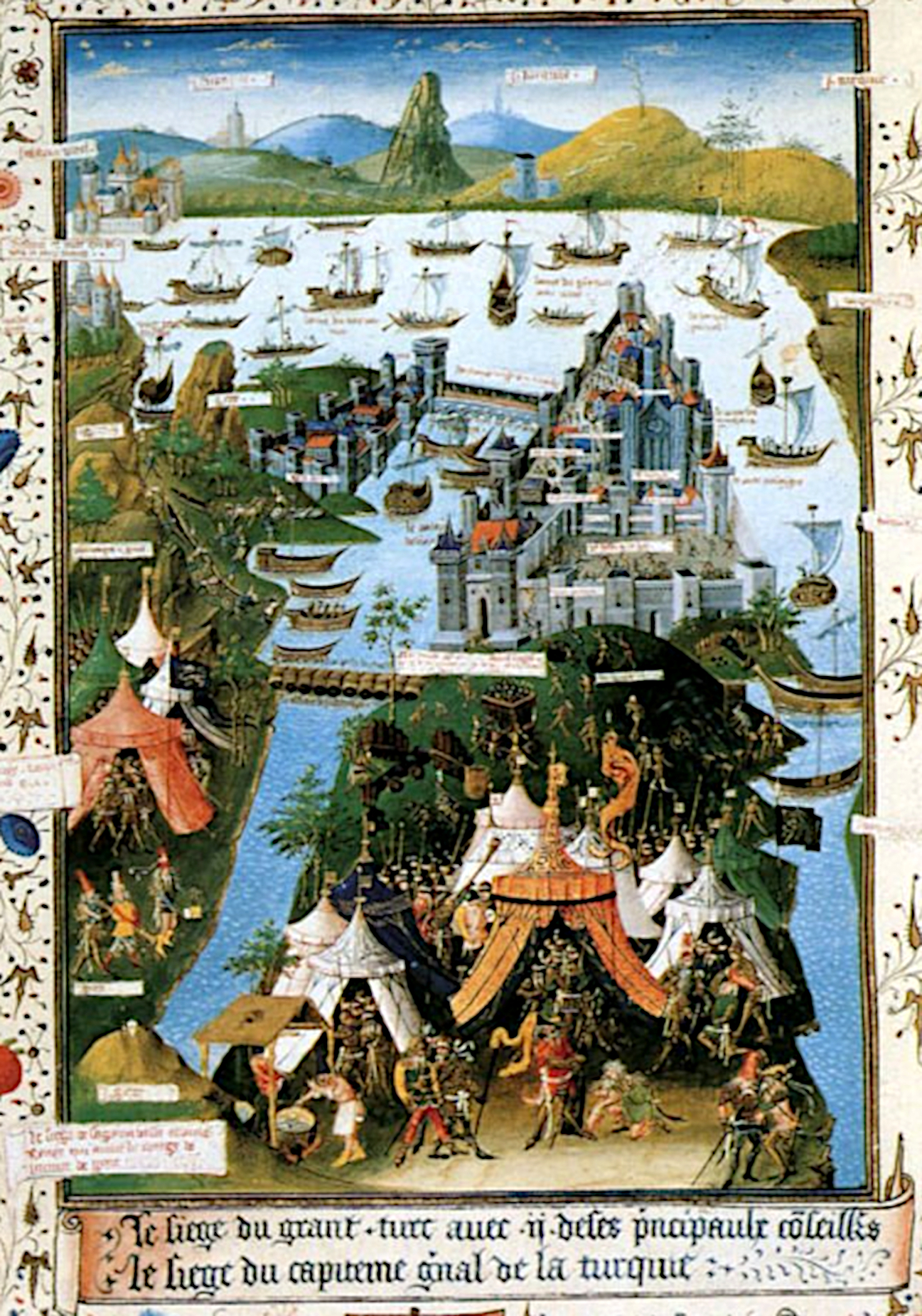
1422 map of Constantinople
Defending the City 
Against the massed might of the Ottoman Empire Constantine could only find 4,983 men to man the twenty kilometres of city walls[i], studded with 110 defence towers and 16 gates. The defenders, included a company of Genoese mercenaries, trusted to the walls to keep the infidel out. The city housed sixty churches but, as Mehmet told his men, Constantinople was;

‘No longer a city, but in name, an enclosure of plants and vineyards, worthless houses and empty walls, most of them in ruins.’[ii]
But the stark reality was emphasised by Mehmet’s demand on 5th March 1453 for surrender of the city. The following day the bombardment started. Orban’s cannon could only fire seven times a day, but each cannonball smashed curtain walls and defensive towers.
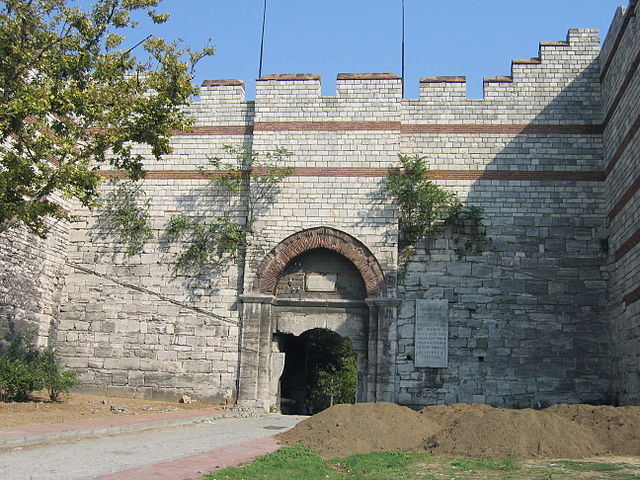
The defenders repaired the city walls each night with a desperation borne from the knowledge that very few had answered the calls for help. A number of Genoese were among those who did venture to Constantinople and Giovanni Giustiniani, who arrived with 700 men, was placed in command of the city walls. Mehmet’s red and gold tent was erected outside the Gate of St Romanus; one of the many gates studding the city walls.
A Battle at Sea
The Turkish navy sailed on the Sea of Marmara , ordered to stop all shipping from reaching the city. The Golden Horn, a natural harbour, was protected by a chain that could be dropped to allow boats inside and the chain was now raised. The commander of the Ottoman navy, one Suleiman Baltoghlu[iii], was ordered to ensure that no relief reached the city from the Marmara side.  A convoy of three galleys, laden with corn, was able to slip inside the boom after a battle that lasted all afternoon. Mehmet was seen on horseback shouting instructions to Baltoghlu, from the water’s edge.


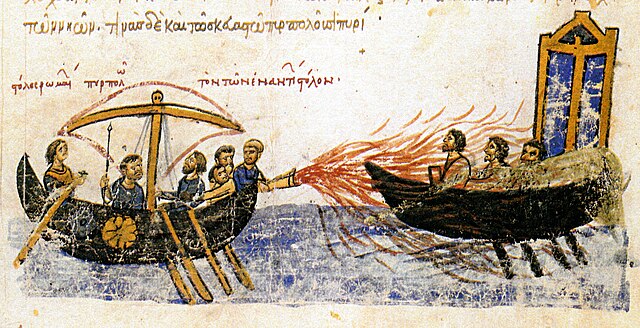
Greek fire in use in a naval battle


Despite the use of Greek Fire[iv], the Christian ships seemed doomed, until a northwards wind allowed their getaway much to the chagrin of the Ottomans. Baltoghlu was sentenced to be executed for his failure until his officers bore witness to his bravery. The sentence was commuted; stripped of all his offices and worldly goods Baltoghlu was sent into exile.

Back to the Wall
Golden Horn
The defenders were unaware for some time of the stratagem that was to bring the deadliest blow to Constantinople. In early April Mehmet had ordered the building of a road from the Bosphorus over the Golden Horn. On the 22nd Mehmet’s engineers used teams of oxen to drag seventy two warships down to the shore of the Golden Horn where their guns were replaced. The Byzantines were;
‘Astounded at the impossibility of the spectacle, and were overcome by the greatest consternation and perplexity. They did not know what to do now, but were in despair.’[v]
An attempt to assault the invading navy was rebuffed with the loss of two of the attacking ships. The ninety sailors were beheaded in full view of the defenders who immediately retaliated by beheading two hundred and sixty Turkish prisoners. But this defiance was to no avail; the Turks now had control of the Golden Horn.

The defenders were subject to infighting between the Venetians and the Genoese, so much so that Constantine was forced to remind them that;
‘The war outside our gates is enough for us.’[vi]
There were those who sought to persuade Constantine to leave the city, he refused saying;
‘It is impossible for me to go away: how could I leave the churches of our Lord, and his servants the clergy, and the throne and my people in such a plight?’[vii]
Attempts were made to undermine the walls, but these failed. Halil persuaded Mehmet to make one last bid for a peaceful solution, but the proposal was rejected. In return Mehmet responded that the only end now for the Byzantines was death or conversion to Islam.
The Fall of Constantinople
Fall of Constantinople
Mehmet ordered an all out assault; the planning of which was undertaken by Zaganos Pasha[viii], on the city for the 29th May 1453. Mehmet promised his soldiers the rights to pillage the city for three days and nights[ix]. The fosse[x] around the city had been filled in over the previous two days; the Monday before the attack was spent in prayer and contemplation, while Mehmet toured the camp offering encouragement to his men.
Three hours before dawn on Tuesday 29th three armies led separate attacks on the walls, where the defenders were succoured by nuns bringing water. The irregulars were the first to be thrown at the walls of Constantinople; Slavs, Hungarians, Kurds, Yörüks[xi], Germans, Italians and Greeks, urged on by whips and maces as the Janissaries closed ranks behind them. They attacked for two hours before being withdrawn and replaced by professional Anatolian infantry, to be replaced in turn by the Janissaries.
Giustiniani was shot at close range through his breastplate and insisted on being carried to his ship, causing much angst amongst the defenders. The Genoese mercenaries fell back in confusion even as Turkish troops ran in through a postern gate left open after a sortie. The Janissaries poured over the walls and through the breaches made by Orban’s cannon.
Many of the citizens made their way in desperation to pray in the Church of Holy Wisdom[xii], where an ancient prophecy said that an angel would appear to beat back the infidel invaders.
‘The whole huge sanctuary was full of men and women…..an immeasurable multitude. And shutting the gate, they stood there fervently hoping for deliverance by the angel.’[xiii]
After the Storm
Gate of Charisius through which Mehmet entered the city
20,000 prisoners, 200,000 ducats[xiv] and the head of Giralomo Minotto, the Bailo[xv] of Venice were taken during the aftermath of the city’s fall.
‘After this the Sultan entered the City and looked about to see its great size, its situation, its grandeur and beauty……..when he saw what a large number had been killed, and the wreckage of the buildings and the wholesale ruin and desolation of the City, he was filled with compassion and repented not a little at the destruction and plundering.’[xvi]
As he intended to move the capital of his empire from Adrianople to Constantinople, Mehmet did not want too much damage to be done to the city’s infrastructure. Inside the Church of Holy Wisdom Mehmet was displeased to find a soldier hacking at the floor. Striking the soldier with a sword, Mehmet informed him;
‘For you the treasures and the prisoners are enough. The buildings of the city fall to me.’[xvii]
Having released the few remaining citizens hiding within the church precincts and letting the priests go free, Mehmet ordered that the church be converted to a mosque. Order was restored after just one day’s looting.
Consolidation
One of Mehmet’s first acts after the fall of the Byzantine capital was to remove the hated Halil Pasha. Halil was replaced by Zagan Pasha, one of his rivals, and was executed on 1st June; just two days after the fall of the city, whose capture he had so often advised against.
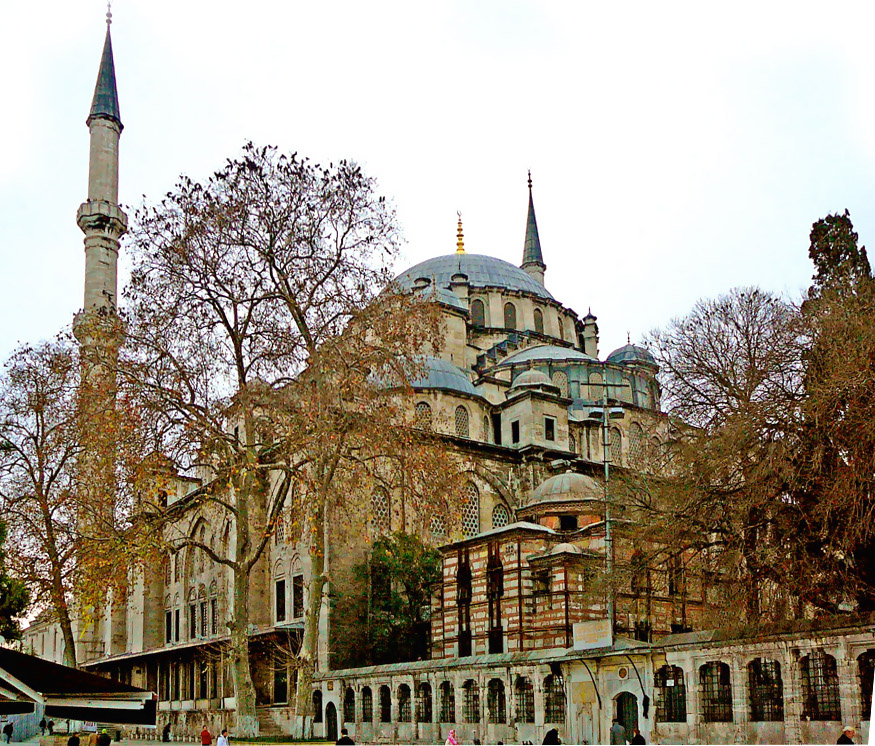
Fatih Mosque
Repairing and fortifying the walls of Constantinople started almost immediately. Mehmet also set in motion the building of the Fatih Mosque, using a Greek architect and built on the site of a church which Mehmet had demolished. Mehmet also laid a foundation stone for the Eyup Mosque. Streets in the city were paved and construction of a new palace[xviii], the Eski Saray[xix], commenced. Mehmet paid close attention to all the new building projects in the winter months between campaigns.
Mehmet, never popular with his Janissaries, now adopted his lifestyle to echo the etiquette and ceremonial of the Byzantine court, further alienating himself from his troops and his people. Mehmet started the process of making the Sultan inaccessible to his subjects, withdrawing behind his court officials, who ever increasingly came from slave stock.
On 2nd December 1459 one of Mehmet’s concubines named Çiçek[xx] gave birth to a boy Jem; the first male of the Ottoman ruling family to be born in the city. Both of Mehmet’s elder sons were sent away to govern, as he himself had been; Bayezid had been sent to Amaysa and Mustafa to Magnesia.
Mehmet was very much aware of the strategic sighting of his new capital, now renamed Istanbul. Its position athwart the entrance to the Black Sea and across the land route to Jerusalem and Egypt ensured a dominance over affairs at the eastern end of the Mediterranean.
Bibliography
The Grand Turk – John Freely, I.B. Tauris and Co Ltd, 2009
The Janissaries – Godfrey Goodwin, Saqi Books 1994
Lords of the Horizons – Jason Goodwin, Henry Holt & Co 1998
The Ottoman Empire – Halil Inalcik, Phoenix 1994
The Ottoman Empire – Lord Kinross, Folio Society 2003
Byzantium, The Decline and Fall – John Julius Norwich, Folio Society 1995
A History of Venice – John Julius Norwich, Penguin Books 1982
The Ottoman Empire – Andrina Stiles, Hodder & Stoughton 1989


[i] Recently repaired with a grant from Durad Branković, who also sent troops to fight in Mehmet’s army
[ii] Lords of the Horizons - Goodwin
[iii] A Bulgarian convert to Islam and Governor of Gallipoli
[iv] The Byzantine version was squirted on enemies through a nozzle from a cheirosiphōn. Their recipe was a state secret that has since been lost
[v] The Grand Turk - Freely
[vi] Lords of the Horizons - Goodwin
[vii] The Ottoman Empire - Kinross
[viii] Mehmet’s former tutor
[ix] As required by religious law
[x] Moat
[xi] Nomads from Anatolia and the Balkan peninsula
[xii] Now the Hagia Sophia
[xiii] The Ottoman Empire - Kinross
[xiv] In 2013 the relative: historic standard of living value of that income or wealth is £138,100,000.00 economic status value of that income or wealth is £4,189,000,000.00 economic power value of that income or wealth is £68,420,000,000.00 www.measuringworth.com
[xv] A diplomat who oversaw the affairs of Venetians in Constantinople
[xvi] The Grand Turk - Freely
[xvii] The Ottoman Empire - Kinross
[xviii] Completed in 1458
[xix] Now the Topkapi Palace
[xx] Flower