Wednesday, 16 July 2014

100 Years War - Bertrand du Guesclin VI


Jehan de Beaumanoir
Further Adventures in Brittany
When a larger English expedition, commanded by the Earl of Salisbury, landed at Saint-Malo at the end of March 1373 a delegation of Breton nobles petitioned Charles V, asking him to send them;

‘A big strong chevauchée of men-at-arms.’[i]
By this time Poitou and Saintonge were almost completely under French control after Bertrand’s victories at Chizé and Niort.

By the end of April Bertrand and the Duc de Bourbon had rallied an army that included many of the most prominent Breton nobles; the Viscount of Rohan, Jehan de Beaumanoir[ii], the Viscount of Rochefort and de Clisson. Finding that his vassals were antipathetic to his hopes Jean V fled to England on 28th April.
‘When the duke of Brittany embarked for England, he nominated sir Robert Knolles governor of the duchy, but very few lords obeyed him. He, however, sufficiently reinforced his castle of Derval with men, and, having provided it with every necessary, gave the command of it to his cousin Hugh Brock. Sir Robert shut himself up in Brest.’[iii]
Resistance was brief; Bertrand entered Rennes on 20th May and then moved on to Montmuran[iv].

Chateau de Brest
There was little resistance until Bertrand arrived at Brest[v], now commanded by Knolles. According to protocol it was agreed that the garrison would surrender if not relieved by 6th August. Bertrand left a small force to besiege the town and then marched towards Saint-Malo. As he neared the town the English convoy put out to sea, sailing to the relief of Brest[vi], arriving fortuitously on 4th August.
In mid-July Bertrand mounted an invasion of the Channel Islands; probably as much to stop the English using the islands for refitting and provisioning, as for profit. Bertrand then toured the various sieges underway in the area and was present for the negotiated submission of Nantes. At the end of August Bertrand was en route for Paris, where his royal master required his advice.

Grande Chevauchées
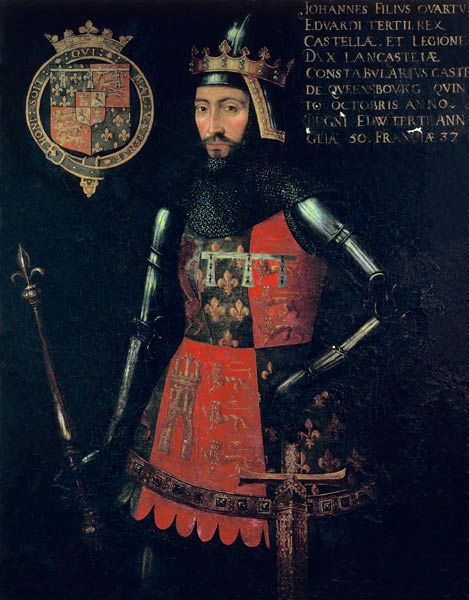
John of Gaunt
The fabulously rich[vii] John of Gaunt, Duke of Lancaster and third son of Edward III, had always been in the shadow of his magnificent brother. Now in 1373 Gaunt[viii], Jean V, a host of English notables and an army of 15,000 men had the chance to outshine the Black Prince’s successes as they sailed to the relief of Gascony. Arriving at Calais the army travelled through France; Peronne, Soissons,
‘It happened that one morning a party of English, to the number of six score lances, who were over-running the country beyond Soissons, fell into an ambuscade of Burgundians and French. When they had passed the ambush, the French sallied forth with banners and pennons displayed…………The English fought very valiantly, but at last were almost all taken or slain.’[ix]

The chevauchée then bypassed Troyes and Rheims and in the autumn down to Marcigny in the upper Loire valley and cutting across to Bordeaux by the end of the year. Philip of Burgundy shadowed the English right flank, while Bertrand and de Clisson shadowed the left. En route most of the horses and the supply train were lost. In the final weeks both Jean V and Gaunt had run out of money; they then quarrelled and went their separate ways.
This chevauchée did not bring Gaunt the glory he so desperately desired; the English chroniclers were not particularly impressed. But in retrospect it did relieve the English presence in Brittany; as Bertrand was recalled to fight this new threat. Aquitaine’s security was reinforced and the French advance into the county halted.
The nobility disapproved of Charles V’s policy of passive defence and refusal to face the enemy in battle; in their view this was cowardly. At a conference in September 1373, asked to give advice to the king, Bertrand said that it would be wrong not to offer battle to the invaders, as long as the French had a clear advantage; halfway between the two opposing positions.

In Languedoc
It is unclear when Tiphaine died, but on 21st January 1374 Bertrand married Jeanne de Laval[x] in the chapel at Montmuran; she was 24 and Bertrand was 53. This second marriage again produced no children, possibly, in part, because Bertrand was rarely home.
Carcassonne
In the spring of 1374 Bertrand was on the road to join Louis d’Anjou’s latest campaign against Gascony. He arrived in Toulouse in late April and spent May purging the lands around Carcassonne[xi] and Beaucaire of marauding routiers[xii]. Bertrand mustered 600 men-at-arms and was accompanied by many old Breton friends and relatives.
Louis d’Anjou’s march down the Garonne did not start until August; the town of La Réole surrendered on 28th by the garrison was not taken until 8th September. By October the Duc d’Anjou was back in Toulouse and Bertrand en route to Paris. On 1st November Bertrand and de Clisson received the surrender of Becherel.

‘You have before heard how the garrison of Becherel had held out for upwards of a year, and had entered into a capitulation to surrender, if they were not relieved before All-Saints-day………but as none appeared to relieve the castle, it was surrendered, and those who were so inclined left it.’[xiii]
Saint-Sauveur le Vicomte
The garrison was allowed to reinforce the fortress of Saint-Sauveur le Vicomte in Normandy, Froissart informs us that Bertrand then laid siege to the fortress.
‘By orders from the king of France, these men at arms shortly after laid siege to St. Sauveur le Vicomte in Coutantin…………St. Sauveur was first besieged on the side next the sea by sir John de Vienne admiral of France……..there was also a large army before it, with plenty of everything. These lords of France had pointed large engines against it, which much harassed the garrison.’[xiv]
Turmoil in Brittany

In April 1375 another chevauchée was launched by Edmund, Earl of Cambridge[xv]. Edmund landed in western Brittany and marched eastward. The French defence was mainly undertaken by de Clisson.
On 27th June a truce was signed in Bruges between the French, the English and Jean V, who was allowed to stay in Brittany. He was required to confine himself to the three towns still under his control; Brest, Auray and Derval. The surrender of Saint-Sauveur le Vicomte was also agreed.
‘They brought with them deeds engrossed and sealed of the truces entered into between the kings of France and England. The duke of Lancaster sent orders, that in consequence of the treaty of Bruges, the army should be disbanded without delay.’[xvi]

Change

Bertrand du Guesclin
In March 1376 Charles V made Bertrand Viscount of Pontorson; he also gave his Constable several manors and forests in Normandy, deeming him
‘Very worthy of great remuneration.’[xvii]
Three months later the Black Prince died on 8th June[xviii]; his father followed barely a year after on 21st June 1377. Edward III left his 10 year old grandson Richard to inherit his throne.

‘In the month of July, the young king Richard, who was in his eleventh year, was crowned with great solemnity at the palace of Westminster: he was supported by the dukes of Lancaster and Brittany.’[xix]
Around this time the failure to renew the treaty with France meant that the fighting broke out again.
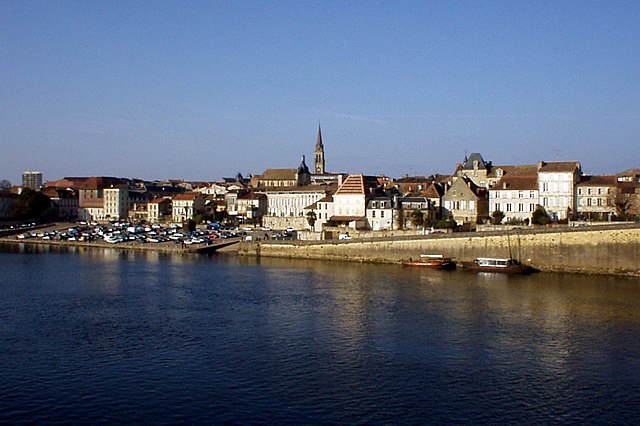
Bergerac
In the summer of 1377 Bertrand, the Duc d’Anjou[xx], Marshal de Sancerre, Enguerrand de Coucy, the Bègue de Villains[xxi] and other captains of renown fought a successful campaign in the Périgord and Gascony. The French besieged Bergerac for two weeks; an ambuscade by the English resulted in the capture of one of their captains; Thomas Felton[xxii]. Bergerac surrendered on 2nd September. By the middle of the month Saint-Foy-la-Grande and Castillon had fallen too.
The army moved south westwards and took a number of towns on the left bank of the Garonne including Sauveterre de Guyenne and Saint-Macaire. The campaign was brought to an end in October by bad weather; but not before having reclaimed 134 castles and towns for the French crown.

Bibliography
Edward III – Bryan Bevan, The Rubicon Press 1992

The Hundred Years War – Alfred Burne, Folio Society 2005
Chronicles – Froissart, Penguin Books Ltd 1968

Edward III – WM Ormrod, Tempus Publishing Ltd 2005
The Monks of War – Desmond Seward, Folio Society 2000

A  Distant Mirror – Barbara Tuchman, Pan MacMillan Publishers Ltd 1989
The Flower of Chivalry – Richard Vernier, The Boydell Press 2003


[i] The Flower of Chivalry - Vernier
[ii] Marshall of Brittany
[iv] Near Les Iffs; it is possible that Bertrand’s marriage to Jeanne de Laval may have been negotiated at this time
[v] Surrendered by Jean IV to the English in 1342
[vi] Which did not capitulate until 1379
[vii] Courtesy of his first wife Blanche, daughter and heiress of the first Duke of Lancaster Henry Grosmont
[viii] Styling himself Monsieur d’Espagne
[x] A relative of the Duke of Brittany
[xii] Mercenaries, often banded into Free Companies
[xiv] Ibid
[xv] Fourth of Edward’s surviving sons and later Duke of York
[xvii] The Flower of Chivalry - Vernier
[xviii] Just before his 46th birthday
[xx] His father had given him the Duchy of Touraine in 1370 in addition to Anjou
[xxi] One of the Marmousets of Charles VI; de Clisson was also a member of the group
[xxii] Seneschal of Guyenne

Wednesday, 9 July 2014

100 Years War - Bertrand du Guesclin V

Wheel of Fortune
French Successes

John of Lancaster, ruling Aquitaine in his brother’s absence, married Constance of Castile[i] on 21st September 1371; he then claimed the kingdom of Castile based on this marriage. This ultimately unsuccessful claim merely incentivised Henry II to stay true to his alliance with France.
Charles of Navarre, a cunning political operator, saw that the wheel of fortune[ii] had reversed direction and that it would be advantageous to come to terms with his brother-in-law. On 25th March Bertrand escorted the hostages to Evreux and then escorted Charles on the return journey to Vernon, as Charles paid homage for his estates in Normandy and signed a treaty.

‘The king of Navarre put his territories in Normandy under the government of his brother-in-law the king of France, and left his two sons, Charles and Peter, with the king their uncle. He then affectionately took his leave, and returned to Navarre.’[iii]
Bertrand was involved in enforcing the treaty and removing the captains of Navarrese strongholds such as Conches and Breteuil. He and de Clisson commenced the lengthy siege of Bécherel[iv].

Throughout 1372 the region between the Loire and the Garonne was almost completely returned to the control of the French crown due to the efforts of the Constable along with the royal dukes and de Clisson. The gates of Poitiers were unexpectedly opened to Bertrand and the Duc de Berry on 7th August; possibly prompted by the fall of Sainte-Sévère[v] after a violent assault on the 29th July when the garrison were spared.
Donjon at Moncontour
Bertrand was not always so lenient. At Moncontour the garrison displayed the du Guesclin arms upside down on the walls of the battlements[vi]. When the castle was stormed the offending shield was removed and the commander of the garrison took its place.
English Reverses

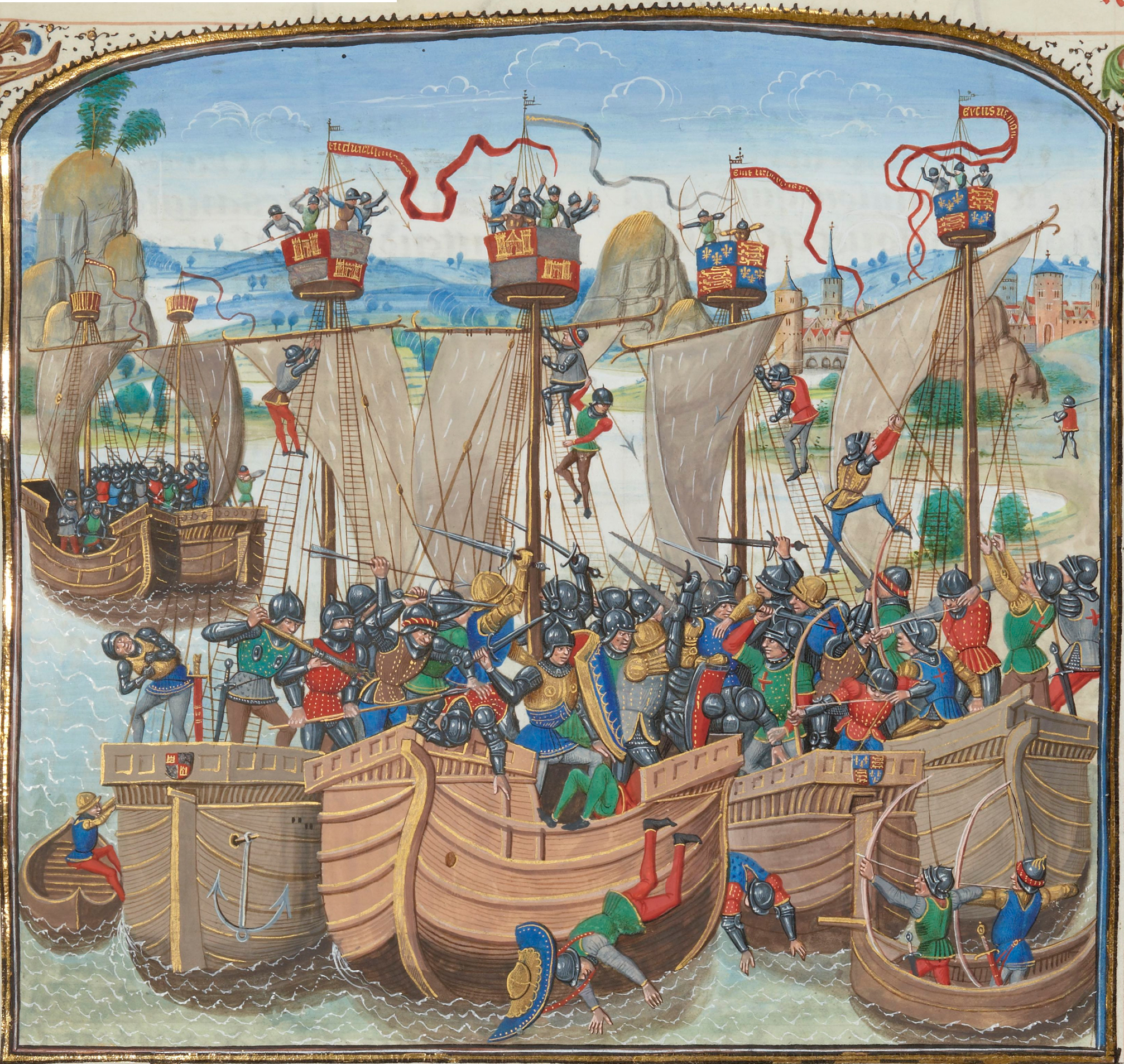
On 23rd June 1372 the Castilian navy, commanded by Admiral Boccanegra, defeated an English convoy off la Rochelle; the convoy was bringing men and horses to supplement the English military in Aquitaine and £20,000[vii] in pay for the army. The Castilian control of the sea endangered the English lines of communication and supply. And worse was to come as Charles was developing a naval base and shipbuilding yards at Rouen.
 
At the end of August Edward III, the sick Black Prince and John of Gaunt set sail with a fleet of commandeered merchant ships to rout out the Castilian navy. This mission of revenge was foiled by the weather; winds in the wrong direction held the fleet in port for nine weeks. This fiasco cost Edward enormous sums and helped foster discontent in England at the seemingly never ending war.
Battle of La Rochelle
The Captal de Buch and Thomas Percy[viii] were taken by a Franco-Castilian landing party commanded by Owen of Wales[ix].
‘Evan of Wales, Sir James de Montmoy, and their men, returned to their boats, carrying with them the Captal de Buch, and their other prisoners, to the huge fleet, which was lying before La Rochelle.’[x]
Bertrand swapped some of his far flung Spanish fiefs in exchange for the Earl of Pembroke[xi], former commander of the convoy. The ransom, set at 130,000 gold doubles[xii], was paid into escrow with the burghers of Bruges.

‘The earl journeyed, under the passport of the constable, through the kingdom of France: but a fever, or some other sickness, overtook him on the road, so that he was obliged to travel in a litter unto the city of Arras, where his disorder increased so much as to occasion his death. The constable, by this event, lost his ransom.’[xiii]
Pembroke died before the ransom could be paid and the money was returned to Edward III. Bertrand unsuccessfully sued the burghers for his lost ransom[xiv].

Charles V refused to ransom the Captal de Buch despite Edward III offering to exchange him for French prisoners with ransoms worth 100,000 francs[xv]. Charles agreed to release the Captal if he became French; he refused to do so. Approached by his nobles Charles then agreed to release the Captal if he abjured further fighting; again this offer was refused.
‘The Captal replied, that he would never make this oath, though he were to die in prison. He remained therefore strictly guarded for five years in confinement, to his great discomfort; for he bore it so impatiently that at last he died.’[xvi]
Imprisoned in the Temple in Paris the Captal became depressed, refusing food and drink. He drifted into a coma, finally dying on 7th September 1376.

Further French Success
Tour de Prince de Galles, Thouars
Meanwhile the town of Saint-Maixent surrendered on 1st September and a week later la Rochelle came to terms with Charles V, giving him control of the best port on the French Atlantic seaboard.
The French now besieged Thouars; a company of knights loyal to Edward III had barricaded themselves in the town. Sir Thomas Felton, the Seneschal of Aquitaine. failed to relieve the town. On 18th September the Viscountess de Thouars met with French envoys and agreed that the garrison would surrender if not relieved by 30th November. The garrison duly surrendered on 1st December[xvii]. Mid December saw Bertrand and the royal dukes entered Paris with their prisoners.
On 15th March 1372 Bertrand stood as godfather for Charles V’s second son, Louis de Touraine[xviii] with the Count d’Étampes. Bertrand added a new rite to the ceremony; he placed the child’s hand on his sword and said;
‘”My lord I give you this sword and put it in your hand, and pray God that he grant you valour such that you be as good and worthy knight as any King of France ever was who carried sword”.’[xix]
Donjon de Niort
On 21st March 1373 Bertrand took the castle at Chizé defeating the English in battle. John Devereux, a close companion of the Black Prince and former Seneschal of la Rochelle, was taken prisoner during the fighting. The donjon[xx] at Niort was captured on 27th March.
Unrest in Brittany
The English were entrenched in several strategic castles in Brittany; including Derval and Bécherel. To pay for the upkeep of the castles the English demanded ‘ransom’[xxi] from the local areas. The ducal treasury was in debt to the English crown and the heir to the dukedom[xxii] was Jean de Bretagne, the son of Charles of Blois; a prisoner in England, hostage for his father’s unpaid ransom.

French support for the canonisation of Charles of Blois[xxiii] was guaranteed to irritate Jean V[xxiv], while the refuge given to Robert Knolles and the remnants of his army cannot have calmed French fears. A secret treaty between Jean V and Edward III was signed in July 1372; the English offering Jean castles that he would have to wrest from French control, while agreeing that he would not owe the English homage for his dukedom once it belonged to the English crown.
A force of four hundred men-at-arms and four hundred archers, under the command of Sir William Neville, landed in early October near Brest
‘The duke had placed his confidence in some of the knights of Brittany, who had betrayed his secret, so that the king of France ordered his constable to invade Brittany.’[xxv]
Bertrand was accompanied by the Dukes of Bourbon and Burgundy. Charles ordered Jean V to send the English packing and when nothing was done Charles informed Jean’s vassals of his correspondence with Jean V; thus undermining their support for their liege lord.

Fighting in the Cotentin
Knolles and his army were cutting a savage swathe through northern France in an attempt to damage the French war effort. English companies were rampaging through the Cotentin peninsula. The King of Navarre was currently in talks with both Edward III and Charles V and possibly intriguing with the Duke of Brittany; both men in a pivotal position to enable Edward to mount another invasion.

The English were finally defeated in a battle on the lower Loire; the commoner Knolles quarrelled with the nobility in his army over precedence and booty and the final destination of the expedition. The four co-captains decided to go their own way and du Guesclin’s men fell on and destroyed isolated columns of soldiers.
Battle of Pontvallain
Du Guesclin caught up with the company led by Sir Thomas Grandison on 4th December and defeated him at the Battle of Pontvallain.
‘Directly at a place called Pont-valin, they were met by the French, who immediately charged them, and surrounded them, as they were full four hundred lances and the English about two hundred. The battle was sharp and long, and well fought on both sides………the French gained the victory over the English, who were all slain or made prisoners; for not an Englishman fled.’[xxvi]
Du Guesclin presented Grandison and eighty other valuable prisoners to Charles V on 1st January 1371.
Bibliography

Edward III – Bryan Bevan, The Rubicon Press 1992
The Hundred Years War – Alfred Burne, Folio Society 2005

Chronicles – Froissart, Penguin Books Ltd 1968
Edward III – WM Ormrod, Tempus Publishing Ltd 2005

The Monks of War – Desmond Seward, Folio Society 2000
A Distant Mirror – Barbara Tuchman, Pan MacMillan Publishers Ltd 1989

The Flower of Chivalry – Richard Vernier, The Boydell Press 2003
www.wikipedia.en


[i] Daughter of Pedro I of Castile,
[ii] Or Rota fortunae, a motif much used in medieval times
[iv] Not concluded until 1374
[v] In the Charente department and within the apanage of the Duc de Berry
[vi] A deadly chivalric insult
[vii] Sufficient to keep 3,000 men under arms for one year and in 2011 worth £11,400,000.00 using the retail price index or £128,000,000.00 using average earnings www.measuringworth.com
[viii] Made Earl of Worcester in 1397 by Richard II
[ix] Leader of a Free Company fighting for the French
[xi] A son-in-law of Edward III
[xii] In 2011 worth £73,900,000.00 using the retail price index or £831,000,000.00 using average earnings www.measuringworth.com
[xiv] Giving up the suit to Charles V for 50,000 francs, in 2011 worth £28,400,000.00 using the retail price index or £319,000,000.00 using average earnings www.measuringworth.com
[xv] In 2011 worth £56,900,000.00 using the retail price index or £639,000,000.00 using average earnings www.measuringworth.com
[xvii] The defenders of Thouars acknowledged the sovereign rights of the King of France leading to the restoration to France of the Duchy of Guyenne
[xviii] The future Duke of Orléans father of Charles d’Orléans
[xix] The Flower of Chivalry - Vernier
[xx] A castle keep
[xxi] A cross between taxation and protection racket; Bécherel alone required payments from 160 parishes in north east Brittany for its upkeep
[xxii] In default of an heir of the blood for Jean V, as agreed in the Treaty of Guérande 1365. Jean’s son and heir was not born until 1389
[xxiii] Confirmed in 1904 by Pius X
[xxiv] If Charles of Blois was canonised that would by implication make Jean V the killer of a saint