Tuesday, 14 February 2017

A Tudor Poet – Henry Howard VII

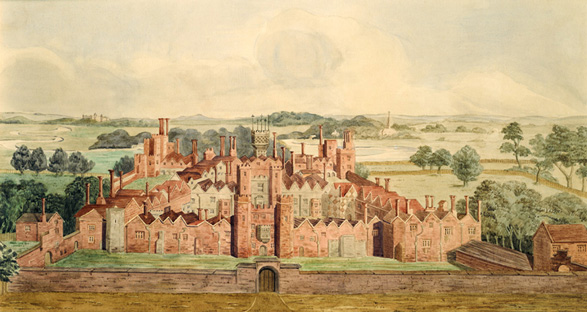
Oatlands Palace
The Fifth Wife of Henry VIII

On the same day that Thomas Cromwell was executed Henry VIII married his fifth wife, a former lady-in-waiting of Anne of Cleves, another Catherine, at Oatlands Palace near Weybridge in Surrey. The new queen’s father, Lord Edmund Howard was one of Norfolk’s younger brothers. Both brothers had pressed Catherine upon the king as a prospective bride.

Henry VIII is supposed to have ‘cast a fantasy’ towards the petite young girl as soon as he saw her. Catherine was vivacious, pliable and devoid of guile, very different from her dead cousin Anne. Henry’s cousin Catherine enjoyed the good life as queen; she was treated as and behaved as a spoilt child. Henry VIII spent money on her as he had on no other wife.

‘The King had no wife who made him spend so much money in dresses and jewels as she did.’[i]


Arms of the Earl of Sussex
Along with the dresses, treats and jewels that came her way were sprinkled favours for her relatives. At court Queen Catherine surrounded herself with old friends, including the widow of another of Henry’s cousins; Lady Rochford[ii] and a number of people she’d met while living in the household of the Dowager Duchess of Norfolk, Agnes Tilney.

Mary Howard was made a member of the queen’s household and Catherine’s brother Charles was made a Gentleman of the Privy Chamber. The Earl of Sussex, Norfolk’s brother-in-law, was made Lord Great Chamberlain, taking over from Cromwell.

On 21st July 1540 Henry was given a purple jacket and doublet woven with gold and silver tinsel. On 8th September he and his father were given conjointly the stewardship of Cambridge University. In November Henry was made a Justice of the Peace for Norfolk.

The Garter and a Diversion

I
Earl of Southampton
n April a greater honour was bestowed upon Henry; he was made a
Knight of the Garter in a ceremony at Windsor. He was due to take up his stall on 22nd May. In between times Henry and Sir Thomas Seymour were sent to France to observe Sir William Fitzwilliam, the Earl of Southampton and Lord John Russell resolve a border dispute between the French garrison at Ardres[iii] and the English garrison at Guisnes.

Both sides massed armies and on 5th May Henry and Thomas Seymour arrived in Calais, immediately inspecting the fortifications and mustering men. On the 7th the same was done at Guisnes along with a military parade. Having shaken a spear in the face of the French, the English exchanged gifts with the French Governor, Monsieur de Biez. Hunting and dinner parties were arranged. The French ambassador in London wrote to Paris;

‘Where nothing but war was talked of there is no mention but of wishing to live at peace.’[iv]


Henry was back in England in time to shop for his Garter ceremony; he purchased his mantle, black velvet cap, collar and medallion of St George without reference to his shaky finances. The gold collar was six troy ounces more than the maximum provided for by the order’s regulations and his St George medallion was encrusted with ten diamonds.


Sheen
The day before the ceremony Henry was a guest of Edward Seymour at Sheen. Over dinner, along with his fellow knight-elect Sir John Gage, Henry was talked through the ceremony he would undergo. The Earl of Sussex acted as the king’s deputy.

Around this time Henry was also made Cupbearer to the king, a post he held with Lord Hastings and Sir Francis Bryan. With this post came free lodgings wherever the court might be and provision of food, candles, fuel and drink. Now Henry no longer had to wait to be summonsed to court and, more importantly, had access to the king.

Adultery and the Queen
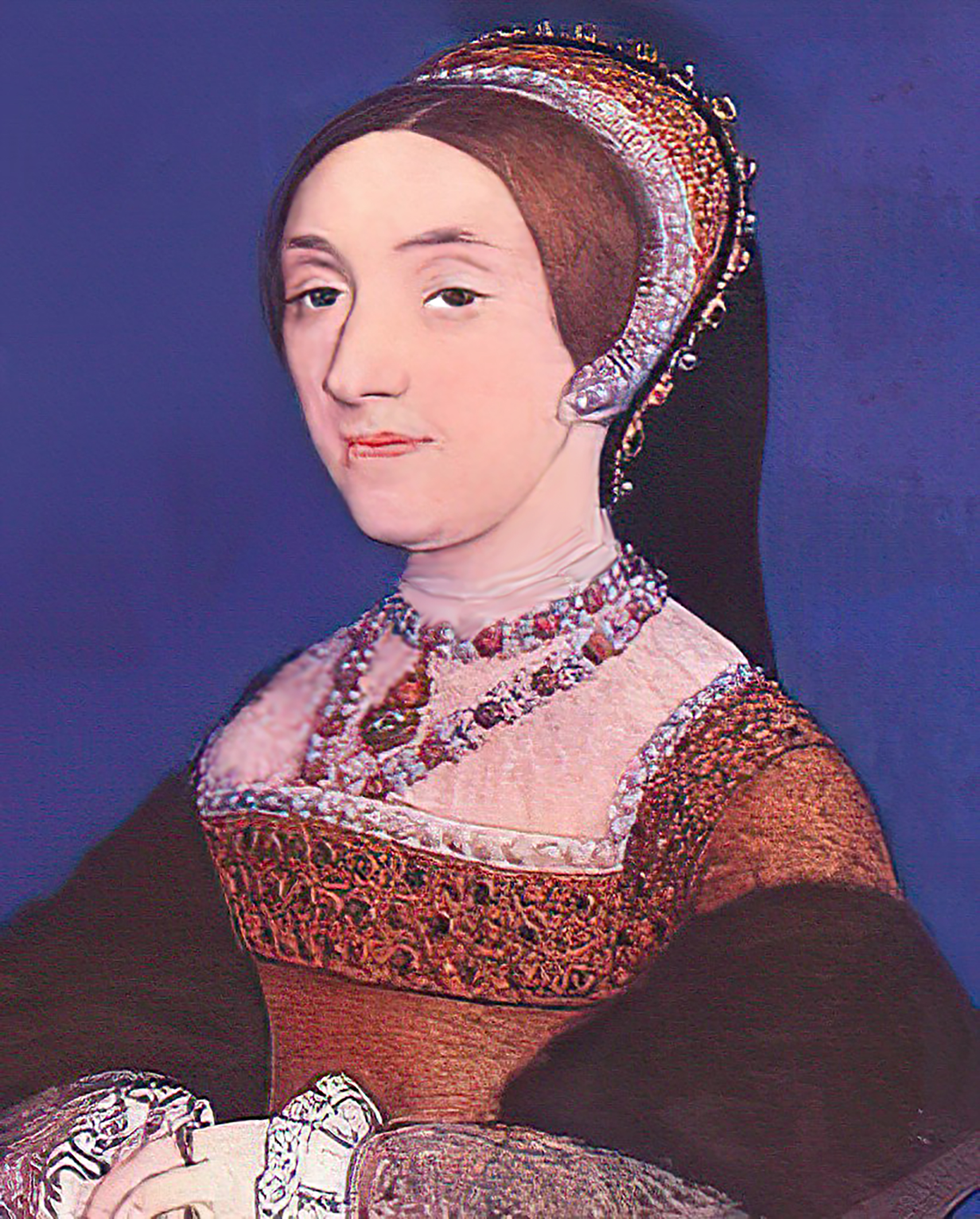
Catherine Howard
Catherine soon became bored of her obese husband whose fumblings and flatulence may very well have repelled her. His once athletic body was decaying and his legs were ulcerated and puss-filled bandages were permanently wrapped around them. His mood swings frightened all his courtiers, let alone his young queen.

Catherine’s attention was diverted away from the marriage bed as Henry VIII took her on a progress around Surrey, Berkshire, Buckinghamshire and Oxfordshire, showing off his new toy. The king returned to Hampton Court at the end of October and ordered prayers to be said for the queen for;

‘The good life he led and trusted to lead [with] this jewel of womanhood.’[v]

The conservative faction led by Norfolk and Bishop Gardiner was opposed by the religious progressives who counted Cranmer among their number. Among the progressives was a Protestant preacher named John Lassells[vi] who was the brother of the nurse of Lord William Howard’s[vii] children. Lassells was informed by his sister of the queen’s behaviour before she married, claiming that Catherine had not been a virgin when she married Henry VIII.

Lassells immediately rushed to inform the Archbishop who was so afraid of the king’s temper that he dare not tell him the bad news face to face. Instead he left a letter in the royal pew in the Chapel Royal. Cranmer’s letter accused Catherine of behaving licentiously with a lute player called Henry Manox, who had been teaching the young girl to play the virginals while staying at a Norfolk residence in Horsham. He claimed that;

‘I know her [Catherine] well enough for I have had her by the cunt, and I know it among a hundred.’[viii]

Two years later, the letter averred, Catherine had an affair with one Francis Dereham, now the queen’s secretary and usher of her bedchamber. The king ordered the Earl of Southampton as Lord Privy Seal to investigate and refute the allegations which he did not believe.

Under interrogation Manox changed his tune, admitting only to taking liberties with the young girl, not having sexual intercourse with her. Dereham, on the other hand, admitted to swiving her. Even now Henry VIII was inclined to spare the girl he doted on, that was until evidence was uncovered about Catherine’s love for Thomas Culpepper, one of the king’s former pages.

The Loss of a Second Howard Queen

The young couple had been trysting at night after the king had retired to bed, although both denied having sexual intercourse. The most striking piece of evidence was a love letter that Queen Catherine wrote to Culpepper;

‘For I never longed so much for thing as I do to see you and to speak with you, the which I trust shall be shortly now….When I think again that you shall depart from me again it makes my heart to die, to think what fortune I have that I cannot be always in your company.’[ix]

Tyburn
After being tortured Culpepper confessed to committing adultery with Catherine[x]. Catherine made her own confession. On 1st December Dereham and Culpepper were tried and found guilty of treason, Norfolk officiated at the trial which Henry attended. The two men were executed at Tyburn on 10th, while Catherine’s brothers paraded on horseback throughout London. In December 1541 Henry was granted the rectory, manors and possessions of Rushworth College in Norfolk.

On 11th February Catherine was found guilty of treason Henry was one of the nobles who, perforce acting as deputy for his father who had returned to Kenninghall, attended at Catherine Howard’s execution on 13th. She was followed to the block by Lady Rochford. Catherine was the third of his cousins to go to the block.

Norfolk was more than happy to throw the rest of his family, including his stepmother Agnes Tilney, to the wolves to save himself and his heir. He helped interrogate Catherine[xi], was one of the chief informers against his stepmother, ransacked Dereham’s coffers and wrote an abject letter to Henry VIII;

‘Yesterday came to my knowledge that mine ungracious mother-in-law [stepmother], mine unhappy brother and his wife, with my lewd sister of Bridgewater[xii] were committed to the Tower; which by long experience, knowing your accustomed equity and justice…am sure is not done but for some their false and traitorous proceedings against your Royal Majesty.’[xiii]

The Howards committed to the Tower were tried for misprision en masse and were sentenced to life imprisonment and forfeiture of goods.

Bibliography

Henry VIII’s Last Victim – Jessie Childs, Vintage Books 2008

The Ebbs and Flows of Fortune – David M Head, University of Georgia Press 2009

House of Treason – Robert Hutchinson, Phoenix 2009

Henry VIII – Robert Lacey, Weidenfeld & Nicholson & Book Club Associates 1972

The Earlier Tudors – J D Mackie, Oxford University Press 1992

Rivals in Power – David Starkey, MacMillan London Ltd 1990

The Six Wives of Henry VIII – Alison Weir, Pimlico 1992

www.wikipedia.en


[i] Henry VIII’s Last Victim - Childs
[ii] George Boleyn preceded his sister to the block
[iii] Where late in 1540 the French had built a castle and a bridge into the Calais Pale
[iv] Henry VIII’s Last Victim - Childs
[v] House of Treason - Hutchinson
[vi] Or Lascelles
[vii] Another of Norfolk’s half-brothers and known as Howard of Effingham
[viii] Henry VIII’s Last Victim - Childs
[ix] Rivals in Power - Starkey
[x] Although whether this actually happened, as with Anne, is problematic. Anne was too canny to have committed adultery, but Catherine was not endowed with her cousin’s intelligence
[xi] Recommending that she be burnt alive
[xii] Katherine Howard married to the Earl of Bridgewater
[xiii] Rivals in Power - Starkey

Tuesday, 7 February 2017

A Tudor Poet – Henry Howard VI


Henry Howard
An Heir to the Throne

Henry and Thomas Seymour brangled at court during the autumn of 1537, when Seymour accused Norfolk of sympathising with the Yorkshire rebels. Still mourning the loss of his childhood friend Henry struck Seymour[i] and spent several months banished to Windsor as a result. It was here that he wrote the ‘Windsor Elegy’ in heroic quatrain; a contrast between his happy years there with Fitzroy and the unhappy present when new men took over court[ii].

     ‘So cruel prison how could betide, alas!

          As proud Windsor? where I in lust and joy,

          With a king’s son my childish years did pass,

          In greater feasts than Priam’s sons of Troy.’[iii]


Henry’s arrogance did not dissipate as he brooded during his confinement. But he was recalled to court in early October. Queen Jane was about to give birth. Prince Edward was Queen Jane’s crowning moment and her death, two weeks after Edward’s birth, sanctified her memory in Henry VIII’s mind[iv].

Norfolk stood as one of the child’s godfathers although Henry was not at the ceremony. He did attend the queen’s funeral as one of ‘the six assistants about the corpse and chair’. Henry then returned to East Anglia. There was little enough for a Howard to do at court as Cromwell successfully blocked Norfolk’s access to the king until the spring of 1538.

A Mismatch

Anne of Cleves
By the summer of 1538 the Seymours’ position at court had become unassailable with the presentation of a legal heir to the throne. Cromwell was already looking to bolster his position by finding the king a new wife; to his misfortune his recommendation alighted on Anne of Cleves, sister of the Protestant Duke of Jülich-Cleves.

Thoughts of an alliance with the French fell through as Henry VIII’s demands were insupportable to a Catholic monarch; recognising Henry VIII as head of the church in England and that the French maidens in competition for the honour of being his bride be ferried to Calais for inspection at market.

With the failure of a French marriage Norfolk, who had been closely involved in the negotiations, found himself not needed by the king. Eager to regain his position at court Norfolk cast upon the idea of marrying his daughter Mary to the younger of the queen’s two brothers. And this, despite the fact that the Seymours were mere country gentry and parvenus at court. Norfolk even went so far as to claim that;

‘There ensueth no grete good by the conjunction of grete bloods together.’[v]

Even Cromwell, jealous of any attempts to encroach on his position of power, supported the match between Thomas and Mary. In early June the king gave his consent to the proposed marriage, all that remained was Mary Howard’s formal assent. This was not forthcoming; Mary’s brother had stuck his oar in. Ever jealous of his noble birth and lineage and, determined to prevent a mésalliance, Henry persuaded Mary, in front of an audience of interested courtiers, to refuse the commoner. Mary left court for Kenninghall in July, and despite her father travelling after her, he was unable to change her mind.

Oppressive Parenting


Edward Seymour
Henry was further irked that his father had proposed his children Jane and Thomas (born 10th March 1538) as spouses for the children of Edward Seymour[vi], the Earl of Hertford without the matter having been discussed with Henry. Norfolk’s hold on Henry was firm, despite the fact that Henry was now in his early twenties. Norfolk selected Thomas’ godparents and planned his grandson’s future.

Henry dined at the Seymour residence in London four times in November 1538, but most of that winter was spent in Norfolk where he was a Commissioner of the Sewers with responsibility for the county’s watercourses. He also assisted his father in ducal business.

Despite being kept chronically short of money by his father, one of the richest men in the country, Henry spent a king’s ransom on maintaining his own splendour. He commissioned paintings of himself by the king’s artists, maintained a splendiferous wardrobe and built a new house in Norwich, on the site of the Benedictine Priory of St Leonard’s[vii]. Built in the Italian Renaissance style the house was furnished with all manner of treasures in the way of tapestries and furniture.

Henry was, like his father, a gambler, but while Norfolk had the psyche of a good gambler, the impulsive Henry did not. He was constantly in debt and he and Frances were forced to live at Kenninghall with Bess Holland and Mary. Henry even borrowed money from his own servants to fund his lifestyle.

The Downfall of a Common Man


John Dudley
Despite their differences the Seymours worked together with the Howards to bring down Cromwell whose championship of the Cleves marriage brought him into disfavour with the king. Henry VIII took against Anne as soon as he met her in the flesh in early January 1540, reportedly calling her ‘the Flemish brood mare’. It cannot have helped that Cleves had asked for guarantors for the lady’s safety[viii]; the king of England’s reputation went before him.

Henry was one of those chosen to ride before the king at Greenwich, as he rode in procession to meet his new wife. The marriage was solemnised on 6th January 1540 and within days the king was demanding that Cromwell rid him of this latest marital encumbrance.

In the mean time it was decided to hold a tourney at Westminster at the beginning of May; Henry immediately signed up as one of the challengers to Thomas Seymour, George Carew and Richard Cromwell[ix]. As the highest ranked competitor Henry opened the jousting against Sir John Dudley[x]. Throughout the seven days of the tournament Henry was neither unhorsed nor did he unseat any of his challengers.


Austin Friars
It was Cromwell’s alleged protection of religious radicals in Calais that was to be the final straw in the case the Seymours and Norfolk were building against their enemy[xi]. The letter, found at Crowell’s house in Austin Friars so angered the king that he ordered Cromwell’s immediate arrest.

Both Henry’s brother Thomas and his sister Mary were attracted to the vibrancy of the new religion. The reformers believed that Henry himself could be detached from the Howards’ staunch support of the old religion, although Norfolk’s support of Catholicism was taken for granted.

On 10th June 1540 Cromwell was arrested in the council chamber; the French Ambassador, Charles de Marillac reported back to Paris;

‘The Duke of Norfolk reproached him [Cromwell] with various villainies which he had committed….and my said Lord [the king] has caused public proclamation that none should any more call him Lord Privy Seal….but only Thomas Cromwell, shearman.’[xii]

Cromwell was taken to the Tower and seven days later Norfolk and Gardiner introduced an Act of Attainder[xiii] against him.

The king still had need of his minister even now, to rid himself of Anne of Cleves. A series of councillors cross-questioned Cromwell in his place of incarceration, and Cromwell duly obliged his master one last time. Queen Anne was pensioned off with £500 per annum[xiv] and a property portfolio, some of which came from Cromwell’s forfeited estates. The marriage was annulled on 9th July. Following Cromwell’s execution on 28th July Henry sneered;

‘Now is the false churl dead, so ambitious of other’s blood. These new erected men would, by their wills, leave no noble man a life…..now he is stricken with his own staff.’[xv]

He was exceeding proud of his lineage dating back to Edward III and beyond; that a man like Cromwell had had the king’s support for so long had irked both Henry and his father.

Bibliography

Henry VIII’s Last Victim – Jessie Childs, Vintage Books 2008

The Ebbs and Flows of Fortune – David M Head, University of Georgia Press 2009

House of Treason – Robert Hutchinson, Phoenix 2009

Henry VIII – Robert Lacey, Weidenfeld & Nicholson & Book Club Associates 1972

The Earlier Tudors – J D Mackie, Oxford University Press 1992

Rivals in Power – David Starkey, MacMillan London Ltd 1990

The Six Wives of Henry VIII – Alison Weir, Pimlico 1992

A Tudor Tragedy – Neville Williams, Barrie & Jenkins 1964

www.wikipedia.en


[i] An offence against the King’s Peace that normally resulted in the cutting off of the aggressor’s right (sword) hand
[ii] i.e. Cromwell and his ilk
[iii] Rivals in Power - Starkey
[iv] She was the only one of his wives granted a place beside Henry VIII in death
[v] The Ebbs and Flows of Fortune - Head
[vi] Later Duke of Somerset
[vii] He named the house Mount Surrey
[viii] One of a pair of dour evangelicals suggested that that ‘proud foolish boy’ the Earl of Surrey should be one of the guarantors; clearly Henry already had a reputation amongst the common man
[ix] Thomas Cromwell’s nephew
[xi] The letters may very well have been faked by Norfolk’s agents
[xii] Rivals in Power - Starkey
[xiii] One of Cromwell’s own inventions
[xiv] In 2015 the relative: historic standard of living value of that income or wealth is £290,500.00 labour earnings of that income or wealth is £2,796,000.00 economic status value of that income or wealth is £10,650,000.00 economic power value of that income or wealth is £135,500,000.00 www.measuringworth.com
[xv] House of Treason - Hutchinson