Monday, 10 April 2017

A Duchess of Burgundy VII


Isabella of Burgundy
A Family Quarrel

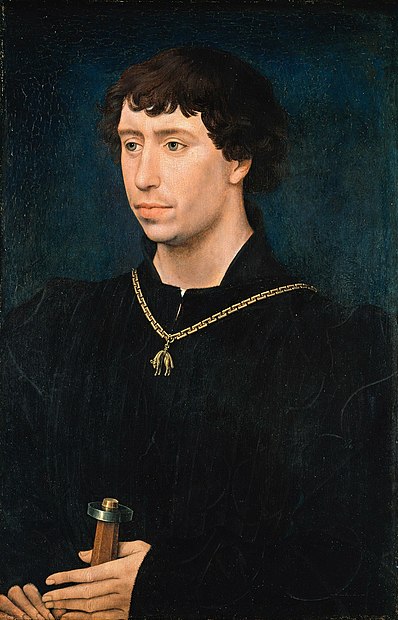
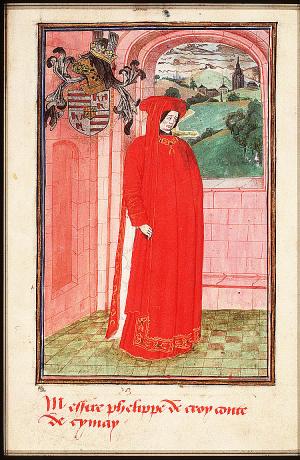
On 17th January 1457 an argument broke out between Philip and Charles after Charles refused to accept one of the detested de Croy family into his household as chamberlain. Philip attacked his son with a dagger; Charles fled with his mother to the chambers of their guest, the Dauphin. The French Dauphin had chosen to exile himself in Burgundy after being banished from court after making a marriage unsanctioned by his father.

Angered that the family dispute had been aired before the heir to the French throne, Philip attempted to reign in his temper, telling Louis[i];

‘I will show Charles that I am his father – that I can appoint a little valet if I please! And better would it have been for his mother, if instead of burdening you with her woes, to have slept a long sleep!’[ii]

Louis asked Philip to pardon his son but Philip refused. Charles flung himself out of the castle and rode off to Tendermonde. His father too disappeared into the bitter January night. Louis and his followers rode out to seek for his uncle who had left without an escort. Philip had got himself lost after sending a message to the de Croy family ordering them to meet him at Halle. Philip was finally found in Genappe, where he was being tended for an injured leg.

The incident caused an estrangement between Charles and his father and Isabella sided with her son. Philip was persuaded by the de Croys that Isabella was the cause of the friction between father and son. So by the spring of 1457 Isabella was spending most of her time at La Motte-au-Bois.

February 1457 saw the birth of Mary of Burgundy, who was born on 13th. Charles went out hunting while Philip ignored the event, asking only to be informed if the baby turned out to be a boy. Louis asked that the baby be named Marie after his mother. Mary was baptised at Coudenberg and Louis stood as her Godfather. Chastellain recorded that;

‘Duke Philip chose not attend the ceremony as it was only for a girl.’[iii]

Estrangement

Louis
Louis chose to ingratiate himself with the de Croy family, to ensure that Philip did not send him back to France, whence he was determined not to return save as king. He also befriended Charles, an easy matter for the easy-going friendly Dauphin. Their joint love of hunting created a bond between the two men despite the ten year age difference.

During the summer Philip took Louis on a tour of his lands which Louis put to good use noting all the strategic landmarks and strongholds. Like his father Louis had every intention of making Burgundy part of France once. again

Once Joan of Arc’s conviction had been overturned by Rome Charles VII grew more belligerent in his position vis-à-vis Burgundy. He demanded that Louis give an account of himself and his failure to return to court and that in default Philip was to arrest his royal visitor. Louis paid largesse to all those who gave him services (ultimately paid for by Philip) and created a swelling of support for the French Dauphin. Short of money he wrote asking for his wife’s dowry;

‘We believed that by Christmas past we would have had money from there [Savoy]….but it has all come to nothing. This puts us in a bad way, for, trusting to have had the money, we have borrowed from a bank the sum of 1000 francs[iv].’[v]

He had borrowed money from Flemish banks to pay, inter alia, for the spies he kept around his father; the chief of whom was Antoinette de Maingnelais, his father’s mistress.

Isabella seized the chance and permanently retired to La Motte-au-Bois in the midsummer of 1457. Isabella’s self-imposed exile was saddened by the news of the death of her nephew John of Antioch, who had lived with her when he was fourteen[vi]. He had been poisoned (five of his attendants also died)[vii]. John had also been a favourite of Philip’s who had made him a member of the Order of the Golden Fleece and arranged for John’s marriage to the King of Cyprusdaughter.

France v Burgundy

Charles of Charolais
At La Motte-au-Bois Isabella amused herself by trying to arrange a marriage between one of her nieces and one of Richard of York’s daughters. York was looking to strengthen his power base even as Queen Margaret was determined to keep York away from the king. Consolidating her power Margaret was able to have the Chancellor and Treasurer replaced as  Yorkists were removed from positions of power at court. Margaret was also able to obtain aid from her uncles Charles.

Throughout early 1458 rumours spread that the French were preparing for an assault on Burgundy once they’d finished fighting the English in what little was left of the Angevin empire in France. Burgundian towns were overrun and others threatened by Charles VII’s armies[viii].

‘Daily there ran new wild rumours; everybody kept his ear to the wind and no one knew whether to expect peace or war.’[ix]

Beginning to lose confidence in the advice of the pro-French de Croys, Philip was stressed out by the situation and turned to amusing himself with hunting, in court revelries and sex. The summer of 1458 saw both Philip and King Charles fall ill; Philip had a fever brought on from over exerting himself playing tennis, while Charles had an ulcerated leg which had enfeebled his constitution[x]. Philip suffered a relapse on 17th June and fell into a coma lasting three days.

The Grand Bastard Anthony, his half-brother Charles and Isabella rode to Brussels where Isabella prostrated herself before Philip’s bed. He asked her to stay and look after him which she did and used the time to repair some of the damage done to their relationship.

Mayhem Abroad

Margaret of Anjou
Isabella was able to revivify Anglo-Burgundian trade relations and an embassy comprising of both Yorkists and Lancastrians was sent to both France and Burgundy where Philip welcomed the proposals. The English proposed marrying his baby granddaughter Mary to one of the Duke of York’s sons. Philip did not answer the proposal.

The embassy then continued on to Rouen where they offered a marriage between Edward Prince of Wales with one of Charles VII’s daughters[xi]. Charles agreed to think about the proposals. The Yorkists warned Philip that if the Anglo-French proposals were taken up the English would be barred from coming to the assistance of the Burgundians if they were attacked by the French.

In early 1459 Isabella wrote to inform the English envoys that she and her husband were prepared to discuss the matter when the English sent sufficiently high-ranking personages to negotiate terms. Philip sent an embassy to Charles VII at Montbazon complaining about the French attacks on his territories and the ignoring of Philip’s ducal rights in the Paris Parlement. The king’s lawyers refuted Philip’s claims, accusing him of disloyalty to the king.
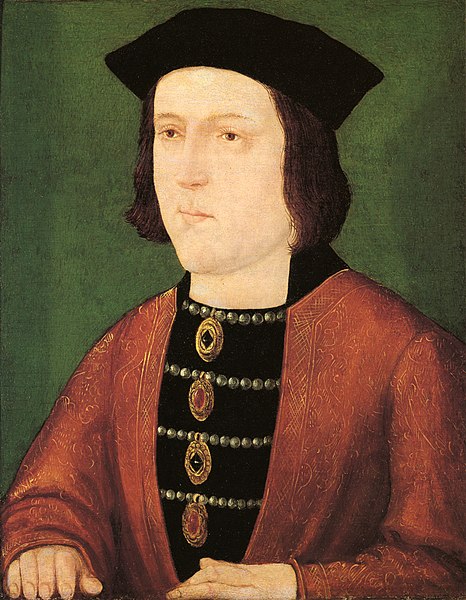
Edward of York
Meanwhile Queen Margaret was working to destroy the alliance between the Yorkists and the Burgundians. On 23rd September Margaret sent her agents to arrest the Duke of York, his son Edward and the Earl of Warwick. The men had been pre-warned of the imminent arrests and York fled to Ireland while Edward of York fled to Calais with Warwick and his father Lord Salisbury.

The Yorkists were not without their sympathisers as this letter warning Norfolk gentleman John Paston[xii] shows;

‘A lewd doctor of Ludgate preached on Sunday a fortnight ago at St. Paul’s, charging the people that no man should pray for these lords, the traitors [York and his allies] etc.; and he had little thanks, as he deserved…..the Chamberlain [Margaret’s man] is not good to these lords.…[A number of persons] have commissions lately to take traitors and send to the nearest gaol all persons who are favourers and well-wishers to the said lords.’[xiii]

The struggle between the Yorkists and the Lancastrians was about to erupt into what was to become known as the Wars of the Roses.

Bibliography

The Hundred Years War – Alfred Burne, Folio Society 2005

The Reign of Henry VI – RA Griffiths, Sutton Publishing Ltd 1998

The Fifteenth Century – EF Jacob, Oxford University Press 1997

Louis XI – Paul Murray Kendall, Sphere Books Ltd 1974

Margaret of Anjou – Helen E Maurer, Boydell Press 2003

Isabel of Burgundy – Aline S Taylor, Madison Books 2001

Philip the Good – Richard Vaughan, Boydell Press 2014

Charles the Bold – Richard Vaughan, Boydell Press 2002

www.wikipedia.en


[i] According to Chastellain
[ii] Louis XI - Kendall
[iii] Isabel of Burgundy - Taylor
[iv] In 2015 the relative: historic standard of living value of that income or wealth is £696,600.00 labour earnings of that income or wealth is £5,955,000.00 economic status value of that income or wealth is £25,340,000.00 economic power value of that income or wealth is £466,200,000.00 www.measuringworth.com
[v] Louis XI - Kendall
[vi] Following the battle of Alfarrobeira where his father Pedro was killed during an uprising against John’s cousin King Alfonso V of Portugal, whose father Edward had died in September 1438. John arrived in Burgundy with his brother Jaime de Coimbre and sister Beatriz who later married one of Philip’s nephews, Adolf of Cleves
[vii] It is believed that John’s mother-in-law Helena Palaiologina ordered his death
[viii] This followed Ohip’s refusal to attend a Lit de Justice ordered by Charles VII into the treasonous behaviour of the Duc d’Alençon who was accused of treating with the English
[ix] Louis XI - Kendall
[x] Possibly the beginning of syphilis or diabetes symptoms
[xi] Prince Edward was not married until December 1470 when he was wed to Anne Neville, daughter of Warwick the Kingmaker as he became known. After his death she married Edward VI’s younger brother Richard
[xiii] Illustrated Letters of the Paston Family – Virgoe
Monday, 3 April 2017

A Duchess of Burgundy VI


The Burghers of Ghent surrender to Philip the Good
Ghent Humbled

Needing funds to continue his war Philip dropped his prohibition on the transport of English cloth. By this point Isabella had decided to support the Duke of York[i], who was pro-trade with Burgundy, in the internecine war in the English court. She now prepared to travel to Gravelines. Charles VII became aware of her intentions which would interfere with the final stages of the Hundred Years War; Charles was hopeful of throwing the English out of his country for good[ii].

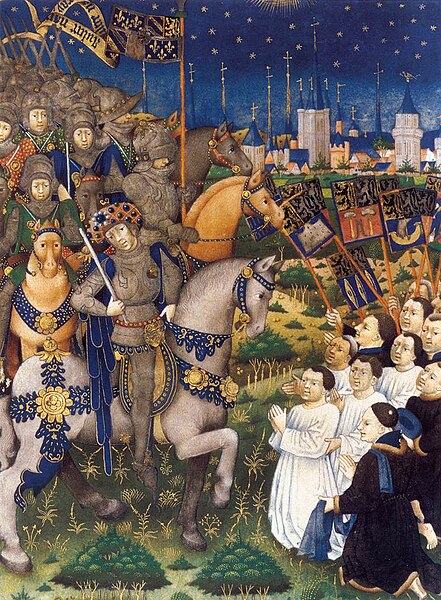
Ghent finally surrendered to her lord after the Battle of Gavère on 23rd July 1453 where 17,000 Ghentish men died. The Burgundians had rallied behind Philip in his fight with the men of Ghent.

‘And their dead were estimated at seventeen or eighteen thousand men, both killed and drowned. Among others several of their captains and deans were killed, including a good ten or eleven of their echevins. Besides this, a number of prisoners were taken.’[iii]

During July 1453 Henry VI lost his hold on reality for the first time; Queen Margaret managed to keep the matter hidden for three months until the birth of her son Edward of Westminster in October. Richard of York was the logical choice to become protector of the realm in the king’s stead and he had Suffolk arrested and replaced him as Captain of Calais with Richard Neville[iv], Earl of Warwick. The war in France was coming to a stuttering close; after the fall of Châtillon[v] in July there was little left save the Pale of Calais to fight over.

A New Wife for Charles

Pope Nicholas V
Charles VII was now looking to his investigation into the legality of Joan of Arc’s trial to yield dividends; the case was going to Rome and Charles anticipated that he would be given sovereignty over all of Burgundy. He hoped to go down in history as the king who reunited France.

In his turn Philip was looking to join the Pope Nicholas V’s call for a crusade against the Ottomans following the fall of Constantinople[vi]. Philip spent much of the early part of 1454 celebrating his victory over the men of Ghent and working to forge his men into a fighting unit that would win him renown in the east. Isabella supported Philip in this ambition.

While Philip was planning a French bride for Charles, now 21, to consolidate any alliance he might be able to make with Charles VII, Isabella had her eye on one of the Duke of York’s younger daughters for her son. To that end she started negotiations with the duke, now Regent[vii].

Sadly for Isabella her plans came to naught as Philip put his foot down; he decided that the potential for peace with France would be best served if Charles was to marry his cousin[viii] Isabella of Bourbon, daughter of Charles I, Duke of Bourbon. Neither Charles nor his mother wanted the match which Philip insisted on. The young Isabella had been living in Isabella’s household; she was favoured by Philip who was fond of his sister’s child.

Philip obtained a release from the pope for the marriage between first cousins even as he started fund-raising for the crusade. He also decided to attend the Imperial Diet at Regensburg to that end. He made Charles;

Governor and Lieutenant General , in the absence of my most redoubted lord and father, of his lands and lordships in the Netherlands.’[ix]

in his absence. Philip also issued edicts on expenditure that curbed the magnificence of his court, although he prudently allowed sufficient monies to overawe the German princes at the Diet. Feasts, games, jousts and concerts were severely curtailed and the pensions of court officials reduced.

The Heir’s Second Wife

Charles and Isabella of Bourbon
Philip suddenly discovered Isabella’s plans to marry their son to a member of the English royal family. He was probably apprised of Isabella’s manoeuvrings by one of the de Croy brothers[x]. Concerned that Isabella would have her own way while he was at Regensburg Philip pushed through the betrothal without the approval of Isabella of Bourbon’s parents and that of Charles VII.

At home Isabella had spent the winter at La Motte-au-Bois[xi] before returning to the Rihour Palace in Lille[xii] in the spring. Her representatives had been meeting with the English since January. Charles joined his mother in Lille in early May. Not long after Philip left Salins for Nevers where he met his sister, the Duke of Orléans and Pierre Amboise the representative of the Duke of Bourbon[xiii]. Philip’s demands for the seigneury and lands of Chinon to be given to Isabella of Bourbon were rejected during several weeks of negotiations[xiv].

Unable to come to an agreement Philip left Nevers for Dijon, prepared to wait until his demands were met. He stayed there throughout August and September. In the north Isabella was struggling to keep the Anglo-Burgundian talks alive. More and more Burgundian ships were being taken by the English and in August both Charles and Isabella wrote to Philip warning of a possible English attack. They wrote again in September.

Termonde
By October Charles VII was becoming worried that Isabella might prevail upon Philip to accede to the English marriage she was chasing and wrote to Philip explaining that he was unable to allow Chinon to be incorporated in the marriage contract;

‘So pray do not postpone the marriage….for any cause, if by permission of the church and or our Holy Father it can be lawfully completed.’[xv]

Philip ordered Charles to marry Isabella of Bourbon straight away under the original terms of the marriage contract signed by the Duke of Bourbon the previous year, which included the lands of Chinon. The marriage took place as ordered on 31st October 1454. Isabella was so chagrined that she failed to pay due deference to her new daughter-in-law. Charles returned to his position as temporary governor based at Termonde[xvi] while Isabella of Bourbon stayed with her mother-in-law.

Drifting Apart

Philippe of Renty
The marriage did nothing to repair the problems with France; the raids on Burgundy’s northern borders continued and Charles VII refused to allow Philip to recruit crusaders in France. In addition Isabella’s power was waning as that of the de Croy family increased. As chamberlain Antoine was the most influential at court, even more so than Chancellor Rolin, but his brother Jehan[xvii] and their sons Philippe of Renty and Philippe of Sempy also benefitted not only from Philip’s largesse but also from the hand of Charles VII. They were powers in their own rights[xviii].

The de Croy family were able to keep Philip focussed on France as Burgundy’s partner, despite the depredations that France’s soldiers were making on Burgundian lands, despite the French enclaves set up thereon. Philip’s blindness to French intent is remarkable as are his ignoring of Isabella’s advice.

Philip, now 59, had taken his eye off the ball. He was distracted by his plans to go on crusade and he still hoped to gain recognition  for his imperial holdings. The de Croy family meanwhile were looking forward to a French victory over Burgundy after which they would reap their just rewards for supporting the victor. They increased their involvement with the French even as Philip’s trust in Isabella decreased. He now had no-one to counter the de Croy influence.

Philippe of Sempy
The Burgundian coasts were plagued by French pirates who preyed mainly on English shipping. The trade treaty that Isabella had stitched together with such care was falling apart. The Burgundians did not help matters by holding up Staple merchant caravans as they crossed Burgundian territory. Philip refused to send Isabella to smooth matters over as she had done in the past.

The couple were divided physically as well as mentally; Isabella was staying at Cassel. Isabella wanted to free her son from the de Croy influence. Charles was very vocal in his opposition to his father’s policies and the two men argued a lot throughout the winter of 1455-6. Charles was described as;

‘Hot-blooded, active and irritable and, as a child, wanted his own way and disliked rebuke. Nevertheless, he had such good understanding he resisted his natural tendencies and, as a youth, there was no one more polite and well-tempered.’[xix]

In this Charles was like his father; Philip was normally the most polite and courteous to all, unless he was crossed and this rarely happened to him.

Bibliography

The Hundred Years War – Alfred Burne, Folio Society 2005

The Reign of Henry VI – RA Griffiths, Sutton Publishing Ltd 1998

The Fifteenth Century – EF Jacob, Oxford University Press 1997

Margaret of Anjou – Helen E Maurer, Boydell Press 2003

Isabel of Burgundy – Aline S Taylor, Madison Books 2001

Philip the Good – Richard Vaughan, Boydell Press 2014

Charles the Bold – Richard Vaughan, Boydell Press 2002

www.wikipedia.en


[i] Queen Margaret was now voicing her suspicions of her husband’s uncle openly
[ii] Bar the area around the Pale of Calais
[iii] Philip the Good - Vaughan
[iv] Known as the Kingmaker
[vii] Margaret had demanded the regency for herself, but too many of the nobility viewed her as siding with Charles VII
[viii] Through her mother Agnes, daughter of John the Fearless
[ix] Philip the Good - Vaughan
[x] Both highly influential with Philip
[xii] A town of some 25,000 inhabitants
[xiii] Incapacitated with gout
[xiv] Bourbon had promised Charles VII that he would leave Chinon to his son John
[xv] Isabel of Burgundy - Taylor
[xvi] Known as Dendermonde
[xvii] Who fielded his own army independent of Philip’s
[xviii] Jehan was Count of Chimay and Antoine was Count of Porcéan and Guînes and Lord of Aarschot
[xix] Philip the Good - Vaughan

Monday, 27 March 2017

A Duchess of Burgundy V


Charlotte of Charolais
A Death in the Family

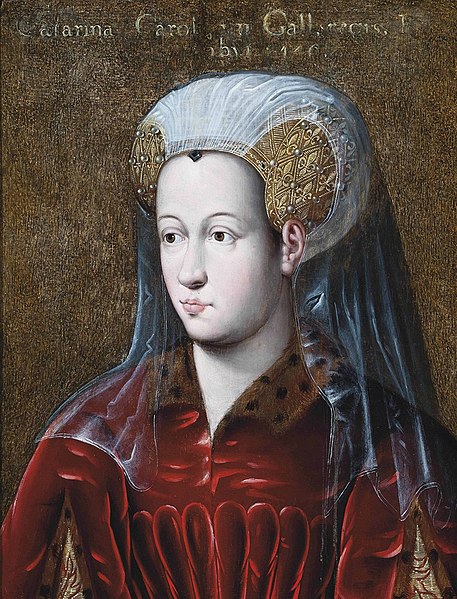
On 13th July 1446, at the age of thirteen, Charles became a widower. Catherine’s death was partly caused by the local climate which was insalubrious[i]; the lowlands being damp and cold which could have affected chest problems. Catherine suffered from fainting fits brought on by coughing. Her health was also affected by the large amounts of travelling required for those following the peripatetic Burgundian court on its journeyings through Philip’s territories.

Charles and Catherine had become friends and when Philip required Charles to attend him in Arras and enter a jousting tourney there in the late spring of 1446 Isabella and her entourage followed. Isabella wanted to protect her enthusiastic son from himself. Charles was to spend his life unable to accept or understand his own limits.

On the day of the joust Catherine had to return to her apartments as she was too ill to sit out in the cold misty air. Charles VII sent two doctors to restore his daughter’s health and Catherine’s husband sat at his wife’s side and played the harp to her, to no avail. Catherine died at about the age of eighteen.

Philip was a soldier and not a diplomat; having been disappointed in his attempts at an alliance with the French he finally gave Isabella free rein to extend the hand of friendship to her English relations. Philip was interested in gaining official confirmation for his imperial lands and seemed unaware of increasing French determination to bring Burgundy completely under French rule. One of Isabella’s aims was to set up a marriage for her son Charles with a member of the English royal family.

The Queen’s Machinations

Richard, Duke of York
Isabella realised that she would have to work with the Duke of York, who was the heir to the throne, in order to achieve a lasting relationship between Burgundy and England. The main thorn in the package was Margaret of Anjou, still violently opposed to all things Burgundian. Her marriage to Henry VI placed her in a position where she could seriously hurt her enemy Philip and she was not afraid to use her influence.

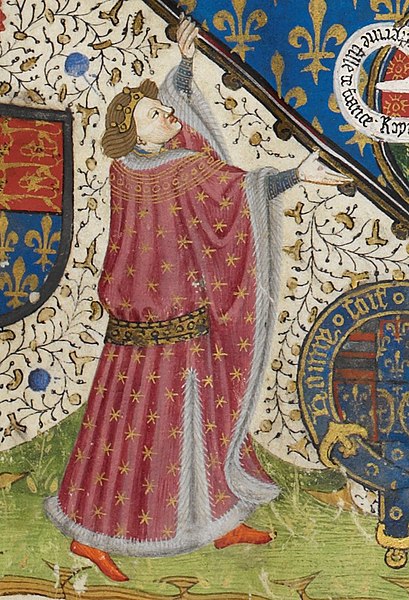
Henry VI was very unlike his father; he’d grown up to become a quiet religious man who wanted nothing more than peace. His wife was a fiery aggressive woman who can have given him no peace at all[ii]. Richard of York, who had governed England in his nephew Henry’s name, was removed from his post as Lieutenant Governor of Normandy and transferred to the wilds of Ireland.

The English court separated into anti and pro-Burgundian factions. Margaret was interested in furthering her father’s prestige at the French court. The queen, along with her allies the Marquess of Suffolk[iii] and the Earl of Somerset[iv], vied for power with the Duke of York[v]. Isabella’s uncle Cardinal Beaufort had retired from the political fray which meant that Isabella needed a new source of gossip and support.

Humphrey, Duke of Gloucester
The queen and her allies were in the ascendant at court, although the marriage was not popular amongst Henry’s subjects as the county of Maine had been negotiated away by Suffolk.

‘And thus the king of England, Henry VI, granted and gave Maine and Anjou at the request of his queen Margaret….and that aforesaid queen of ours begged the King of England that [they] so be given to her father at the urging of William Pole [Suffolk].’[vi]

Margaret’s coterie were soon able to remove another potential rival, the Duke of Gloucester[vii] who was arrested for treason on 20th February 1447 and died mysteriously three days later.

A Burgundian Misstep

The Flemish weavers were dependent on the English merchants selling good quality goods at an acceptable price from the Staple at Calais[viii]. At the moment only inferior grade wool was available for the Burgundians at prices that were far from attractive. Isabella hoped to work with the English merchants to persuade the Crown to change the rules and regulations governing the Staple.

Anthony, Grand Bastard of Burgundy
In August 1446 the Burgundian representatives were able to sign a continuation of the Anglo-Burgundian mercantile agreement extending the treaty until 1458. Isabella spent the autumn in Coudenberg monitoring the factions in the English court. She felt herself to be isolated and sought out the company of Anthony; the Grand Bastard of Burgundy[ix]. Anthony joined with Isabella and Hue de Lannoy preparing plans to persuade Philip to revoke his prohibition against the transportation of English cloth throughout Burgundy.

With Gloucester dead and when her Uncle Beaufort died in April 1447 and with the Duke of York in Ireland, Isabella found herself short on allies and information from the English court. Philip’s imposition of a further 5% tax on English wool coming from Calais only exacerbated the situation.

Burgundian merchants in London were attacked and Henry VI had to place them under his own protection. At the same time, he needed to protect his lands in Normandy from French attack[x],

‘Four armies converged on the duchy from the east, south and west. King Charles attached himself to the eastern one, commanded by Dunois[xi], and directed on the capital [Rouen]….the mob so worked on Somerset that he weakly allowed the archbishop to negotiate for a surrender.’[xii]

War in Burgundy

It took Isabella until the spring of 1451 to persuade the merchants of the Staple to lower their prices and to pay 16,000 gold saluts[xiii] as an indemnity payment in return for an exemption from duty on wool and cloth in Burgundy.

Simon de Lalaing
When Philip amassed his troops outside the walls of Ghent he was infuriated to find the gates of his city closed against him. All his men in the city were executed, runners were sent to neighbouring towns for support and the government was closed down. On 30th March 1452 Philip declared war on one of his own possessions and laid waste to the land thereabouts.

‘Considering the obstinacy and continuing wickedness of the Ghenters….we have summoned some of our noble vassals and loyal subjects from around here….to reduce them to obedience and humility towards us with God’s help.’[xiv]

Isabella’s journey from Brussels to Bruges was across war-torn countryside. Not long after arriving in Bruges Isabella was informed that Oudenaarde, one of Ghent’s allies, had been taken by Simon de Lalaing[xv]. The men of Ghent responded by attacking Oudenaarde and besieged it for two weeks, threatening to kill Lalaing’s two sons. Philip’s armies, one from Seclin and the other from Grammont, raised the siege. Philip attacked Ghent twice in May and other towns allied with Ghent were attacked.

The townspeople of Ghent turned to Charles VII as Philip’s overlord; he was only too happy to interfere in Philips’ affairs. He sent envoys to arrange peace between the two belligerents. One of Charles’ demands was that Philip return of the towns of the Somme valley to France.

Bibliography

The Hundred Years War – Alfred Burne, Folio Society 2005

The Reign of Henry VI – RA Griffiths, Sutton Publishing Ltd 1998

Europe: Hierarchy and Revolt 1320-1450 – George Holmes, Fontana 1984

The Fifteenth Century – EF Jacob, Oxford University Press 1997

Margaret of Anjou – Helen E Maurer, Boydell Press 2003

Isabel of Burgundy – Aline S Taylor, Madison Books 2001

Philip the Good – Richard Vaughan, Boydell Press 2014

Charles the Bold – Richard Vaughan, Boydell Press 2002

www.wikipedia.en


[i] She is believed to have died from tuberculosis
[ii] Henry inherited a form of madness (possibly schizophrenia) through his mother, whose father Charles VI of France had suffered bouts of insanity. Their son Edward was born in 1453
[iii] William de la Pole had been upgraded in rank from Earl to Marquess in 1444 as a result of the successful negotiations for the Anglo-French marriage of which he had been the main proponent. He would later be made Duke of Suffolk
[iv] Edmund Beaufort was made Duke of Somerset in 1448
[v] Quondam Lord Protector of England
[vi] Margaret of Anjou - Maurer
[vii] Another of the king’s uncles
[viii] The designated Staple port
[ix] Unlike other courts, in Burgundy the bastard children of the ruler were treated very much as the legitimate children were; the boys had careers and the girls were married off. Isabella was on good terms with many of Charles’ half siblings. Anthony received an official salary of 3,840 crowns per annum worth in 2015 the relative: historic standard of living value of that income or wealth is £2,741,000.00 labour earnings of that income or wealth is £22,610,000.00 economic status value of that income or wealth is £93,890,000.00 economic power value of that income or wealth is £1,748,000,000.00 www.measuringworth.com. Anthony went on to serve Charles after their father died.
[x] The French invaded Normandy in early November 1447 and took Rouen on 10th.
[xi] Half-brother of Charles of Orléans
[xii] The Hundred Years Way - Burne
[xiii] On the assumption that a salut was roughly worth the same as a guilder, pound or livre this would be worth in 2015 the relative: historic standard of living value of that income or wealth is £11,710,000.00 labour earnings of that income or wealth is £91,260,000.00 economic status value of that income or wealth is £393,800,000.00 economic power value of that income or wealth is £7,418,000,000.00 www.measuringworth.com
[xiv] Philip the Good - Vaughan
[xv] Admiral of Flanders