Showing posts with label Cardinal Wolsey. Show all posts

Monday, 24 April 2017

The Spare Prince


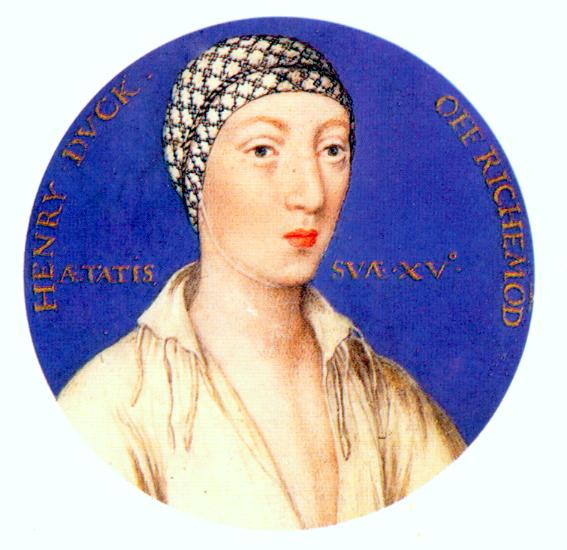
Henri, Duc d'Orleans
The Heir Plus Two Spares

François I, king of France, and his wife Queen Claude[i] were married on 18th May 1514. Their eldest child Louise was born in 1515 but died two years later[ii], Charlotte was born in 1516[iii]. After the birth of her two eldest daughters and worried by her failure to produce an heir for the throne of France Claude made a vow to François de Paul in front of Père Binet, general of the Order of Minims that if she was blessed with a son she would call him François and make representations to Pope Leo X to have the friar canonised[iv]. Her son François was born on 28th February 1518;

‘On the last day of February 1517, the good, virtuous and very perfect Queen of France gave birth to her first son, Dauphin of Viennois, in the town of Amboise, which was the occasion for great rejoicings throughout the realm.’[v]

François was followed on 31st March 1519 by Henri[vi], Duc d’Orléans. The last of the couple’s boys was Charles, Duke of Angoulême born on 22nd January 1522. Two of their daughters also survived the perils of infancy; Madeleine born 10th August 1520, and lastly Marguerite in June 1523.

The queen, who was ignored by her husband, her mother-in-law Louise of Savoy and the court despite having been one of the greatest heiresses of her time[vii], had little bar embroidery and her children to amuse herself. The children were brought up at the Château d’Amboise. Claude, who suffered from ill-health, died 20th July 1524 when Henri was six.

Trouble Abroad


Charles V
The newly crowned François I had a high opinion of himself, which led him to play games out of his league. François had ambitions in Italy; his marriage to Claude had given him a claim to the Duchy of Milan[viii]. Immediately upon becoming king he led an army over the Alps to take Milan from the Hapsburg backed Sforza family. The French won the Battle of Marignano in September 1515[ix].

François’ first setback came when he put his name forward to become Holy Roman Emperor  in place of Maximilian I who died in January 1519. Maximilian’s grandson Charles V was chosen instead. This was a period of change in Europe; to the north and south of France the new Holy Roman Emperor was flexing his muscles and to many of his contemporaries it looked as though he was trying to dominate the world let alone Europe. The ruthless Charles also took the throne of Spain from his mother Queen Juana[x].

Along with the dispute in Italy the issue of the Duchy of Burgundy lay between the two rulers[xi]. Charles wanted to include the rich lands of Burgundy into his empire, creating a foothold in France that would always be a threat to the French.

Battle of Pavia
For centuries to come one of France’s major concerns was to be the encirclement of the country by the Hapsburgs. Over the channel was the rising star of the English popinjay Henry VIII who was to change and change about as the fancy took him, at times allying with Charles V, at others with François, playing one off against the other.

The attack against the Sforzas wasn’t as masterly a step as it may have seemed to François at the time as it brought him into collision with Charles who had his own ambitions in Italy. He allied himself with Leo X. Two years later Charles’ forces won back Milan from the French. The French army pursued the imperial troops south and laid siege to Pavia causing the imperial captain the Marquis of Pescara to exclaim;

‘We were defeated, soon we shall be victorious’[xii]

And so it proved. The two sides clashed in February 1525 at the Battle of Pavia which was a crushing defeat for François who was captured in an ambush by over 1000 imperial arquebusiers.

Imprisonment


Francois I
Arriving in Spain in the summer of 1525 François was greeted as a king, he wrote to his mother;

‘Madame. To let you know the extent of my misfortune, nothing remains to me but my honour and my life which are safe.’[xiii]

But François did not bear up well under imprisonment and fell into a depression and stopped eating. An abscess in his nose was causing the doctors concern. Worried that he might lose this valuable asset Charles hurried to his prisoner’s sickbed and then granted permission for François’ sister Marguerite to minister to her brother.

Charles refused to accept a ransom for François and, working to regain her son’s freedom, Louise of Savoy acting as Regent did her best to break up the anti-French alliance. On 30th August the Treaty of the More was signed with England[xiv]. Henry VIII would use his influence to free François who would pay the English two million écus[xv] in instalments.

By the following January François had agreed the terms of the Treaty of Madrid. He gave Burgundy and Tournai to Charles and resigned his rights in Italy. In return François would return to France as an ally of Charles[xvi]. In return François was allowed to return to France and his two elder sons would take his place. He was affianced to Charles’ sister Eleanor of Austria on 20th January.

Spanish Internment

Bidassoa River
On 17th March 1526 the two older French princes Henri and François exchanged their lives in France for the rigours of dour Spanish fortresses; they were sureties for their father. François preferred his boisterous youngest son, so perhaps he did not miss the Dauphin or Henri? They were escorted into Spain by their grandmother Louise of Savoy and Henry VIII’s ambassador who reported to Cardinal Wolsey;

‘After dinner I was brought to see the Dauphin, and his brother Harry; both did embrace me and took me by the hand….the King’s godson is the quicker spirit and the bolder, as seemeth by his behaviour.’[xvii]

After an exchange of the two young boys and their father on a raft on the Bidassoa river the French princes were originally housed at Vitoria staying with their new stepmother along with a household of French servants including their governor, tutor and seventy attendants. But conditions for the children changed for the worse as François reneged on his agreement with Charles. He repudiated the treaty and the estates of Burgundy endorsed the king’s decision as the deputies declared their wish to remain French.

Pedraza
The Dauphin and Henri were moved to a castle near Valladolid then in February 1527, claiming there had been a plot to free the two French princes they were moved further south to a castle near Palencia[xviii]. Some of their attendants were returned to France. In October 1527 Charles gave permission for Henry VIII’s emissaries to visit François and Henri; their tutor Benedetto Taglicarno reported that;

‘He could not enough praise the Duke of Orléans of wit, capacity and great will to learn, and of a prudence and gravity passing his age, beside treatable gentleness and nobleness of mind, whereof daily he avoweth to see great sparks.’[xix]

In 1529, following the discovery near Palencia of a Frenchman Charles ordered that the two princes be moved yet again to the formidable fortress of Pedraza. By this time all but one of their attendants, a dwarf, had all been taken from them and allegedly sent to man galleys. A French agent reported that whenever the boys were allowed out they were accompanied by large groups of soldiers, Henri was only allowed to ride a donkey held by two men, because of his numerous escape attempts. Henri also cursed the Spaniards at every opportunity.

Bibliography

Martyrs and Murderers – Stuart Carroll, Oxford University Press 2009

Catherine de Medici – Leonie Frieda, a Phoenix Paperback 2003

Charles V – Harald Kleinschmidt, Sutton Publishing 2004

French Renaissance Monarchy – RJ Knecht, Longman Group 1996

The Rise and Fall of Renaissance France – RJ Knecht, Fontana Press 1996

Catherine de’ Medici – RJ Knecht, Pearson Education Ltd 1998

A History of France – David Potter, The MacMillan Press 1995

Prince of the Renaissance – Desmond Seward, MacMillan Publishing 1973

Emperor Charles V – James D Tracey, Cambridge University Press 2010

Henri II – H Noel Williams, Methuen and Co 1910 (reprint 2016)

www.wikipedia.en


[i] Daughter of Louis XII and his second wife Anne of Brittany
[ii] She was engaged to Charles V, while he was still just king of Spain, while she was in the cradle
[iii] She died in 1524 and was engaged to Charles V when her sister died
[iv] Francis of Paola had already been beatified; François and Claude made the necessary representations and St Francis was canonised the following year
[v] Henri II - Williams
[vi] Named as a compliment to the king of England who was his godfather
[vii] Her mother had wanted to marry Claude to Charles V
[ix] The high point of his military career
[xi] Charles father Philip the Handsome had inherited much of the duchy on the death of his mother Mary of Burgundy. The duchy had been seized by the French following the death of Mary’s father Charles the Bold  
[xii] The Rise and Fall of Renaissance France - Knecht
[xiii] Prince of the Renaissance - Seward
[xiv] Negotiations had been interrupted by the Battle of Pavia
[xv] In 2015 the relative: historic standard of living value of that income or wealth is £1,345,000,000.00 labour earnings of that income or wealth is £13,620,000,000.00 economic status value of that income or wealth is £41,660,000,000.00 economic power value of that income or wealth is £616,700,000,000.00 www.measuringworth.com
[xvi] Deserting his former comrades in arms, the Duke of Guelders, the king of Navarre and Robert de la Marck
[xvii] Catherine de Medici - Frieda
[xviii] About 100 miles north of Madrid
[xix] Catherine de Medici - Frieda
Tuesday, 10 January 2017

A Tudor Poet – Henry Howard II

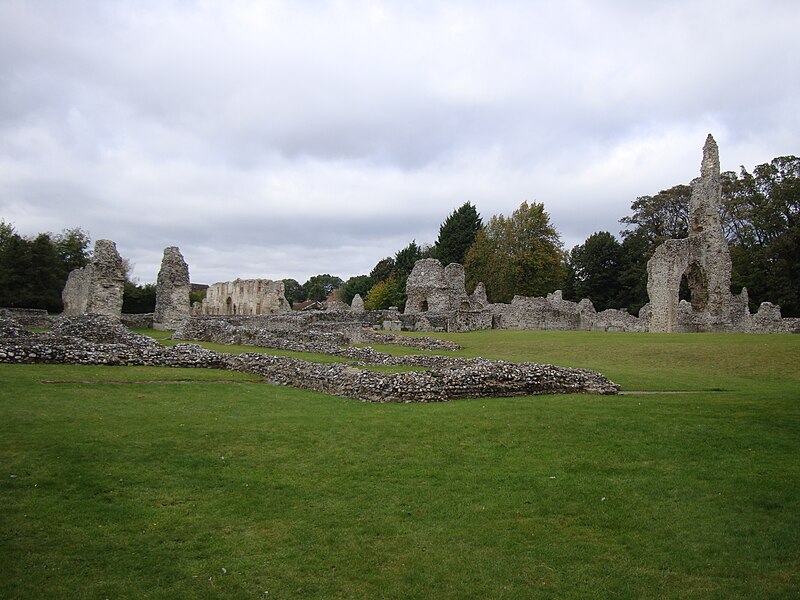
Thetford Priory
A Death in the Family

Norfolk passed the post of Lord Treasurer on to his son in 1522. Two years later the old duke died in May 1524, having served four kings and his son Thomas was elevated to his father’s position. The Howards had kept their place in the royal courts with a ruthlessness that was unrivalled. The hereditary post as Earl Marshall transferred to the new duke at the old duke’s death. Henry became Earl of Surrey in his father’s place.

In June 1524[i] Henry and the rest of the family arrived at Thetford for the funeral and elaborate ceremonies transferring the Howard responsibilities from the second to the third duke at the Priory where all the Howards were buried. The service and ceremonies were conducted by the Bishop of Ely.

Earl of Oxford
Thomas inherited an annual income that varied from £3,000 - £4,000[ii]; an amount greatly in excess of the average peer’s income of £801[iii]. Life at Thetford Hall became increasingly more complex; the new duke took on many of his father’s retinue along with his half-sister Anne, Lady Oxford, relict of the 14th Earl, who had been dispossessed of her possessions by the new Earl of Oxford, a second cousin of her husband’s.

Christmas that year was celebrated with ducal magnificence and so many people arrived that Tendring Hall was overcrowded. Thomas decided to transfer his main home to Kenninghall and employed an army of builders to expand and extend the house into an H shaped building with upwards of seventy rooms.

Changes

The poor and indigent were not ignored by the new duke; hermits and gypsies were welcomed at the Howard table. But Thomas retained in many of his lands the villenage of his predecessors, much to the disgust of his bondsmen who complained that the duke treated them;

‘With much more extremity than his ancestors did.’[iv]

From 1527 onward Norfolk was afflicted by an undiagnosed illness that was to plague him for the rest of his long life[v]. He was prone to discussing his ailment with the king and council, giving them details of his bowel movements. It possibly made him more cranky and remote from his children

Butley Priory gatehouse
Henry’s education now expanded to include subjects approved by the Humanists. His studies were focussed on the liberal arts; rhetoric, Latin, moral philosophy, history, literature and the scriptures. His favourite authors were Virgil and Martial. As a future courtier Henry learnt French, Spanish and Italian, dancing and singing. Henry was a precocious student and Norfolk often gloated over his son’s Latin translations when at court.

Henry loved hunting and his father indulged him while, at the same time, teaching his heir his future responsibilities. Henry accompanied his father while Norfolk undertook his duties as duke. On 16th September 1526 Norfolk went hunting with his sons at Scuttegrove Wood in East Suffolk, spending the night at nearby Butley Priory. On the following day Henry was with the duke when he ordered the desalination of the salt marshes at Hollesley.

The King’s Private Matter

Charles V
Thomas Howard was a hard man; he had to be to survive the vicissitudes of the Tudor court; for over a decade he had been jousting for power with the low-born Thomas Wolsey and generally losing. When his niece Anne Boleyn[vi] became the king’s latest infatuation Thomas found himself in favour and returned as a royal counsellor and companion.


Anne was canny enough not to give in to the king; she had no desire to be one of his discarded mistresses. Even then she may have had marriage in mind putting her in direct opposition to Wolsey who, even then, was considering a divorce for his royal master. Rather than a scion of the Howard family, Wolsey had his eye on a French princess to replace Queen Katherine whose continued failure to produce an heir, other than Princess Mary, was of concern to both king and minister.

Wolsey asked the pope Clement VII for an annulment of the marriage, but the pope was not inclined to overturn the judgement of his predecessor[vii]. The matter rumbled on until Katherine’s nephew’s troops sacked Rome where they found the pope in hiding. The Holy Roman Emperor’s control of the pope meant that his aunt’s annulment was not the done deal that both Wolsey and the king had hoped. This failure to produce a divorce from the faded and aging queen was to cost Wolsey dear. Wolsey’s fall was to produce opportunities for one of his greatest enemies.

The King’s Son

Henry Fitzroy
At the tail end of 1529 Norfolk won what he must have felt was a coup; the king entrusted him with the care of his only son Henry Fitzroy[viii] Duke of Richmond and Somerset. Henry was to be a companion and someone for the young duke to emulate. Norfolk confided in Eustace Chapuys, Charles V’s ambassador, telling him that;

‘I told you that I was on many accounts delighted to see my son making so much progress in his studies and following the path of virtue. The King has entrusted to me the education of his bastard son, the Duke of Richmond….that he may obtain knowledge and virtue, so that a friendship thus cemented promises fair to be very strong and firm.’[ix]

Henry was more likely to impress the young Fitzroy with his prowess in the hunt or on the tennis court rather than with his scholarship; Fitzroy had not inherited his father’s erudition and was not one for books.

The meeting of the two boys who were to be best friends took place at Windsor in the spring of 1530. Fitzroy was eleven to Henry’s thirteen. Norfolk intended that Henry’s bonding with the young boy, who was believed to be intended for high office, would strengthen Howard ties with the throne.

At Windsor

Both boys were hot-headed and very competitive with a tendency towards an arrogance born of their high stations in life. The two boys shared a love of sport and ogling pretty women at court. The boys played Real Tennis together and, if there were females in the spectators’ gallery, they would strip off to display their manly torsos as Henry later wrote[x];

‘’The palme-play [tennis court], where, despoiled [stripped] for the game,

          With dazed eyes oft we by gleams of love,

          Have miss’d the ball, and got sight of our dame,

          To bait her eyes, which kept the leads above….’[xi]

Real Tennis Court Hampton Court
At dances the two boys would often act in tandem, each pleading the other’s case to the desired belle and would later compare notes, no doubt giggling like the adolescent boys they were. Although these two boys were among the most eligible  youths in the country, their advances were frequently rejected and upon occasion being on the receiving end of ‘looks that tigers could but rue‘, They shared chambers in the castle, hung with tapestries, some with a chivalric theme, one depicted the story of Paris and Helen.

The two boys started their military training at Windsor. They practised their jousting skills in the tiltyard and learnt to use a sword on foot and on horseback with and without armour. Their trainers encouraged a friendly rivalry between the two boys. Fitzroy and Henry went hunting as often as possible.

Bibliography

Henry VIII’s Last Victim – Jessie Childs, Vintage Books 2008

The Ebbs and Flows of Fortune – David M Head, University of Georgia Press 2009

House of Treason – Robert Hutchinson, Phoenix 2009

Henry VIII – Robert Lacey, Weidenfeld & Nicholson & Book Club Associates 1972

The Earlier Tudors – J D Mackie, Oxford University Press 1992

Bastard Prince – Beverley A Murphy, Sutton Publishing 2001

Rivals in Power – David Starkey, MacMillan London Ltd 1990

The Six Wives of Henry VIII – Alison Weir, Pimlico 1992

www.wikipedia.en


[i] The duke had lain in state in the chapel at Framlingham Castle for a month
[ii] In 2015 the relative: historic standard of living value of £3,000 is £1,855,000.00 labour earnings of that income or wealth is £17,000,000.00 economic status value of that income or wealth is £59,780,000.00 economic power value of that income or wealth is £894,000,000.00. In 2015 the relative: historic standard of living value of £4,000 is £2,473,000.00 labour earnings of that income or wealth is £22,660,000.00 economic status value of that income or wealth is £79,710,000.00 economic power value of that income or wealth is £1,192,000,000.00 www.measuringworth.com
[iii] In 2015 the relative: historic standard of living value of that income or wealth is £495,300.00 labour earnings of that income or wealth is £4,538,000.00 economic status value of that income or wealth is £15,960,000.00 economic power value of that income or wealth is £238,700,000.00 www.measuringworth.com
[iv] Henry VIII’s Last Victim - Childs
[v] He died in 1554 at the age of 81
[vii] Allowing for the marriage between Henry VIII and Katherine, despite her prior marriage to Henry’s brother Arthur
[ix] Henry VIII’s Last Victim - Childs
[x] A poem written while in the Tower
[xi] Rivals in Power - Starkey