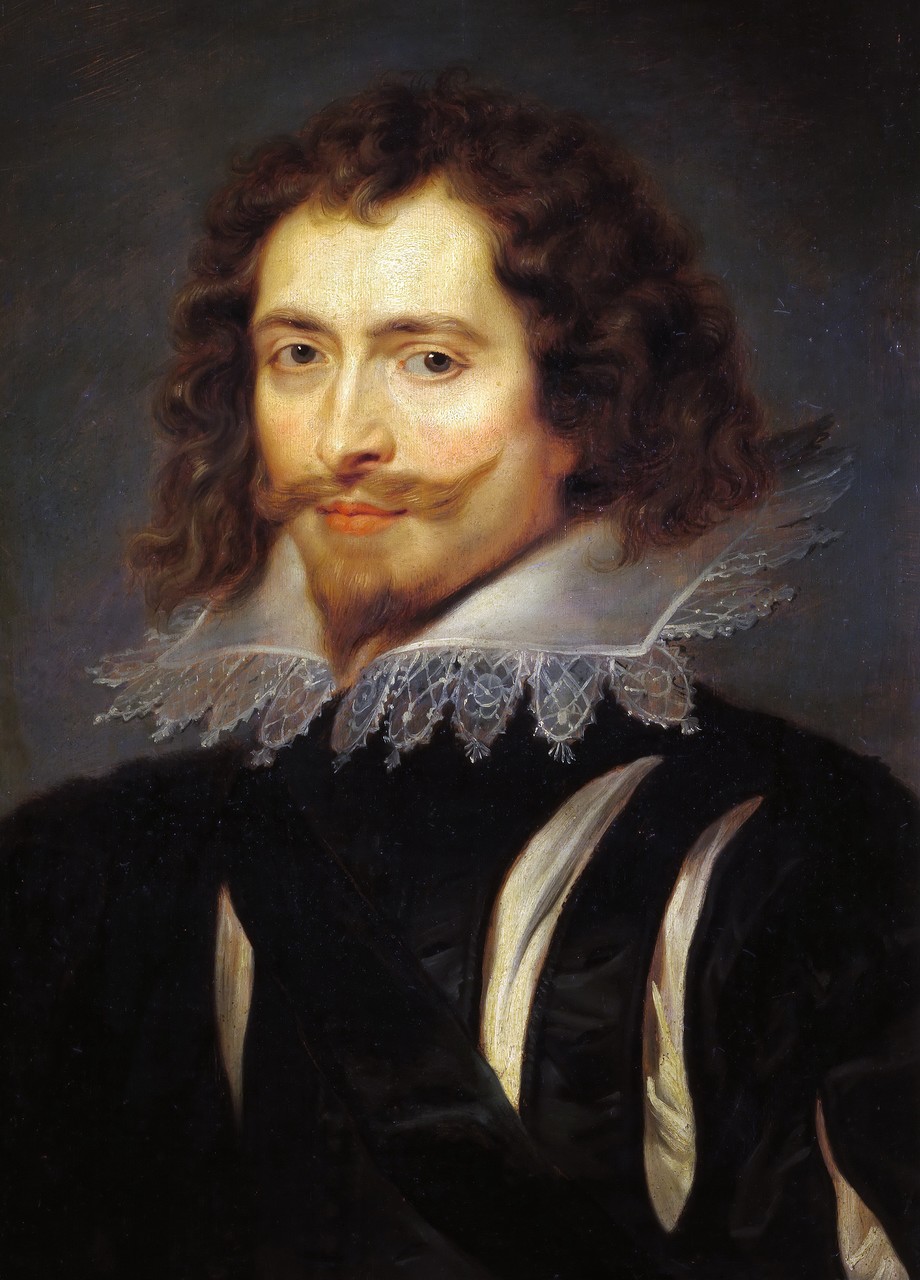
Showing posts with label Duke of Buckingham. Show all posts

Wednesday, 26 November 2014

A Stuart Princess - The Winter Queen IV


Battle of Stadtholn
The War Rages On
On 6th August 1623 the imperial forces, led by Tilly, fought their way to a magnificent victory at Stadtholn in Westphalia. The Protestant forces led by Christian of Brunswick were overwhelmed and, although Christian and 1,000 cavalry escaped[i], many of his senior officers were killed. Frederick was forced to sign an armistice with Ferdinand.

Meanwhile Elizabeth’s brother Charles and his good friend George Villiers were scandalising the Spanish court, while spying out the land; Charles was interested in marrying one of the Infantas of Spain. James believed that an alliance with Spain would be the way to keep England out of the war. His daughter did not view the proposal with equanimity;
‘I have cause enough to be sad yett I am still of my wild humour, to be as merrie as I can in spite of fortune. I can send you no news but that which will make you sadder………..All growes worse and worse………..my brother is still in Spaine.’[ii]
In 1624 Denmark entered the war and in the same year, egged on by his favourite George Villiers and his son, James sent troops to support the Protestant cause.
Births and Deaths

Frederick Henry of the Palatinate
On 21st August 1624 Elizabeth gave birth to Louis, who died aged five months. Seven months later Elizabeth’s father James died on 27th March 1625 and was succeeded by Charles, a man decidedly unfit for purpose and, like his father in his dotage, ruled by Villiers.
On 5th October 1625 Edward, Count Palatine of Simmern[iii] was born. And in the same year that Sweden entered the war, under the leadership of Elizabeth’s former suitor Gustavus Adolphus, on 7th July 1626 Henriette Marie of the Palatinate[iv] was born. The following year on 26th September Elizabeth bore John Philip Frederick of the Palatinate.

In 1628 Catholic France, directed by Cardinal Richelieu, entered the war on the Protestant side[v] At the end of the year, on 19th December 1628, Charlotte of the Palatinate was born[vi].
Less than a month later, Elizabeth and Frederick’s eldest child Henry Frederick drowned, age 15 on a visit to the Haarlemmeer to see a captured Spanish treasure fleet. 
Charles Louis and Rupert
The tragedy resulted in Frederick leaving all political matters in Elizabeth’s hands and she relied on her brother who recommended taking up Ferdinand on his offer of having Charles Louis brought up as a Catholic in Vienna. Elizabeth was incensed;
‘Rather than stoop to such an act of meanness she would with her own hands become her son’s executioner.’[vii]
Elizabeth’s penultimate child was to have significant effect on English history. Sophia, the future Electress of Hanover, was born on 14th October 1630[viii]. In that year Saxony and Brandenburg finally took up arms for the Protestant cause. Frederick and Elizabeth’s final child was Gustavus Adolphus born on 14th January 1632 and named after the Swedish king at Elizabeth’s request; Frederick had wanted to name him after their lost first born.
Frederick
Frederick died on 29th November 1632, 23 days after the death of Gustavus Adolphus of Sweden; Elizabeth was to outlive her husband by thirty years. Frederick had hidden the gravity of his ailments and the news of his death was a shock to Elizabeth, she wrote to the States of Holland;
‘To lose him renders my grief almost beyond endurance. My first great resource is Heaven: next to that divine trust, I confide in you; nor will I doubt but that to me and my children, will be continued that friendship so long manifested to my lamented consort. It is for a widow, for her orphans, that I now implore your protection.’[ix]
Elizabeth spent her widowhood in den Haag writing copious numbers of letters and attempting to make marriage matches for her children, while the war continued to rage around her.

Peace in Our Time
Gustavus Adolphus with his mother or elder sister
The young Gustavus Adolphus died on 9th January 1641; in the same month that the Diet of Regensburg, summonsed by Ferdinand, offered Elizabeth and her daughters a safe conduct should they wish to claim the pensions and dowries suitable for the widow and children of a German prince. The safe conduct was not offered to her sons, one of whom was fighting in the Dutch army, one in the Swedish army and another was a prisoner of Ferdinand’s and never ceased informing his jailers of the righteousness of his father’s cause.
Charles Louis and Rupert spent time in England attempting to gain Charles’ support for their cause. Indeed Rupert commanded Charles’ cavalry and was in charge of Bristol during the 1645 siege. Rupert was castigated by Charles when he surrendered the city to save his men. Egged on by a jealous royal favourite, the George Digby the Earl of Bristol, Charles ordered that his ablest commander was to no longer fight for the royalist cause. This was not the only foolish advice tendered by Digby who persuaded Charles on the course that was to end on the scaffold for Charles and exile for Digby.
Ratification of the Treaty of Munster
Peace in Europe was not reached until 1648 when the Peace of Westphalia[x] was finally concluded with a series of Treaties signed at Münster and Osnabrück. The peace saw Charles Louis restored to his rightful position as Prince of the Lower Palatinate and as an Elector; the Upper Palatinate being attached to Bavaria.
Death in Winter
The deaths of Gustavus, John Philip in 1650, Henriette Marie in 1651 and Maurice in 1652 must have caused Elizabeth much grief. Elizabeth would have also suffered when her baby brother Charles was executed, due to his own folly, in early 1649. Charles’ family spent time in the Netherlands and at the court of Louis XIV during the years of the Commonwealth.
Elizabeth as a widow
Elizabeth became estranged from her remaining children, although she did spend time with her growing number of grandchildren. She was now to pay the price for being "a distant mother to most of her own children".
In May 1660 Elizabeth’s nephew Charles II was restored to the English throne; the English fleet came to collect their king from den Haag. A young Pepys was in the king’s entourage and he was allowed the honour of visiting the king’s aunt;
‘After that, to see the Queen of Bohemia, who used us very respectfully. Her hand we all kissed.’[xi]
Elizabeth decided to return home and arrived in England on 26 May 1661. The delay was caused by Charles’ ministers who intimated that a visit from the king’s aunt would be best delayed. Elizabeth wrote to the Chancellor;
Prince Rupert
‘Having taken leave of her friends, she could not go back to it without incurring disgrace.’[xii]
By July, she had decided to stay and arranged for the remainder of her furniture, clothing and other property to be sent to her.
Elizabeth moved into Drury House in London. In the new year, on 29 January 1662, she moved to Leicester House; but by this time she was ill, suffering from pneumonia. On 10 February 1662 Elizabeth had a lung hemorrhage, dying soon after midnight on 13 February 1662; appropriate timing for the Winter Queen. She was buried in Westminster Abbey close to her brother Henry, with only Rupert walking behind his mother’s coffin. 
Bibliography
Gustavus Adolphus the Great – Nils Ahnlund, 1999 History Book Club

Memoirs of Elizabeth Stuart, vol 2 – Elizabeth Benger (ed), General Books LLC 2012
The Early Stuarts – Godfrey Davies, Oxford University Press 1987
King James – Antonia Fraser, BCA 1974
Charles I – Christopher Hibbert, Penguin 1968
The Thirty Years War – Herbert Langer, Dorset Press 1990
The Shorter Pepys – Samuel Pepys – Penguin Books 1987
The Thirty Years War – CV Wedgewood, Folio Society 1999
www.wikipedia.en


[i] This was Christian’s last serious engagement and he died three years later in 1626 at the age of 26
[ii] Memoirs of Elizabeth Stuart, vol 2 – Benger (ed)
[iii] Edward later married Anna Gonzaga
[iv] On 16 June 1651 she married Sigismund Rákóczi, brother of the Prince of Transylvania
[v] France was concerned about the incipient Hapsburg hegemony in Europe
[vi] She died just over two years later
[vii] Memoirs of Elizabeth Stuart, vol 2 – Benger (ed)
[viii] Sophia married Ernest Augustus, Elector of Hanover, her son George became King of England
[ix] Memoirs of Elizabeth Stuart, vol 2 – Benger (ed)
[x] France and Spain remained at war for another eleven years
[xi] The Shorter Pepys - Pepys
[xii] Memoirs of Elizabeth Stuart, vol 2 – Benger (ed)

Wednesday, 4 June 2014

The First Stuart King - The Wisest Fool in Christendom VII


Change
Sir Theodore Mayerne
James was ill and was attended by his physician Theodore Mayerne. He suffered from depression, attacks of the colic, vomiting and diarrhoea. In 1617, despite his illness, James travelled up to Scotland; the trip was a costly one. Not only tapestries and silver went north, but also melons and cherries as the king had a passion for soft fruit.
While in Scotland, James pushed to further remove all traces of Puritanism in the Scottish church. In 1618 the Five Articles of Perth imposed Anglican rituals on the Scots although they were not ratified until 1621. James increased minister’s stipends before threatening to remove the increase from those who objected to the articles.

James, against his religious beliefs, was as a policy matter forced to deal with the High Church bishops of the Church of England. He did however refuse to promote Laud[i], a confidant of Villiers, who was to cause such problems for his son.
1709 edition of the Book of Sports
In England, where Puritanism was becoming rife, James had to issue the Book of Sports to protect dancing, playing and ‘church-ales’ which were permissible once the church service was over.
Anne died on 2nd March 1619; the couple had been married for thirty years, although they had not shared a household for ten years. James did not attend her deathbed or funeral having a morbid dislike of such events. But he was upset by her death and wrote poetry;

‘She’s changed, not dead, for sure no good prince dies

But, as the sun sets, only for to rise.’[ii]
Charles was with his mother when she died, he was close to his mother possibly particularly so after the loss of his sister Elizabeth to a life abroad.

Expansion Abroad

In September 1620 the Pilgrim Fathers set off in the Mayflower for the new world in a search for a land free from the persecutions suffered in England. They were not the first English travellers to make landfall in the Americas. A colony in Virginia was given a royal patent in 1616.
Sir William Alexander
Sir William Alexander[iii] founded a short lived colony in Nova Scotia; James granted him a royal charter in 1621. Walter Ralegh was allowed out of the Tower for one last ill-fated expedition up the Orinoco where gold was alleged to be found. Alas, Ralegh clashed with the Spaniards whom James felt it politic to appease. And he was executed upon his return, much to the indignation of his fellow countrymen who felt that their king had become a puppet of Philip III.
War in Europe

Few who saw the beginning of the war that now befell Europe can have imagined that it would last thirty years and one that was to have profound effects on James’ daughter and her husband. The largely Protestant states were lined up against the hegemony of the Hapsburgs.

The Protestants in Bohemia revolted against their Catholic overlord, the Holy Roman Emperor. The throne was offered to James’ son-in-law, Frederick who became king in August 1619. He and Elizabeth became known as the Winter King and Queen as they were chased out of Bohemia in November 1620 and out of the Palatinate following an invasion in February 1620 by Spain and Austria.
Initially James refused to become involved in the dispute saying;
‘His subjects were as dear to him as his children, and therefore he could not embark them on an unjust and needless quarrel.’[iv]
Frederick the Winter King
James was caught between the peril that his daughter and son-in-law now found themselves in and his hopes for a Spanish marriage for Charles. Supporting Frederick was popular amongst James’ subjects and an appeal for money raised some funds, but to pay for military intervention sufficient funds could only be obtained from parliament.
Parliament was in an intractable mood and spent much time criticising James’ policies and in particular his foreign policy, which James viewed as a royal prerogative. There was much popular discontent with the granting of patents and monopolies of which large parts were controlled by Villiers and his family[v].

Bacon warned Villiers of the dangers but was blithely ignored. In the event it was Bacon who was used as a scapegoat and was fined £40,000[vi] and imprisoned[vii]. The brangle between James and parliament rolled on. James wished to trust to the new king in Spain, Philip IV, to return Frederick to his Electorship. Parliament was dissolved in January 1621 with no war subsidies having been granted.
In Buckingham’s Talons
George Villiers
James was still caught in Villiers’s toils; telling his Privy Council in 1617
‘I, James, am neither a god nor an angel, but a man like any other. Therefore I act like a man and confess to loving those dear to me more than other men. You may be sure that I love the Earl of Buckingham more than anyone else.’[viii]
The more honours and riches Villiers was given, the more unpopular he became. High positions or remuneration were awarded at his discretion. He purchased the post of Lord High Admiral from Nottingham for a lump sum of £3,000[ix] and a pension of £1,000 per annum for life[x]. Following the queen’s death the majority of her collection of jewels and plate, worth nearly £500,000[xi] was lavished on the favourite.

The Spanish Bride?
Diego Gondemar
The friendship between the heir to the throne and the favourite continued apace; Charles went off with Villiers in 1623 on an unofficial trip to Spain to catch a glimpse of his future wife at the suggestion of Diego Gondamar, the Spanish Ambassador.
At a suggestion that Villiers and Charles extend their stay James, who wore a portrait of ‘Steenie’ under his waistcoat, became frantic.

‘Alas, I now repent me sore that I ever suffered you to go away, I care for match nor nothing, so I may once have you in my arms again; God grant it!’[xii]
The antics of the heir to the English throne and the king’s favourite horrified the staid Spanish court and the marriage to the Infanta Maria Anna[xiii] with her very desirable dowry of £600,000[xiv] was off, putting paid to James’ hopes for a closer union between the two countries

Henrietta Maria
Charles and Villiers returned to England via France where the prince caught a glimpse of the Princess Henrietta Maria the sister of the king of France Louis XIII[xv]. Following their treatment there the two young men were now determined on war with Spain.
In February 1624 Parliament met again; James and Charles and Villiers had very divergent expectations; James wanted peace, Charles and Villiers wanted war. And Villiers wanted to bring about the fall of Cranfield, the highly efficient Lord Treasurer, who had supported the Spanish marriage, much to James’ consternation;

‘My God, Steenie you are a fool and will shortly repent this folly.’[xvi]
But James was old for his age, sick and tired and the folly was enacted and the country’s foreign policy completely reversed. Instead of Spain, the country now allied with France, whose anti-Austrian policy, under the auspices of Cardinal Richelieu, had brought her into the war on the Protestant side.

Parliament voted for a naval war with Spain and voted £300,000[xvii] towards the costs. Villiers, as Lord High Admiral, led a disastrous expedition to Cadiz which further sullied his reputation at home. While James’ diplomatic moves to save the Palatinate were in vain.
Death Comes as the End
James in 1621
On 5th March 1625 James fell ill while hunting at Theobalds with what was described as;
‘As ordinary and moderate tertian ague[xviii].’[xix]
James did not recover as expected and suffered a stroke; Villiers and his mother tried country remedies to save the king who was by now unable to speak and suffering from dysentery into the bargain. He died on 27th March; the Earl of Kellie commented;

"As he lived in peace, so did he die in peace, and I pray God our king [Charles I] may follow him."[xx]
It was James’ misfortune that he was succeeded by a son whose abilities were mediocre and who was under his wife’s thumb; so much so that he was prepared to return the country to Catholicism. And his grandsons Charles and James were to attempt to do the same. It was a great-grandson, William of Orange[xxi], who was to save England from the Popish threat for all time.
Bibliography
Charles The First – John Bowle, Weidenfeld & Nicholson 1975

The Early Stuarts – Godfrey Davies, Oxford University Press 1987
King James – Antonia Fraser, BCA 1974

Charles I – Christopher Hibbert, Penguin 1968
www.wikipedia.en


[i] A man with homosexual leanings, whose erotic dreams about Buckingham were confided to his diary
[ii] King James - Fraser
[iv] Ibid
[v] Controlling the licensing of inns and ale-houses and the manufacturing of gold and silver thread amongst others
[vi] In 2011 the relative: historic standard of living value of that income or wealth is £6,565,000.00 economic status value of that income or wealth is £204,500,000.00 economic power value of that income or wealth is £1,331,000,000.00 www.measuringworth.com
[vii] Released by James after a few days
[ix] In 2011 the relative:  historic standard of living value of that income or wealth is £454,100.00 economic status value of that income or wealth is £14,760,000.00 economic power value of that income or wealth is £99,090,000.00 www.measuringworth.com
[x] In 2011 the relative:  historic standard of living value of that income or wealth is £151.40 economic status value of that income or wealth is £4,921.00 economic power value of that income or wealth is £33,030.00 www.measuringworth.com
[xi] In 2011 the relative:  historic standard of living value of that income or wealth is £80,930,000.00 economic status value of that income or wealth is £2,834,000,000.00 economic power value of that income or wealth is £18,850,000,000.00 www.measuringworth.com  
[xii] King James - Fraser
[xiii] The younger sister of Anne of Austria, queen of France
[xiv] In 2011 the relative: historic standard of living value of that income or wealth is £90,570,000.00 economic status value of that income or wealth is £3,303,000,000.00 economic power value of that income or wealth is £21,000,000,000.00 www.measuringworth.com
[xv] Whom he eventually married; the future queen was a disastrous influence on Charles
[xvi] Charles I - Hibbert
[xvii] In 2011 the relative: historic opportunity cost of that project is £51,750,000.00 labour cost of that project is £775,300,000.00 economic cost of that project is £9,527,000,000.00 www.measuringworth.com
[xviii] A three day fever
[xix] King James - Fraser
[xxi] His mother was Mary, Princess Royal, eldest daughter of Charles