Showing posts with label Charles V. Show all posts

Monday, 5 June 2017

The Spare Prince VII


Henri crushes heresy underfoot
Persecuting Heretics

By 1547 the French monarchy had ranged itself against the Protestant tide sweeping over northern Europe. Henri was allegedly encouraged by Diane to persecute the heretics in France. Montmorency was another of Henri’s advisers not known for his liberal tendencies. François de Guise too was strongly anti-Protestant; he encouraged Henri to believe that conciliation with the papacy was necessary and that France should support Pope Paul III and after him Pope Julius III. Henri certainly attended more than one auto-da-fé.

On 5th April 1547 Henri issued an edict against blasphemy and set up a special tribunal[i] of the Paris Parlement to deal with cases of heresy, by-passing the ecclesiastical courts. By March 1550 the tribunal had handed down 39 death sentences out of 215 cases heard before it. There were other sentences, apart from death, ranging from public penance to public whipping, loss of all goods and possessions, exile and being sent for a galley slave. Confiscated estates were handed out to Henri’s favourites and few refused. The Maréchal de Vieilleville was one of the few who objected to enrich himself in this manner;

‘It would be to incur the pains of hell for next to nothing.’[ii]

The church objected to its exclusion from all but cases involving clerics and eventually in June 1551 Henri issued the Edict of Châteaubriant. Only simple heresy was henceforth to be dealt with by the ecclesiastical courts. From now on;

·         Parlement personnel were to be reviewed every three months to ensure they did not suffer from the taint of heresy.

·         All public appointments were made subject to the appointee receiving a certificate of Catholicity.

·         All teachers were to be good Catholics

·         Magistrates were to seek out heretics and destroy forbidden books.

·         Money was not allowed to be sent to Geneva or other hotbeds of Protestantism.

·         Attending church was made obligatory

·         Bishops had to reside in their bishoprics and the articles of faith[iii] were to be read out from the pulpit every Sunday; without adherence to the articles no-one was allowed to preach.  

The edict resulted in an exodus of heretics to Geneva, prepared to exile themselves for their faith. By 1560 it is estimated that close to 10,000 people may have left France for the safety of Geneva which became a centre for the printing of heretical books.

The Emperor’s Revenge

Bouvignes
In April 1553 Charles, in revenge for his defeat in Metz, invaded Picardy besieging Thérouanne. When the town surrendered he had it razed to the ground. France was surrounded by enemies; England and Spain were allied by the marriage between the two monarchs, Mary Tudor whose brother Edward died in July 1553[iv], and Charles’ son Philip.

Henri decided that the answer was to invade the Low Countries; in June 1554 three French armies reached the southern Netherlands and on 28th they captured Mariembourg[v]. On 12th July Henri and Montmorency captured Bouvignes and the 800 man Spanish garrison was put to the sword. The French marched on Brussels and, in an attempt to draw Charles out of his stronghold, attacked the fort of Renty on 10th August.
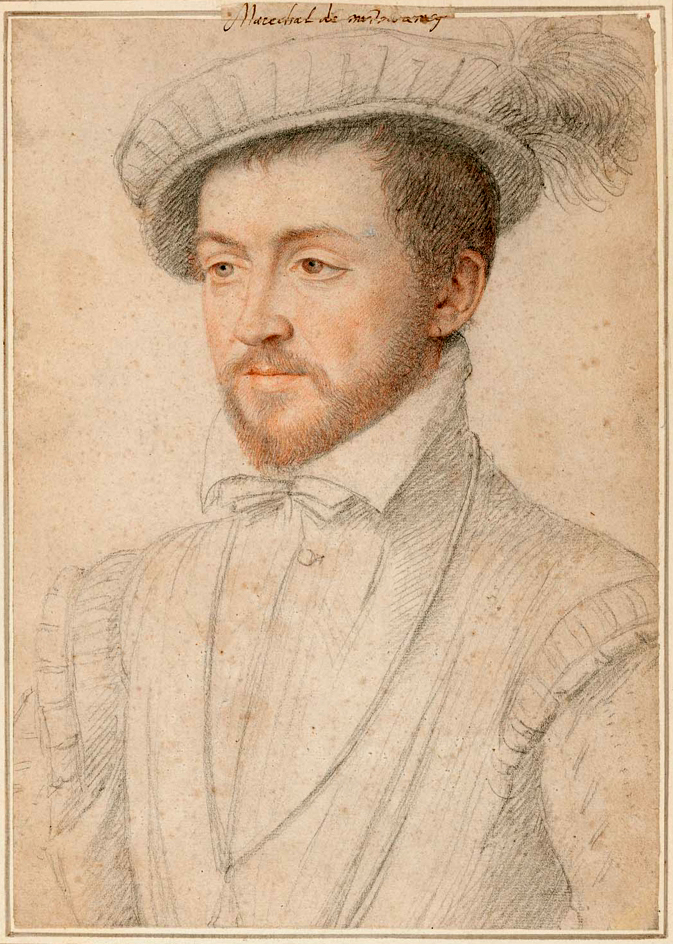
Francois de Montmorency
Battle was joined on 13th but Charles held on to Renty and on 15th Henri called off the campaign. Montmorency was accused of failing to capture Charles and the Venetian envoy Giovanni Capello reported;

‘He used to be regarded as pusillanimous; now he is seen as a veritable coward, as he is afraid of chasing an enemy who was beaten and almost fleeing.’[vi]

The Guises were at the forefront of the Constable’s critics whose son François was held captive[vii] by Charles. Montmorency longed for peace while the Guise family saw their future in war.

War Comes to Italy

The war was also fought in long-contested northern Italy where the Cardinals Francois de Tournon and Ippolito d’Ésté held a conference with French allies about creating a diversion in Italy. On 26th July the citizens of Siena rose against the Spanish garrison and expelled it. The following month Paul de Termes[viii] took control of Siena’s defence and appointed Cardinal d’Ésté as governor.

Cosimo de’ Medici, Duke of Florence[ix] intrigued with Charles to bring Siena back under imperial control. Pedro Alvarez de Toledo, the Viceroy of Naples laid siege to Siena in January 1553 but was forced to raise the attempt when France’s ally, the Ottoman Empire, threatened the south of Italy. Henri had written to Suleiman asking him to send a fleet in the spring and early in 1553 Baron de la Garde[x] travelled to Constantinople to liaise with the Turks.
Battle of Marciano
The Turkish fleet was joined by French galleys and, given that Siena was safe, followed Henri’s orders to attack Corsica[xi], which fell to the invaders easily enough. The Genoese captured much of the island back the following year in an expedition under the command of Andrea Doria, although all the French troops were not cleared out until 1555.

Piero Strozzi[xii] was placed in charge of Tuscany but he was defeated on 2nd August 1554 at the battle of Marciano[xiii] which was followed by the besieging of Siena. The city fell in April 1555. Elsewhere in Italy things had being going France’s way; Casale and Ivrea fell and Marshall Brissac took Montferrat and controlled the exits from the Po valley.

The Emperor’s Departure

Emperor Ferdinand
Following the disappointment of Siena’s fall Montmorency attempted to negotiate a general peace; talks began in May 1555 in Marck[xiv]. Diane too was interested in peace as her nephew Robert de la Marck had also been taken prisoner. The French treasury was depleted with the cost of raising and keeping so many armies on the march.

By now Charles’ ill-health was getting the better of him and between October 1555 and January 1556 he laid down his titles and responsibilities, leaving the empire to his brother Ferdinand and Spain to his son Philip. In an emotional speech Charles told his audience of his travels;

‘I have made eight voyages in the seas of the Mediterranean and three in the seas of Spain, and soon I shall make a fourth voyage when I return there to be buried.’’[xv]

Charles retired to the monastery of Yuste[xvi].

Following the death of Pope Julius III in March 1555[xvii] the rabidly anti-Spanish Paul IV became pope; he hated Charles and nourished ambitions for his nephews. The new pope was a great believer in nepotism and demanded the see of Naples for his cardinal-nephew Cardinal Carafa[xviii] and Piacenza for another nephew Giovanni, the Duke of Paliano[xix] who had been placed at the head of the papal army. Philip refuse to accommodate the pope’s demand and in return Paul IV excommunicated Philip and his father.

Philip II
Henri was delighted by Philip’s intransigence and planned;

‘To force the emperor and his allies to shift the main burden of the war to Italy in order to relieve our territories and subjects on this side [of the Alps]’[xx]

At the instigation of the Cardinal of Lorraine the Franco-papal alliance was signed in December 1555, despite the concerns of Montmorency who pointed out that the papal treasury was empty and the pope lacked allies in Italy.

Bibliography

Martyrs and Murderers – Stuart Carroll, Oxford University Press 2009

Suleiman – André Clot, Saqui Books 2012

Catherine de Medici – Leonie Frieda, a Phoenix Paperback 2003

Philip of Spain – Henry Kamen, Yale University Press 1997

Charles V – Harald Kleinschmidt, Sutton Publishing 2004

French Renaissance Monarchy – RJ Knecht, Longman Group 1996

The Rise and Fall of Renaissance France – RJ Knecht, Fontana Press 1996

Catherine de’ Medici – RJ Knecht, Pearson Education Ltd 1998

A History of France – David Potter, The MacMillan Press 1995

Emperor Charles V – James D Tracey, Cambridge University Press 2010

Henri II – H Noel Williams, Methuen and Co 1910 (reprint 2016)

www.wikipedia.en


[i] Called the Chambre Ardente as a result of the severity of its sentencing
[ii] Henri II - Williams
[iii] Laid down by the Paris Faculty of Theology in 1543
[iv] The short-lived claim by the Duke of Northumberland on behalf of his daughter-in-law Lady Jane Grey was ended with her execution
[v] Now a suburb of the town of Couvin in the Ardennes
[vi] The Rise and Fall of Renaissance France - Knecht
[vii] Taken during the fall of Thérouanne
[viii] Henri’s lieutenant in Italy
[ix] Upgraded in 1569 to the Grand Duchy of Tuscany
[x] Former ambassador to the Sublime Porte and General of the Galleys.
[xi] Part of the Genoese Republic territory, causing Genoa to ally with the Holy Roman Emperor
[xii] Leader of the Florentine exiles; a favourite of Catherine de’ Medici’s who mortgaged some of her dower lands in the Auvergne to fund him and his supporters
[xiii] Also known as the battle of Scannagallo
[xiv] The talks were unsuccessful as Henri demanded that the status quo be preserved while Charles insisted on a return to the pre-war position
[xv] Philip of Spain - Kamen
[xvii] Whose successor Marcellus II died 22 days after his election
[xviii] Formerly a condottiero
[xix] To replace Paliano which the Spanish had recently conquered.
[xx] The Rise and Fall of Renaissance France - Knecht
Monday, 29 May 2017

The Spare Prince VI


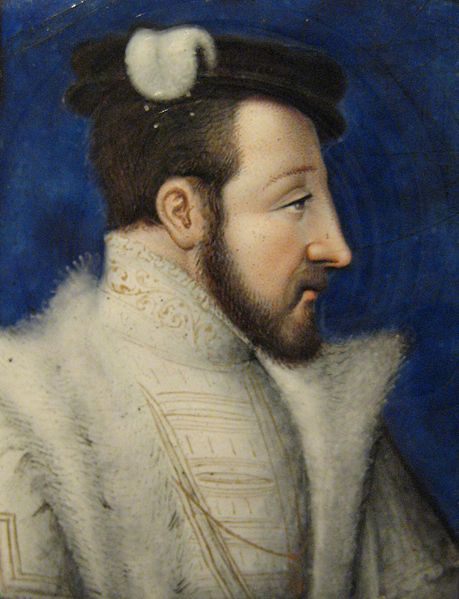
Henri II
Fighting the Imperials

With the salt tax revolt under control Henri could finally turn his attention to Charles V. Early in 1550 the German Protestants, led by Maurice of Saxony, began talks which two years later resulted in the Treaty of Chambord, a union between German Protestants and French Catholics against the imperium. As his reward for subsidising the Protestant princes[i] Henri was to occupy Metz, Cambrai, Toul and Verdun as Imperial Vicar.

Encouraged by Diane and the Guise family[ii], Henri saw this as the beginning of another French bid for the imperial crown for himself. Within months many of the princes came to terms with their emperor and switched sides. Action seemed necessary when imperial troops occupied a strategic position near Metz[iii]; Montmorency organised the army of 50,000 that gathered in Champagne, with reserve forces held in Picardy.
Christina of Denmark
Henri declared war on 15th February 1552 and the French army swept into imperial territories after Henri reviewed the troops at Joinville[iv] at the end of March. Montmorency and François de Guise took Gorze after a short siege and Montmorency walked into Metz on 10th April without a fight. Sometime in April 1552 Henri raised the status of Joinville into a principality in France, changing the status of the Guise family into French nobility rather than noble foreigners.

On the 14th the French army violated the neutrality of Lorraine and marched on Nancy where Cardinal Lorraine had prepared the way. Christina of Denmark was removed as regent. Henri was made Protector of the young Duke Charles[v] and the Lorraine nobility swore their allegiance to the new Protector. French soldiers were garrisoned in the main towns of the duchy. In May 1552 Henri wrote to Diane;

‘I find myself marching to pass the river Sarre….I beg you to believe that my army is splendid, and animated by an excellent spirit; and I am confident that, if it is intended to dispute the passage, Our Lord will aid me by His grace, as he did at first.’[vi]

The Counter-Attack

Duke of Alva
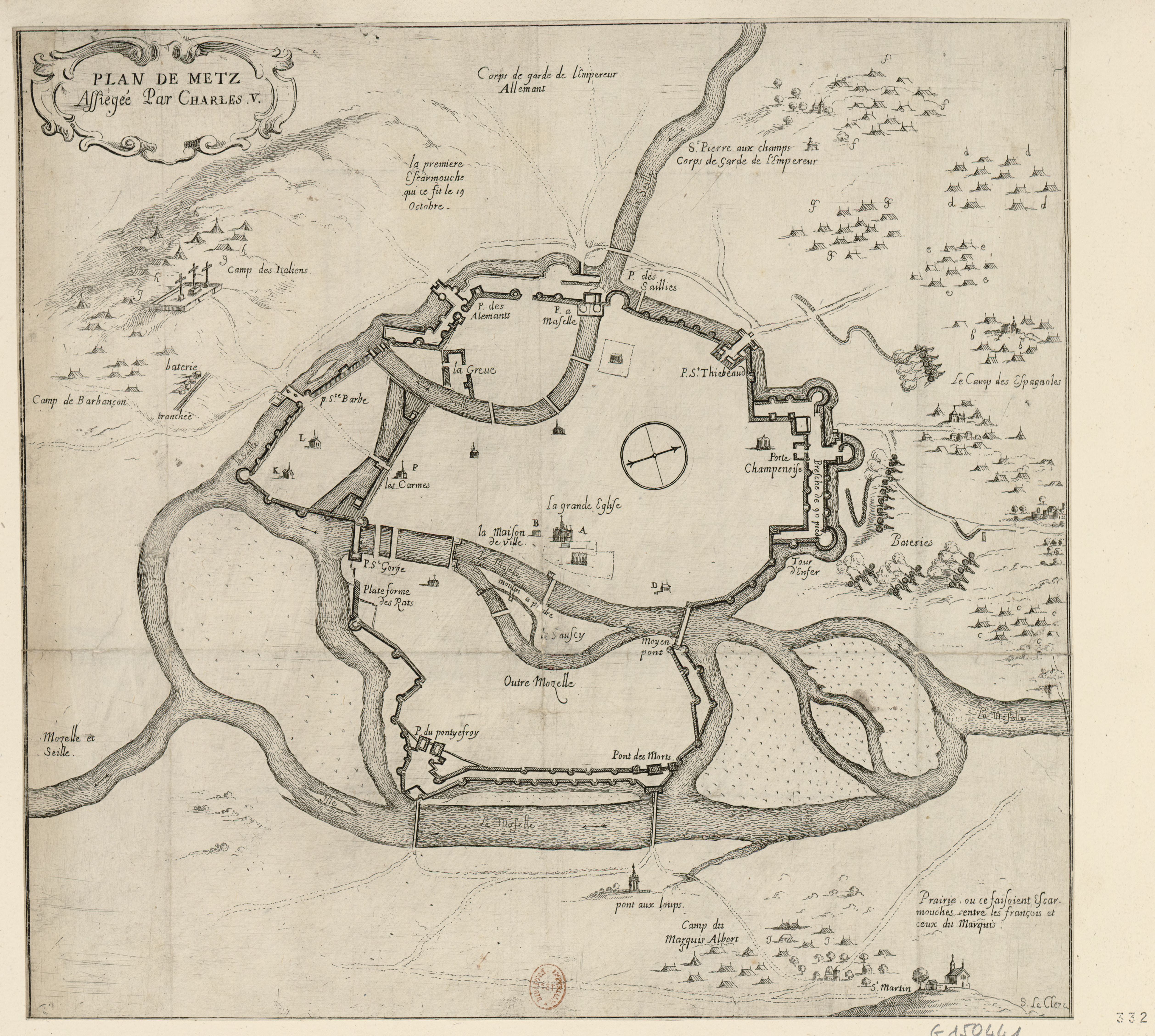
The emperor, despite his infirmities[vii], was determined to avenge this defeat and regain control of this stretch of land that allowed communication between his northern and southern parts of his empire. He gathered his allies for a counter attack. The imperial general the Duke of Alva arrived to take control of the army; although it was late in the season Charles was determined to press on. 80,000 imperial troops marched into Lorraine in October. The weather was bad and the army did not arrive before Metz until 14th.

François de Guise had only 6,000 men with which to defend the city against a siege, but had used the time available to him to strengthen its defences. Metz was well supplied and the troops had followed a scorched earth policy in the surrounding countryside. François kept the citizens onside with personal appearances day and night and on occasion using a spade himself to help prepare the fortifications, which involved destroying the suburbs to give clear lines of fire.

The scions of France’s greatest nobility came rushing to Metz to help defend the city; the Prince de Condé, the younger brothers of the King of Navarre, Charles de Bourbon-Montpensier, Montmorency’s sons and François de Guise’ younger brothers all took positions defending the city walls.

Plan of Metz
By 18th December François calculated that the imperial army had let off 11,800 cannonballs against the city. The cannonade failed to make much impression on a city that was well-stocked to withstand the siege. It was the besiegers who were suffering and eventually Charles raised the siege on New Year’s Day and departed for Brussels, his tail between his legs.

He left behind the corpses of over 12,000 men who had died from hunger, typhus and scurvy. Also left behind were the sick and wounded; these men were given succour by the French. To celebrate the victory François, good fanatical Catholic that he was, had all the Lutheran books in the city burnt in a bonfire of books. The Mantuan ambassador wrote;

‘There was no one among those who were at Metz who does not praise the courtesy and good government of Monsieur de Guise so that he is adored today by the whole kingdom.’[viii]

On 20th February 1553 Henri publicly praised François in a full session of the Paris Parlement, the result of which was to make Montmorency jealous. This jealousy was to burgeon into a hatred that was to poison the relationship between the houses of Guise and Montmorency for the next decade.

The King’s Children

Lady Janet Fleming
In February 1549 the queen gave birth to Louis de Valois. And little over sixteen months later Charles de Valois was born on 27th June 1550. Louis died on 24th October 1550. Diane de Poitiers was getting old and, allegedly, had never been that interested in the sexual side of the relationship, unlike Henri who had several other mistresses, three of whom bore children from the unions.

Reports were sent to Diane that Montmorency was bedding the future Dauphine’s governess, one Lady Janet Fleming[ix]. In an attempt to overset the Constable’s influence with the king Diane instructed François de Guise and his brother to interrupt the couple en flagrante. To their consternation the de Guise brothers found that Lady Fleming’s lover was none other than Henri.

Diane was furious and confronted Henri who was chastened by the encounter; henceforth Diane was to ally herself with the Guise family against the Montmorency faction at court[x]. Lorenzo Contarini, the Venetian ambassador wrote home;

‘There was a moment when the court asked itself which of the two the King loved the most – the Constable or Madame de Valentinois – but now it is known, by many signs, that Madame is the best beloved.’[xi]

Nevertheless the liaison with Lady Fleming continued unabated until the lady became pregnant, an event she announced to the court with great sangfroid.

‘God be thanked. I am with child by the King, and I feel very honoured and very happy about it.’[xii]


Prince Louis and the Princesses Jeanne and Victoire from Catherine de Medici's book of hours
The result was that Catherine and Diane united against the bold-faced intruder and Henri’s life was made miserable until he sent Lady Fleming away from court. Lady Fleming gave birth to Henri d’Angoulême[xiii] in Aix la Chapelle in 1551[xiv].

Diane steered her lover back into his wife’s bed and the results were prodigious. On 19th September 1551 Catherine gave birth to Henri de Valois. There was then a break of nearly twenty months before Marguerite de Valois was born on 14th May 1553. Hercule de Valois was born on 18th March 1555. The couple’s final children, Jeanne and Victoire were born on 24th June 1556. Jeanne died the same day and Victoire only lived until 17th August.

Catherine must have been physically exhausted with the effort of producing ten children in twelve years. That she lived was a testament to her own strength; indeed she was to outlive all but two of her children[xv].

Bibliography

Martyrs and Murderers – Stuart Carroll, Oxford University Press 2009

Catherine de Medici – Leonie Frieda, a Phoenix Paperback 2003

Charles V – Harald Kleinschmidt, Sutton Publishing 2004

French Renaissance Monarchy – RJ Knecht, Longman Group 1996

The Rise and Fall of Renaissance France – RJ Knecht, Fontana Press 1996

Catherine de’ Medici – RJ Knecht, Pearson Education Ltd 1998

A History of France – David Potter, The MacMillan Press 1995

Emperor Charles V – James D Tracey, Cambridge University Press 2010

Henri II – H Noel Williams, Methuen and Co 1910 (reprint 2016)

www.wikipedia.en


[i] A lump sum of 240,000 éçus; in 2015 the relative: labour cost of that project is £997,700,000.00 economic cost of that project is £39,300,000,000.00, www.measuringworth.com. This was to be followed by monthly payments of 60,000 éçus for upkeep of the Protestant armies;
[ii] The Guise family were a cadet branch of the Lorraine family whose duchy had fallen under the imperial sphere of influence
[iii] Which controlled the lands between the Spanish Netherlands and Germany
[iv] A Guise estate; the original castle was torn down during the revolution but the Chateau du Grand Jardin built by Cardinal Lorraine still stands
[v] Charles was married to Princess Claude in January 1559
[vi] Henri II - Williams
[vii] An old man at the age of 52; he suffered from epilepsy, gout (which became progressively worse as he aged) and stomach complaints that resulted from his deformed jaw (itself a result of Hapsburg inbreeding) which caused him problems eating, something he usually did in private
[viii] The Rise and Fall of Renaissance France - Knecht
[ix] Illegitimate daughter of James IV of Scotland and mother of one of the four Marys sent as companions to the Dauphine
[x] Montmorency had eased Henri’s way into Lady Fleming’s bed
[xi] Henri II - Williams
[xii] Catherine de Medici - Frieda
[xiii] Henri made his son Count of Angoulême and he later became Abbot of la Chaise-Dieu
[xiv] In 1557 Henri had a child by Nicole de Savigny a married woman; the boy was named Henri de St-Rémy and was made Count of St-Rémy although he was not legitimated
[xv] One of whom, Henri, was to die seven months after his mother. The other, Marguerite the only one of her children who inherited Catherine’s good health, died in March 1615