Showing posts with label Mehmet the Conqueror. Show all posts

Wednesday, 13 May 2015

Renaissance Italy - At the Court of the Borgia II


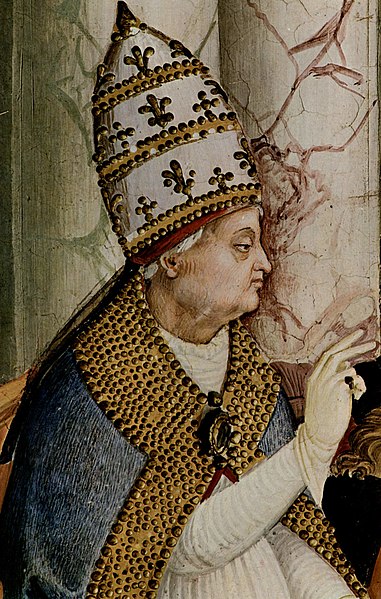
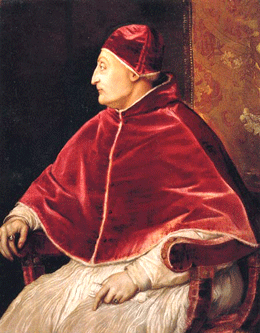
Pope Sixtus IV
Meddling in Unholy Matters
Sixtus took to nepotism like a duck to water; his nephew Guiliano della Rovere[i] was made a cardinal within months of Sixtus’ ascension to the papacy. Sixtus packed the College of Cardinals with his own appointees, so much so that when he died only five were not beholden to him.

Sixtus created an apostolic chamber of 100 lawyers to supervise the financial affairs of the Papal States and law cases in which the papacy had a financial interest. The income was devoted to the pope’s family and to embellishing the ‘external glories’ of the Holy See; the Vatican library was restored to its former glory and the Academy of Rome was re-opened. He also ordered the building of the Sistine Chapel.
 
Sixtus appoints the Prefect of the Vatican Library
Sixtus was attacked by other princes of the church for allowing the Catholic church to fall into disrepute. The Holy Roman Emperor, Maximilian I’s envoy Cardinal Archbishop Zamometic was thrown into the Castel Sant’Angelo for criticising Sixtus and the Curia.
Freed by a friend, Zamometic called for a continuation of the Council of Basle to prevent the pope ruining the church, accusing Sixtus of heresy, simony, wasting church patrimony and entering into a secret alliance with the spawn of Satan, Mehmet II. Shortly before his death Sixtus refused to consider a proposal from the Estates General of Tours, to reform the church, getting rid of fiscal abuse, plural benefices and the much hated practice of ad commendam[ii].

An Ugly Little War
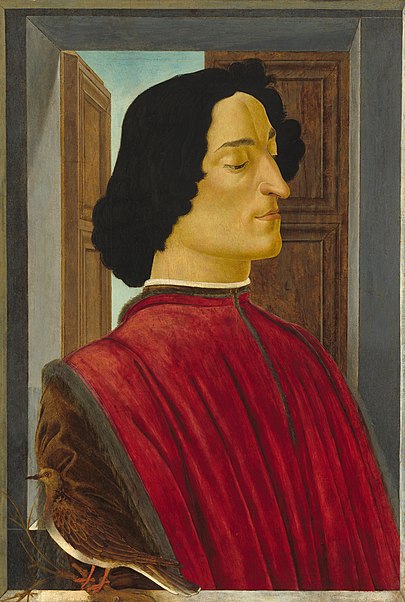
Guiliano de' Medici
Sixtus’ attention was focussed on worldly matters; he, at the least, condoned the murder and attempted murder of Giuliano de’ Medici and his brother Lorenzo[iii] on Easter Day 1478. The death of Giuliano saw Lorenzo take swift and merciless retribution against his enemies including Sixtus’ nephews.
Sixtus took the opportunity to excommunicate Lorenzo and then the whole city of Florence when they failed to hand the murderers over to the church. The excommunications failed to have the expected effect, so Sixtus declared war on Florence. Naples and Siena wanted to help dismember the city state and they joined the pope in this unholy war. Venice and Milan[iv] took the side of Florence and they were soon joined by the papal fiefs of Ferrara, Bologna and Rimini.
One of the conspirators, Bernard di Bandini de’Baroncello fled to Istanbul, taking refuge with relatives. Mehmet had him arrested and the Florentine Senate were informed.
‘We have learned with great pleasure how that most glorious prince [Mehmet] has seized Bernado Bandini[v], most heinous parricide and traitor to his country, and declares himself willing to do with him whatever we may want.’[vi]

Or Two or Three
Otranto
The Florentines joined the Venetians[vii] in making an alliance with the Ottomans. Sixtus encouraged the war to reduce the powerful Colonna family. The capture of Otranto by the Ottomans in 1480 was a wake-up call for the pope. Sixtus removed the interdict on Florence and Lorenzo was again of good standing in the church. It was only the death of Mehmet the following year and the lack of interest in further expansion by his heir Bayezid II that saw the threat of an Ottoman invasion recede.
The final years of Sixtus’ life were embroiled in the War of Ferrara, instigated by Sixtus in his determination to avenge himself against Lorenzo de’ Medici and all those who had defied him. Having bribed Venice with the promise of one of his own papal fiefs, Ferrara; Sixtus and his ally stood against Naples; Florence, Milan, Ferrara, Bologna, Rimini, Mantua and Urbino.
The war saw Ferrante of Naples[viii] hire 1500 Turkish cavalry to fight his fellow Italians while Sixtus’ incompetent nephew Giralomo Riario gamed away his army’s payroll playing dice. He then attempted to rout out the Colonnas from their Roman strongholds, causing death and mayhem to stalk the streets of Rome. Riario and his uncle refused to consider discussing peace with their erstwhile allies the Venetians.
Death of a Pope
Innocent VIII
Fortunately for Italy Sixtus died on 12th August 1484; his death provoked two weeks of rioting and plundering in Rome; mainly led by soldiers of the Colonna faction. He left the problems highlighted by Zamometic and the Tours Estates-General unsolved; they were to result in the Protestant Reformation.
Sixtus’ successor was Cardinal Marco Barbo, Innocent VIII. Rodrigo was unable to garner sufficient votes to ensure victory; the Florentine envoy reported home that Rodrigo was;
‘So false and proud that there is no danger of him being elected.’[ix]
And this was despite bribes of up to 25,000 ducats[x] and promises of lucrative promotion. Sixtus’ nephew Guiliano also failed to garner sufficient votes; he and Rodrigo then both combined to ensure Barbo’s election.
Innocent was remarkable mainly for his indulgence of his son Franceschetto. Otherwise he came under Guiliano della Rovere’s influence whose militant stance led him to being declared Captain-General of the Church. The Florentine envoy wrote to Lorenzo de’ Medici;
‘Send a good letter to the Cardinal of St Peter [della Rovere] for he is Pope and more than Pope.’[xi]
Rodrigo remained as Vice-Chancellor in charge of the Curia but he did not fare so well as his opponent. Innocent did make Rodrigo administrator of a monastery in Valencia but he had little influence in papal policy.
While Innocent was ensuring Franceschetto’s future[xii], Rodrigo was busy creating new offices in his chancellery to sell off to the highest bidder. Even the post of Vatican Librarian, previously awarded on merit, was sold. Rodrigo sold pardons at inflated prices, the first 150 ducats[xiii] going to the Pope and the remainder to his son.
Throughout his career working for five popes Rodrigo collected many benefices, including his last; sixteen days before Innocent’s death on 25th July 1492 Rodrigo was made the first Archbishop of Valencia.
The Cardinal’s Children
Vanozza dei Cattanei
Like many churchmen Rodrigo had mistresses, the most enduring of these was Vanozza dei Cattanei. Rodrigo was an attractive man and one Gaspar of Verona described him as;
‘Handsome, of a most glad countenance and joyous aspect, gifted with honeyed and choice eloquence. The beautiful women on whom his eyes are cast he lures to love him, and moves them in a wondrous way, more powerfully than the magnet influences iron.’[xiv]
Rodrigo’s first child was born in 1462; Pedro Luis was brought up in Spain. In 1485 Pedro Luis was made Duke of Gandia, the hereditary Borja lands, having purchased the duchy with the consent of the local nobles. He fought for Ferdinand and Isabella during the wars of the Reconquista. Rodrigo fathered a further child, a daughter Isabella born in 1467 and then Girolama born in 1469; both girls were brought up in Rome[xv].
It was Vanozza who was mother to four of Rodrigo’s children; Rodrigo took up with Vanozza after his return from Spain in 1472. Three years later Vanozza bore Cesare[xvi], the following year she had another son Giovanni. Four years later Vanozza gave birth on 18th April to another Borgia child Lucrezia and her final child of Rodrigo’s was Joffre, born in 1481 or 2[xvii].
Rodrigo’s cousin Adriana de Mila acted as governess to the Borgia children; Adriana was the wife of Ludovico Orsini[xviii]. Her daughter-in-law Giulia Farnese, married to Orsino Orsini, gave birth to two more of Rodrigo’s children; Giovanni in 1498 and Rodrigo in 1503. By 1493 Guilia was living with Adriana and Lucrezia in a palace easily accessible from the Vatican. 

Bibliography
At the Court of the Borgia – Johan Burchard, Folio Society 1990
Italian Dynasties – Edward Burman, Equation 1989
Lucrezia Borgia – Rachel Erlanger, Michael Joseph 1979
Florence and the Medici – JR Hale, Phoenix Press 2001
The Rise and Fall of the House of Medici – Christopher Hibbert, Folio Society 2001
The Borgias – Mary Hollingsworth, Quercus Editions 2014
The Borgias – GJ Meyer, Bantam 2013
A History of Venice – John Julius Norwich, Penguin Books 1982
Absolute Monarchs – John Julius Norwich, Random House 2011
A Renaissance Tapestry – Kate Simon, Harrap 1988
The March of Folly – Barbara Tuchman, Cardinal 1990
www.wikipedia.en


[i] Who was to become an inveterate enemy of Rodrigo’s
[ii] The practice of transferring an ecclesiastical benefice in trust to the custody of a patron
[iii] In part for hanging an Archbishop in defiance of clerical immunity
[v] Later hanged
[vi] The Grand Turk - Freely
[vii] The Ottomans proposed that the Venetians joined them in attacking King Ferrante of Naples, as both he and the Pope were enemies of the both Venice and the Ottoman Empire
[viii] Who had changed his allegiance to join Sixtus, who had lost his Venetian allies
[ix] The March of Folly - Tuchman
[x] In 2013 the relative: historic standard of living value of that income or wealth is £15,280,000.00 economic status value of that income or wealth is £487,900,000.00 economic power value of that income or wealth is £7,279,000,000.00 www.measuringworth.com
[xi] The March of Folly - Tuchman
[xii] A marriage was arranged to one of Lorenzo de’ Medici’s daughters
[xiii] In 2013 the relative: historic standard of living value of that income or wealth is £91,700.00 economic status value of that income or wealth is £2,927,000.00 economic power value of that income or wealth is £43,670,000.00 www.measuringworth.com
[xiv] The Borgias - Meyer
[xv] The mother(s) of all three children are unknown
[xvi] Born sometime between September 1475 and April 1476
[xvii] Vanozza had a fifth child Ottavio di Croce, the son of her husband Giorgio di Croce from a marriage arranged by Rodrigo in 1480
[xviii] Widowed at an early age Adriana sought her cousin’s assistance with administering her husband’s large estate
Wednesday, 6 May 2015

Renaissance Italy - At the Court of the Borgia


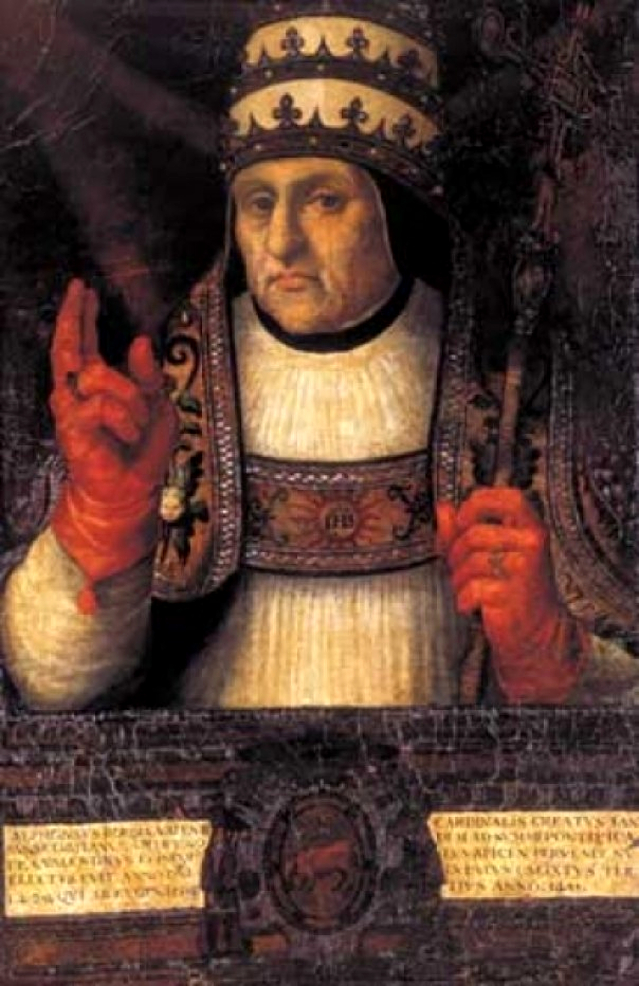
Calixtus III

The Pope’s Nephew

Rodrigo Borgia had immaculate support in his career as a churchman; his uncle was Pope Calixtus III[i]. Calixtus became pope a bare two years after the fall of Constantinople, a world changing event. Europe felt the chill of Mehmet the Conqueror’s aims; Rome itself could fall to the infidel. The event overshadowed Calixtus’ papacy and he attempted to make the rulers of Europe aware of the Ottoman menace and sent missionaries abroad to preach crusade.
On the eve of his coronation Calixtus wrote to King Ladislas Posthumus of Bohemia and Hungary, one of those on the frontline of Ottoman ambitions, telling of his dedication to crusade;
‘Even to the shedding of his blood….that those most hideous of the Christian name should be entirely expelled not only from the city of Constantinople…..but also from the confines of Europe.’[ii]

Rodrigo was the son of Joffre Llançol i Escrivà. Joffre was a noble from the town of Xativa[iii], he married his distant cousin Isabella de Borja[iv], daughter of Domingo de Borja. Rodrigo studied law at Bologna, where he graduated ‘the most eminent and judicious jurisprudent’, a Doctor of Law. Upon his uncle’s elevation to the papacy Rodrigo was made a deacon in the church and took his mother’s surname.

Promotion
St Nicola in Carcere
The 25 year old Bishop of Valencia[v] was made a Cardinal-deacon[vi] of St Nicola in Carcere in Rome on 20h February 1456 ten months after Calixtus became pope. His cousin Luis de Mila was similarly honoured. Both nephews had been given important roles within the Curia a mere twenty days of Calixtus’ accession.
‘Cardinal Rodrigo is young, it is true, but his conduct and good sense add years to his age.’[vii]

At the same time Rodrigo’s younger brother Pedro Luis was made Captain-General of the Church, in charge of the Papal army and castellan of Castel Sant’Angelo.
March of Ancona
On 31st December 1456 Rodrigo was made Vicar General in the March of Ancona[viii], where he efficiently rid the town of Ascola[ix] of a gang of bandits. To fund his work in Ancona Rodrigo had to mortgage his income for the next three years. This was in despite of the gift from Calixtus; the Bishopric of Girona, an attempt to improve Rodrigo’s finances.
Rodrigo’s next posting was Rome where Calixtus was attempting, through the agency of Pedro Luis, to overthrow the rule of the Orsini family to the north and west of Rome. In 1457 Rodrigo was promoted to the post of Vice Chancellor of the church. In the summer of 1458 Calixtus was planning further promotions for his nephews when he fell ill.
Disaster
Castel Sant'Angelo
The Romans, especially supporters of the Orsini family, were more than pleased when the 79 year old Borgia pope sickened in early August 1458 and it became exceptionally dangerous to be a Spaniard in Rome. The Spanish were attacked on the streets and a number of houses and warehouses belonging to Spanish merchants were set ablaze.
On 5th August Pedro Luis surrendered the keys to the Castel Sant’Angelo and he and Rodrigo mustered 3,000 mounted troops and 200 infantry. The Romans’ hatred focussed on Pedro Luis who was a marked man. He managed, with his brother’s help, to escape to the papal fortress of Civitavecchia of which Pedro Luis was Captain-General. Rodrigo returned to the Vatican to be with his uncle when he died on 6th August 1458.

Cardinal d'Estouteville
In the ensuing enclave it was Rodrigo who cast a block buster vote for Cardinal Piccolomini, helping break a threatened deadlock in the cardinals’ voting. Piccolomini’s main rival was a Frenchman, the Cardinal of Rouen, Guillaume d’Estouteville. Piccolomini had warned Rodrigo against voting for his opponent;
‘If you have no thought for the Church of Rome…..for whom you are preparing yourself such a vicar, at least take thought for yourself, for you will find yourself among the hindmost, if a Frenchman is pope.’[x]
The new pope Pius II made Rodrigo one of his protégé’s and his continuing rise was assured. Pius confirmed Rodrigo as Vice Chancellor. What Rodrigo was unable to do was to save his younger brother. News reached Rodrigo on 26th September that Pedro Luis had died en-route to Civitavecchia of malaria.
The Pius Papacy
Pius II
Pius followed Calixtus’ example by preaching a crusade against the infidel newly enthroned in Constantinople. He invited Europe’s rulers to send representatives to Mantua in the summer of 1459. Very few representatives arrived at the conference; the Venetians were not prepared to support a crusade.
The French were unhappy because Pius had failed to support the French candidate for the throne of Naples, instead he promoted the cause of Ferrante. Before leaving Mantua Pius declared that, despite the lack of support, there would be a crusade and that it would leave from Ancona in 1464.
Upon his return to Rome Pius was forced to support Ferrante against his enemies. Not only the pope, but Milan and Skanderbeg of Albania sent assistance to Naples. With this help Ferrante’s position stabilised and he was able to increasingly interfere in Italian politics.
Sigismondo Malatesta
War torn Romagna was being brought under the sway of Sigismondo Malatesta, Lord of Rimini. Control of the Papal States was slowly being drained away by local lords determined on independence from the church. But Pius’ ambitions were focussed abroad on his crusade; he emptied the Vatican treasury to build galleys and hire crews. He told his cardinals;
‘The call ‘Go!’ has been unheeded; perhaps the call ‘Come!’ will evoke a heartier response….We do not intend to fight. We shall imitate Moses who prayed on the mountain while Israel fought Amalek. On the ship’s prow or on the mountain top we shall entreat our Lord Jesus Christ victory for our soldiers in battle.’[xi]

Pius died on 14th August 1464 in Ancona; whence he’d travelled to launch his crusade, but the crusade died with him.
The Popes’ Servant
Pope Paul II
The new pope was the Venetian Pietro Barbo who became Pope Paul II on 30th August. Paul was an eccentric who slept during the day and gave audiences only at night. Like his predecessors Paul showed great confidence in Rodrigo’s abilities, expanding his responsibilities and authority. The number of Curial offices that Rodrigo was responsible for was increased and several Spanish benefices were showered on him. In 1468 Rodrigo was ordained to the priesthood and three years later was consecrated bishop and was made Cardinal-Bishop of Albano.
Paul was determined to increase the Papal holdings in Italy and chose Federico da Montefeltro, Duke of Urbino, as his military champion. Montefeltro brought Rimini back into the fold and Malatesta under control. Further gains by Montefeltro were quickly taken by the Orsini. Paul’s greedy eyes then fell on Bologna but his luck was out.

Federico Montefeltro
Like his predecessors Paul was determined on a crusade against the Turk and wrote to his fellow monarchs;
‘Beloved Sons, there must be no delay, because our enemy, who seems to desire nothing more than the bloody extermination of all Christendom, [is] already at our throats, grows stronger every day……..is strengthened in his resolve.’[xii]
Paul was able to energise the states of Italy into forming a defensive alliance against the Turk on 22nd December 1470. Paul died suddenly on 26th July 1471 and his replacement Francesco della Rovere took the name Sixtus IV.
Travels in Spain
Expanding on Paul’s initiative Sixtus called for a crusade against the infidel and sent Rodrigo out as one of his envoys. Rodrigo was sent to Spain as Papal Legate and envoy for a crusade against the Turk.

King Henry IV
While Rodrigo was in Spain he persuaded the Catalans to enter peace talks with king Juan of Aragon. Barcelona accepted Aragon rule and Juan accepted Rodrigo’s proposal that the city’s defenders be given a general pardon and that Juan should uphold the Catalan constitution. As a way of consolidating the peace Rodrigo awarded the dispensation that validated the marriage between Ferdinand of Aragon and Isabella of Castile[xiii] that had taken place three years earlier.
Rodrigo then travelled to the court of Castile where King Henry IV[xiv] was warring with those claiming Isabella as heir to the throne and those supporting Henry’s daughter Juana.. Rodrigo persuaded Henry to repudiate his daughter who was claimed to be the child of Beltran de la Cueva, the Duke of Albuquerque. In return Henry’s favourite bishop was to e promoted to the College of Cardinals.
Rodrigo met with the Bishops of Léon and Burgos in Segovia; launching a reform of the church in Spain, setting up some of Europe’s first diocesan seminaries, thus ensuring in future that priests would be ordained with a knowledge of Latin and theology.

Segovia
By the summer of 1473 Rodrigo had been in Spain over a year and his enemies had not been slow to take advantage of his absence. Cardinal Jacopo Ammanati-Piccolomini[xv] wrote to Rodrigo suggesting that an early return was needed to counter the influence of the pope’s nephews. At the same time Ammanati was writing to other correspondents blackening Rodrigo’s name complaining of his behaviour as;
‘Vain, luxurious, ambitious, [and] greedy’[xvi] and he claimed that while in Portugal Rodrigo spent ‘most of his time with the ladies.’[xvii]

Bibliography
Italian Dynasties – Edward Burman, Equation 1989
Lucrezia Borgia – Rachel Erlanger, Michael Joseph 1979
The Grand Turk – John Freely, IB Tauris & Co Ltd 2012
Florence and the Medici – JR Hale, Phoenix Press 2001
The Rise and Fall of the House of Medici – Christopher Hibbert, Folio Society 2001
The Borgias – Mary Hollingsworth, Quercus Editions 2014
The Borgias – GJ Meyer, Bantam 2013
A History of Venice – John Julius Norwich, Penguin Books 1982
Absolute Monarchs – John Julius Norwich, Random House 2011
A Renaissance Tapestry – Kate Simon, Harrap 1988
The March of Folly – Barbara Tuchman, Cardinal 1990
www.wikipedia.en


[i] A compromise candidate, selected due to his extreme age (77), it was believed that he would soon die and the throne up for grabs again
[ii] The Grand Turk - Freely
[iv] The Spanish spelling of the name
[v] Rodrigo inherited the bishopric upon his uncle’s accession to the throne of St Peter
[vi] Or lay Cardinal, i.e. not in Holy Orders
[vii] The Borgias - Meyer
[viii] Nominally under the rule of Sforza family
[ix] Now Ascoli Piceno
[x] The Borgias - Meyer
[xi] A History of Venice - Norfolk
[xii] The Grand Turk - Freely
[xiii] Both cousins many times over
[xiv] Known as the Impotent
[xv] Adopted into the late Pius II’s family
[xvi] The Borgias – Meyer
[xvii] Ibid