Thursday, 9 July 2015

Renaissance Italy - At the Court of the Borgia XI


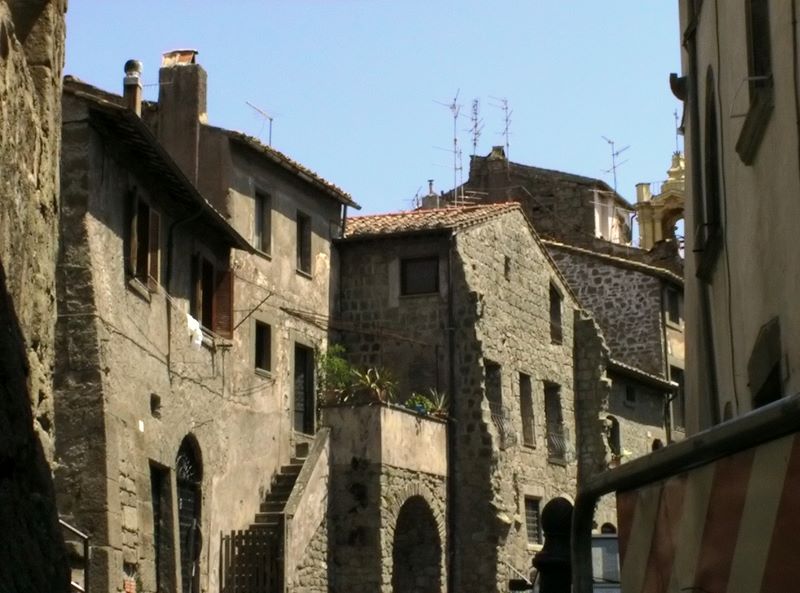
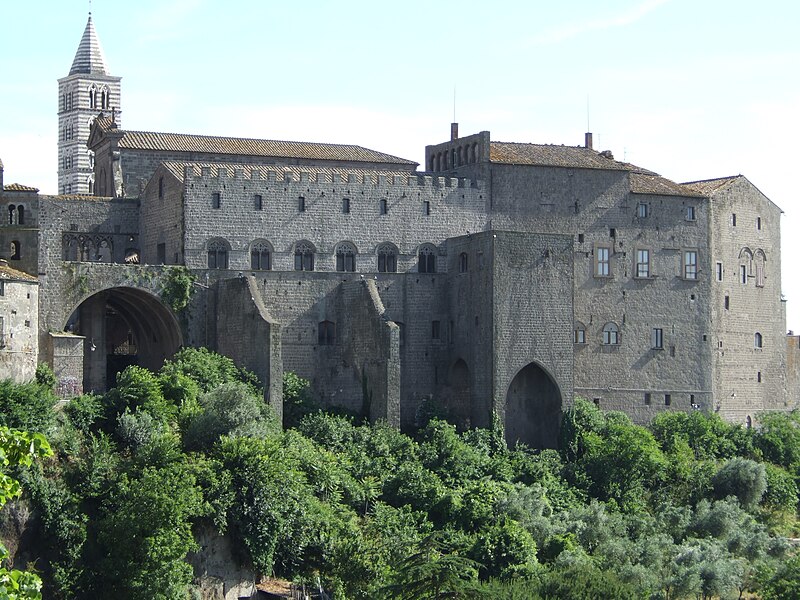
Pope's Palace Viterbo
Disaster
Cesare survived the death of his father, only to find that several cities had risen in revolt and a French army under Francesco Gonzago had reached Viterbo, only forty miles from Rome. Cesare knew that his only hope of survival was to stop the election of his bitter enemy della Rovere who was one of three candidates; the other two were Cardinal Georges d’Amboise, Louis XII’s chief counsellor and Cardinal Ascanio Sforza, released from prison by d’Amboise’s order.
Pope Pius III
The Orsini stormed Cesare’s palace and Cesare took refuge in the Castel Sant’Angelo. Della Rovere sent messengers to Cesare assuring him of his protection in the event of his election. To block della Rovere Cesare used the monies taken from Rodrigo’s apartments to help swing the papal conclave to choose a compromise candidate; Francesco Todeschini-Piccolomini who took the name of Pius III[i].
Pius lasted twenty six days and the following conclave was short, della Rovere was elected with Borgia assistance and took the name Julius II. The Venetian envoy commented of Julius;
‘No-one has any influence over him, and he consults few or none. It is almost impossible to describe how strong and violent and difficult he is to manage….he inspires fear rather than hatred, for there is nothing in him that is small or meanly selfish.’[ii]
Cesare left the Castel Sant’Angelo and returned to his apartments at the Vatican. Julius needed Cesare’s help. It’s surprising that Cesare believed accepted Julius’ promises, one who had long been an enemy of his family.
The Downfall of Cesare
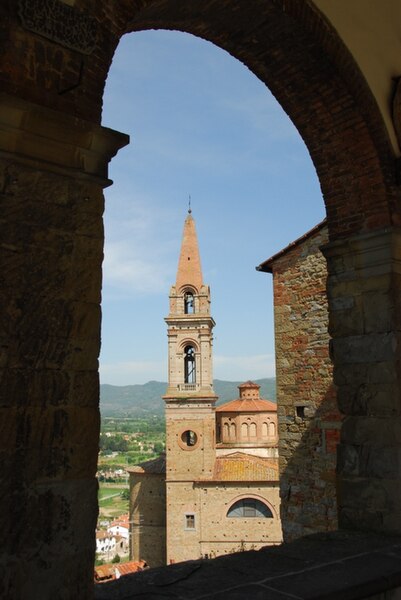
Castiglione Fiorentino
Florence’s enemy Venice was helping herself to city after city in the Romagna. And as Venice was Cesare’s ally, Machiavelli informed Cesare that Florence was not prepared to allow him to travel through Florentine lands.
Florentine soldiers disarmed much of Cesare’s army at Castiglione Fiorentino and captured Michelotto into the bargain[iii]. Julius was jubilant when he heard the news.
‘The pope was overjoyed, more than words can say, and believed that the capture of this man offered an opportunity to uncover all the cruel thefts, murders, desecrations, and other countless evils that have been committed in the last eleven years in Rome.’[iv]
Not long before Cesare had been arrested in Ostia while attempting to escape to Genoa. Cesare was still refusing to hand over the few remaining fortresses he controlled in the Romagna. He was brought back to Rome and informed that Julius wanted all Cesare’s commands handed over, along with the secret passwords that his Spanish commanders demanded before surrendering their commands.
Cesare was housed in an apartment in the Vatican reserved for visiting cardinals. Gian Giordano Orsini[v] urged Julius to kill Cesare. Machiavelli’s reports to Florence show Cesare was now;
‘Inconstant, irresolute and timid and not standing firm in any decision.’[vi]
But he did not give his secrets up to Julius and his commanders continued in their refusal to surrender the fortresses they commanded. By February Cesare was desperate to earn his freedom and agreed to give up the passwords in return for the gold held in his name in Genoa.

Cesare was transferred to Ostia in February and was held captive for a further two months while the slow process of the surrendering of the fortresses took place. Lucrezia’s father-in-law was asked to proffer Cesare asylum in Ferrara; he refused. Cesare was released and decided to go to Naples; his cousin Cardinal Pedro Borgia, himself in Naples, sent Cesare a galley to bring him to a city now under the control of Ferdinand of Spain.

The Twilight Years
Castel Nuovo, Naples
Cesare spent three weeks in Naples, planning his return to the Romagna. When he visited the city’s commander, Gonzalo de Cordoba, to bid him farewell Cesare was stunned to be arrested at the pope’s request. Cesare was imprisoned on the island of Ischia under increasingly punitive arrangements. On August 20th Cesare was taken by galley to Spain and taken to a castle in Chinchilla.
Meanwhile Lucrezia had raised enough money to fund 1,000 soldiers who were commanded by Borgia loyalist Pedro Ramires. Discovering that Cesare was in prison Ramires turned back. In January 1505 Lucrezia’s father-in-law died and she was now duchess of Ferrara. She was looking after Cesare’s illegitimate children Camilla and Giralomo, as well as Giovanni, the infans Romanus. Lucrezia appointed Alberto Pio, Lord of Carpi as his guardian.
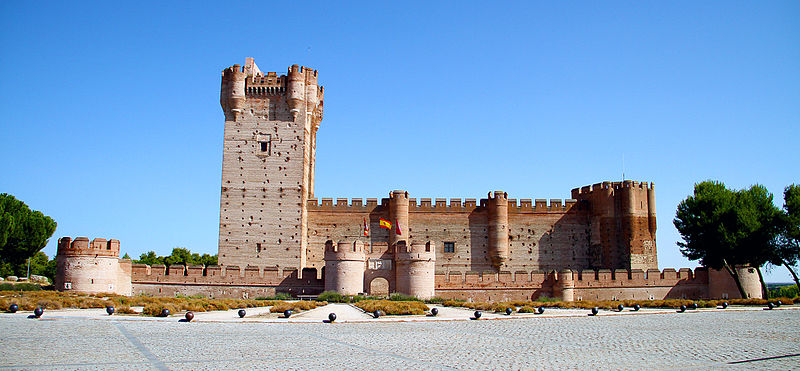
La Mota castle
In the spring of 1505 John III of Navarra, Cesare’s brother-in-law, petitioned Louis for payment of the dowry Cesare had been promised when he married Charlotte. The request was refused and shortly afterwards Cesare hurled himself on the castle’s commander, apparently in an attempt to throw himself off the ramparts. He was overpowered and shortly thereafter moved to the fortress of La Mota at Medina del Campo, northwest of Madrid.
Juana la Loca
Spanish power politics now left Cesare under the control of Queen Juana[vii], rather than his inveterate enemy Ferdinand. Juana had Cesare indicted with the murders of his brother Juan and Lucrezia’s beloved Alfonso of Bisceglie[viii].
Ferdinand was distracted by events in Naples and Juana was showing signs of the dementia that was to plague her; discipline at La Mota slackened and Cesare was given assistance in a bid to escape. On 25th October 1405 Cesare slid down a rope to freedom. Injured in a fall when the rope was cut by above, Cesare was still mounted on a horse and arrived in Navarre on 3rd December, a semi-invalid. He was described as;
‘A man doubled up, with an ugly face, a big nose, dark.’[ix]

In Navarre he wrote to all and sundry in a desperate attempt to regain what he had lost.

Death of a Reputation
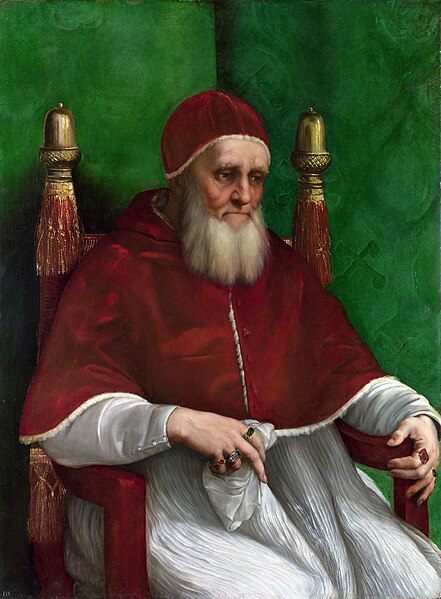
Julius II
Julius II was determined to destroy any vestige of the Borgias and, like a man obsessed, ordered;
‘I will not live in the same rooms as the Borgias lived. He desecrated the Holy Church as none before. He usurped the papal power by the devil's aid, and I forbid under the pain of excommunication anyone to speak or think of Borgia again. His name and memory must be forgotten. It must be crossed out of every document and memorial. His reign must be obliterated. All paintings made of the Borgias or for them must be covered over with black crepe. All the tombs of the Borgias must be opened and their bodies sent back to where they belong – to Spain.’[x]
His attempts were doomed to failure. Despite the attempts of his enemies Cesare lived on and, despite Julius’ attempts to erase the name Borgia, at least two of Rodrigo’s successors considered Alexander VI as an exemplary pontiff.
Despite his hatred of Rodrigo, Julius continued Rodrigo’s policy of expanding the Papal States, albeit without Cesare. And this, the most war-like of popes, was to be extremely successful at his self-ordained task. He also mirrored Rodrigo’s nepotism.
Death of a Prince
Cesare died at the age of thirty one on 12th March 1507, fighting for his wife’s brother, John of Navarre. Cesare was besieging the castle at Viana held by the Count of Lerin. He arrived at Viana in December 1506 with 10,000 men.
In the early morning of 11 March 1507 a number of Lerin’s knights escaped from the castle during a heavy storm. Outraged Cesare chased them outpacing his own men. Realising that Cesare was isolated the knights trapped him in an ambush. Cesare received a fatal injury from a spear. He was then stripped of all his luxurious garments, valuables and the leather mask covering his face, Cesare was left lying naked, with just a red tile covering his genitals.
Upon receiving the news Lucrezia;
‘Did not cry but displayed great sadness and great fortitude.’[xi]
King John had Cesare buried in a marbled mausoleum he had ordered built by the altar of the Church of Santa Maria in Viana.
Rodrigo’s Last Child
On 5th April 1508 Lucrezia gave birth to Ercole d’Esté, named after his grandfather. His birth was;
‘Celebrated with great joy with church bells, salvoes of artillery and fireworks. All the screens and the cloth in the windows of the piazza caught fire; in the court house the benches of the notaries, the judge’s stand, the windows and the doors all burnt down as well as the pews of the ladies in the cathedral.’[xii]
E
Chevalier Bayard
rcole was followed on the 25th August 1509 by
Ippolito. The following year Lucrezia met the famed French soldier, the Chevalier Bayard while the latter was co-commanding the French allied garrison of Ferrara. The Chevalier became a great admirer of Lucrezia's, considering her a ‘pearl among women’.
Lucrezia suffered the loss of her beloved child Rodrigo who predeceased her, dying in August 1512 at the age of 12. Two years later Lucrezia gave birth to Alessandro and on 3rd July 1515 Leonora and on 1st November 1516 Francesco.
Lucrezia outlived all her siblings, dying on 25th June 1519 at Ferrara. The death followed complications after the birth of her eighth child Isabella Maria who was born and died on 14th June. Lucrezia had a history of problematic pregnancies; Lucrezia was buried in the convent of Corpus Domini.
Bibliography
At the Court of the Borgia – Johan Burchard, Folio Society 1990
Lucrezia Borgia – Rachel Erlanger, Michael Joseph 1979
The Borgias – Mary Hollingsworth, Quercus Editions 2014
The Borgias – GJ Meyer, Bantam 2013
A History of Venice – John Julius Norwich, Penguin Books 1982
Absolute Monarchs – John Julius Norwich, Random House 2011
The March of Folly – Barbara Tuchman, Cardinal 1990
Niccolo’s Smile – Maurizio Viroli, IB Tauris & Company Ltd 2001
www.wikipedia.en


[i] Honouring his uncle Pius II
[ii] Absolute Monarchs - Norwich
[iii] Michelotto had been ferrying the Vatican gold to Ferrara
[iv] Niccolo’s Smile - Viroli
[v] Husband of Julius’ illegitimate daughter Felice
[vi] Ibid
[vii] Later known as Juana the Mad
[viii] She was probably influenced by Cesare’s son-in-law the dowager Duchess of Gandia
[ix] The Borgias - Meyer
[xi] The Borgias - Hollingsworth
[xii] Ibid

Tuesday, 7 July 2015

Renaissance Italy - At the Court of the Borgia X

Pietro Bembo
Vengeance is Mine

1503 was to be a momentous year for the Borgia family; Lucrezia began a long affair with her brother-in-law Francesco II Gonzaga, Marquess of Mantua[i]. She also had an affair with the poet Pietro Bembo. For Cesare life was to be far more exciting.
The 1st January 1503 was the last day of life for the traitors Euffreducci & Vitelli, both garrotted by Michelotto. Later that day Cesare marched his troops out of Senigallia and accompanying them were three of the Orsini, Paolo, Roberto and the young Francesco, Duke of Gravina. Paolo’s young son Fabio managed to escape.
The three Orsini were in chains and their kin in Rome were being rounded up by Rodrigo’s troops. Cardinal Orsini was arrested on 3rd January;
Torre di Nona
‘The cardinal rode to the Vatican….He himself entered the Sala del Pappagallo, only to find himself surrounded by armed men, and in great fear was escorted to the Bishop of Carinola’s apartment at the prison of the Torre di Nona[ii].’[iii]
The Archbishop of Florence Rinaldo Orsini was arrested later in the day along with Jacopo di Santa Croce and Bernardino Orsini, the Abbot of Alviano.
Attacks and Counter-attacks


Ponte Nomenatano 
Within three days of leaving Senigallia Cesare was master of the Vitelli stronghold Città di Castello along with the Euffreducci town of Fermo. Baglioni fled Perugia which fell uncontested into Cesare’s hands.

Meanwhile the Orsini family had rallied and from a number of family strongholds planned a counter-offensive against Rome. The men that Cesare left in the city turned the Orsini attack back at the Ponte Nomentano and the Orsini withdrew, taking with them Cardinal Ippolito d’Esté, who had recently added Cesare’s mistress Fiametta and Joffré’s wife Sancha to his long list of conquests. He left;
‘To avoid the anger of Duke Cesare….the cardinal was having an affair with the princess [Sancha] who was married to Cesare’s brother and that the duke himself was also having an affair with this woman.’[iv]
A frightened Rodrigo demanded the return of Cesare’s army to Rome.
Viterbo
On 18th, as his troops entered the foothills of northern Tuscany, Cesare had Paolo and Francesco strangled by Michelotto. At the same time he released Roberto Orsini for reasons unknown. Cesare signed an alliance with the Bentivoglio of Bologna on 20th January. Three days later the news reached Rome that Cesare’s troops had taken Chiusi, Pienza, Sarteano and San Quirico d’Orcia.

Outside Siena Cesare’s men prepared to besiege the city; Cesare offered the local tyrant Pandolfo Petrucci free passage out of the city. But when Petrucci left he was wily enough to beware Cesare’s offer and escaped to take refuge in Lucca. Cesare and his men turned towards Rome, stopping to regroup at Viterbo.
A Family Quarrel
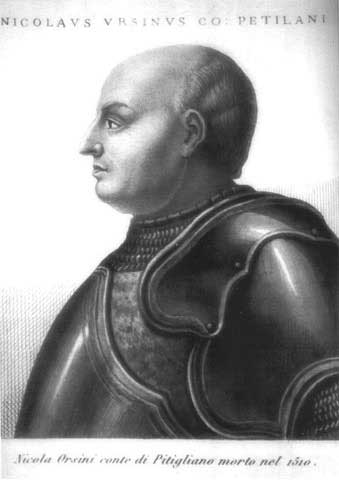
Niccolo Orsini
A breach appeared in the family; Rodrigo who wanted to turn the papal troops against the last few remaining Orsini strongholds at Bracciano, Ceri[v], Cerveteri and Pitigliano. Cesare disagreed, believing that such attacks could turn friends into enemies. Louis regarded the Orsini lords of Bracciano and Pitigliano[vi] as friends, while Venice employed Niccolò Orsini as a condotta.
On 7th February Rodrigo declared the Orsini rebels against the church[vii] and despatched artillery to besiege Bracciano. When Cesare objected Rodrigo threatened his son with the loss of all his fiefs. Reluctantly Cesare ordered his men into the fray, but chose the less well defended Ceri to attack.
Cesare returned to Rome in time to enjoy the pre-Lent carnival and spent much time indulging in carnal pursuits.
The 15th February saw the Venetian ambassador reporting that Cardinal Orsini had become delirious; he was dead by 22nd, possibly poisoned, as rumour had it, by Cesare or Rodrigo. Rodrigo informed his cardinals that Cardinal Orsini had offered 25,000 ducats[viii] in return for his freedom; his reply had been
‘To urge the cardinal to be of good spirits and to take care only for his health. He [Rodrigo] had told him that all other matters would be dealt with as soon as he was strong again. All the doctors who could provide the cardinal with the best attention for his recovery had been sent to him.’[ix]
The Balance of Power Tips

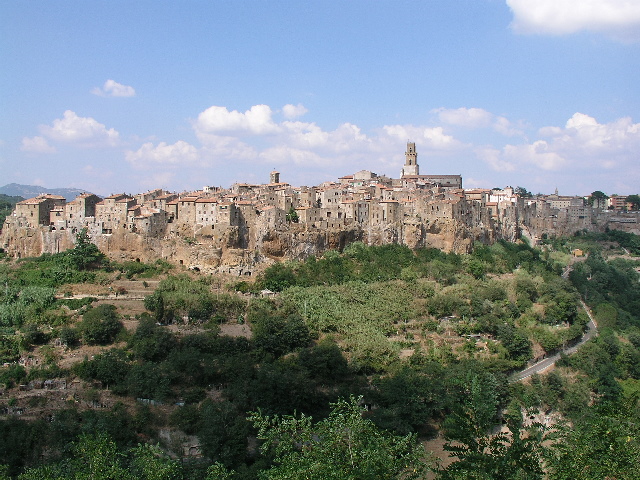
Pitigliano
In late February Pisa offered to make the city subject to Cesare in return for assistance in its fight to free itself from the overlordship of Florence. Louis, worried that Cesare would become too powerful, set up a league between of Florence, Lucca, Bologna and Siena. He made the cities his allies and wards and therefore safe from Cesare’s roving eyes. This only served to exacerbate the differences between Rodrigo and his son.
On 6th April, following mounting threats from his father, Cesare left the fleshpots of Rome and made his way to Ceri. En route he was met by the news that Giulio Orsini had surrendered the town, the defences having been battered to bits by Cesare’s artillery. Giulio had received a letter from Louis urging him to give up. Giulio agreed to give up the family possessions nearest Rome and he and his family were allowed safe passage to Niccolo Orsini’s base at Pitigliano.
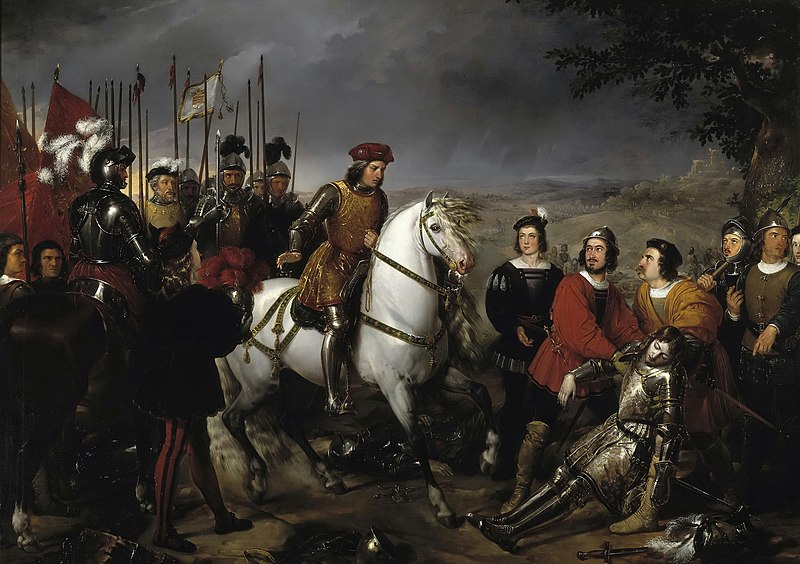
Cordoba after the battle
Louis was worried about the situation in Naples; his accord with the Spanish was breaking down and clashes between the two armies were increasing along the agreed borders of their territories. By April the situation was becoming dire and the 28th April 1503 saw the French and Spanish armies fight it out at the Battle of Cerignola; the Spanish, led by Gonzalo de Cordoba, fought a larger French army and won.
Dreaming of Naples
Rodrigo did not want the Spanish to have a foothold on the Italian peninsula. He was not on good terms with King Ferdinand and Cesare’s hold on power in the Romagna was underwritten by the French. To help fund Cesare’s military endeavours on 31st May Rodrigo created another nine cardinals[x]; the Venetian ambassador calculated;
Louis de la Tremoille
‘All paid generously for their titles…..120,000 to 130,000[xi] ducats; and if we add the 64,000 ducats raised from the sale of posts in the Curia, and the legacy of Cardinal Michiel[xii], we have a large sum…Pope Alexander shows us that a pope’s income can be as high as he wants.’[xiii]
Louis’ hunger for Naples was undiminished and, despite his losses in April, he created a new army in Parma under the leadership of Louis de la Trémoille. To win the prize he coveted Louis estimated that he needed Borgia assistance and now he found the Borgias demanding a heavy price for their involvement. The price was too high and ended with an uneasy neutrality; the Spanish took Naples in mid-May, replacing France as the dominant power in Europe.
Death of a Pater Familias
The weather in Rome that summer was unseasonably hot and saw an outbreak of malaria. Rome had a new governor – Michelotto, who used his position to extort monies from wealthy Spanish citizens, accusing them of being marrani[xiv]. He also forced Jews to pay for protection from harassment.
Rodrigo’s fifty year old (and fat) nephew Cardinal Juan Borgia died on 5th August; he was sick with syphilis but it was believed that he died from a fever. The same day Rodrigo and Cesare attended a party given by Adriano Castelli da Corneto, a one-time secretary of Rodrigo’s.
Death of St Sebastien, detail from Borgia apartments in the Vatican
On 7th the Venetian ambassador paid a visit to Rodrigo and found him enveloped in a shawl, despite the overwhelming heat. On 11th August Castelli fell ill; the following day Rodrigo rose. After saying mass he took breakfast and then retired to bed after vomiting. Cesare, who was about to leave Rome, fell sick about the same time. He managed to return to his quarters before collapsing.
‘Fourteen ounces of blood were taken from him [Rodrigo] three days later and tertiary fever[xv] set in. Early on August 17th he was given some medicine, but he worsened and at about six o’clock, on the following morning, he made his confession…..he expired in the presence of the datary, the bishop [of Carinola] and the attendants standing by.’[xvi]
Burchard informs us that Cesare then sent Michelotto to secure the pope’s apartments; his men seized all the silver and two coffers containing 100,000 ducats[xvii].
Bibliography
At the Court of the Borgia – Johan Burchard, Folio Society 1990
Lucrezia Borgia – Rachel Erlanger, Michael Joseph 1979
Florence and the Medici – JR Hale, Phoenix Press 2001
The Rise and Fall of the House of Medici – Christopher Hibbert, Folio Society 2001
The Borgias – Mary Hollingsworth, Quercus Editions 2014
The Borgias – GJ Meyer, Bantam 2013
A History of Venice – John Julius Norwich, Penguin Books 1982
Absolute Monarchs – John Julius Norwich, Random House 2011
A Renaissance Tapestry – Kate Simon, Harrap 1988
The March of Folly – Barbara Tuchman, Cardinal 1990
Niccolo’s Smile – Maurizio Viroli, IB Tauris & Company Ltd 2001
www.wikipedia.en


[i] The passionate affair ended when Francesco contracted syphilis
[ii] Formerly an Orsini stronghold and at this time used as a papal prison
[iii] At the Court of the Borgia - Burchard
[iv] The Borgias - Hollingsworth
[v] From where Giulio Orsini was attacking the alum mines at Tolfa directly run by the Camera Apostolica
[vii] Thereby incurring automatic excommunication
[viii] In 2013 the relative: historic standard of living value of that income or wealth is £16,260,000.00 economic status value of that income or wealth is £465,400,000.00 economic power value of that income or wealth is £6,491,000,000.00 www.measuringworth.com
[ix] At the Court of the Borgia - Burchard
[x] Giving him 70% of the college
[xi] The value of £184,000 0s 0d in Income or Wealth , in 1503 there are three choices. In 2013 the relative: historic standard of living value of that income or wealth is £119,700,000.00 economic status value of that income or wealth is £3,425,000,000.00 economic power value of that income or wealth is £47,780,000,000.00 www.measuringworth.com
[xii] A nephew of Pope Paul II and a prisoner in Castel Sant’Angelo who died after two days of violent vomiting
[xiii] The Borgias - Hollingsworth
[xiv] Muslims claiming to have converted to  Christianity


[xv] Malaria
[xvi] At the Court of the Borgia - Burchard
[xvii] In 2013 the relative: historic standard of living value of that income or wealth is £65,040,000.00 economic status value of that income or wealth is £1,862,000,000.00 economic power value of that income or wealth is £25,970,000,000.00 www.measuringworth.com