Tuesday, 11 October 2016

Henry Fitzroy – a Tudor Prince V

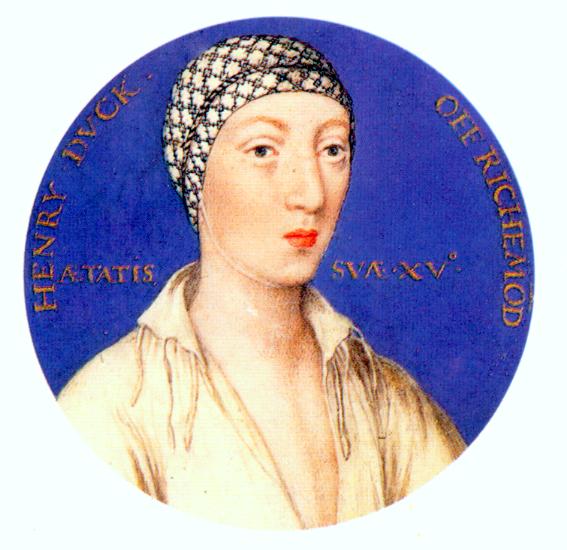
Henry Fitzroy
Weighty Matters

By January 1534 Henry and Anne were expecting their second child. For the New Year exchange of gifts Fitzroy gave his father a ‘great spoon of gold’ weighing 4 oz[i]. In return Fitzroy received more silver gilt and Anne gave her stepson a silver salt and ring. Fitzroy took a liking to the ring and wore it frequently. This could of course have been a political ‘liking’. Mary gave her father-in-law a ‘tablet’ of gold and in return was given something from his store of gifts he kept squirrelled away.

In March 1534 Henry downgraded Catherine’s status to that of his brother’s widow and his marriage to Anne was ratified. The succession was secured on the first male child of Henry’s union with Anne. In the event of no male children then Elizabeth was to inherit the throne. The Act of Succession made it clear that only legitimate children could inherit the throne, putting paid to any ideas Fitzroy may have had.
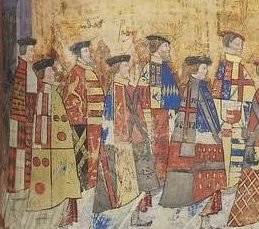
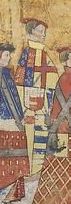
Henry Courtenay (2nd left)
Fitzroy started taking part in official occasions; he attended parliament 33 times out of 46. He took the sovereign’s chair at the Order of the Garter at the annual Feast of St George in April at Windsor, deputising for his father. That summer Fitzroy visited his manor of Canford[ii] in Dorset and then one of his manors in Sheffield.

Eight months into her pregnancy Anne miscarried and she and Henry set out on the annual progress. Anne objected to her husband taking his pleasures with the ladies of the court and Henry rebuked her. Meanwhile he was getting very touchy about others claiming the right of inheritance. When the king’s cousin Henry Courtenay[iii] claimed that he would be next in line to the throne he was thrown into prison.

Towards Adulthood

Philippes de Chabot
Henry increased Fitzroy’s visibility at court; he played host at the St Andrew’s Day Feast in honour of the French Admiral Philippe de Chabot. In February 1535 he hosted Chapuys when Henry was in council; in May he attended the execution at Tyburn of three Carthusian monks, along with

‘Several other lords, and gentlemen courtiers, were present at the execution, openly and quite close to the victims’[iv]

a shocked Chapuys recorded.

Norfolk was now a power in Fitzroy’s life; he was Fitzroy’s Vice-Admiral and he was guardian of Fitzroy’s half-brother George Tailboys, who had been adjudged a lunatic. In addition Norfolk held the wardship of Fitzroy’s uncle George. Many of Fitzroy’s servants had links to the Howard family.

Norfolk helped Fitzroy out with his household matters. In 1535, when there were problems in Fitzroy’s landholdings in the Welsh Marches, Norfolk travelled with him to Holt to advise on addressing the issues. In 1536 Henry gave Fitzroy Baynards’ Castle as his London home. He and Mary were to take up residence there, an indication that at 17, Fitzroy was to be considered an adult.

Death of a Queen


Jane Seymour
It did not take long for Henry to tire of his new wife, who, as her insecurities grew, lashed out at her husband when things did not go her way. She also hit out at her uncle Norfolk. Henry for his part soon tired of these outbursts of temper and the continued failure on Anne’s part to deliver herself of a son. Once again in early 1536 Anne disappointed her husband with another miscarriage; the child was a boy.

By early 1536, Henry had found himself a new love; one of Anne’s ladies-in-waiting, Jane Seymour. He needed a reason for a divorce and his henchman Cromwell soon found one for him; Anne was guilty of adultery with four other men and into the bargain was guilty of incest with her brother Rochford.

On the night of Anne’s arrest Henry had Fitzroy brought to him to say goodnight. The king embraced his son and wept as he told him that he and his half-sister Mary should thank God for escaping;

‘That cursed and venomous whore, who tried to poison you both.’[v]

On 19th May Anne was beheaded[vi]; the clearly ailing Fitzroy was one of the nobles present at the execution. Others witnessing Anne’s death were Cromwell and his son, the Lord Chancellor and the Duke of Suffolk[vii]. Anne’s uncle stayed away.

Death of a Blameless Youth

In May 1536 the news that Fitzroy had been made Chamberlain of Chester[viii] and North Wales was sent to the king’s uncle, Arthur Plantagenet, in Calais; by his man Husee;

‘My Lord of Richmond is Chamberlain of Chester and North Wales.’[ix]

In addition Fitzroy was given the post of Warden of the Cinque Ports and Constable of Dover Castle[x]. He also busied himself trying to obtain, the stewardship of Banbury, for his servant Giles Forster. Unfortunately the post had already been promised to Cromwell.

In June 1536 the Second Act of Succession was passed; making Elizabeth illegitimate as well as Mary. This left Henry without any legitimate children, but the act gave Henry ‘full and plenary power and authority’ to choose who would succeed him if he died without an heir of his body, by naming his successor in letters patent or in his last will[xi]. Fitzroy attended parliament on 8th June; carrying his father’s ‘cap of maintenance’. After the proceedings Fitzroy joined the lords for dinner at York Place.
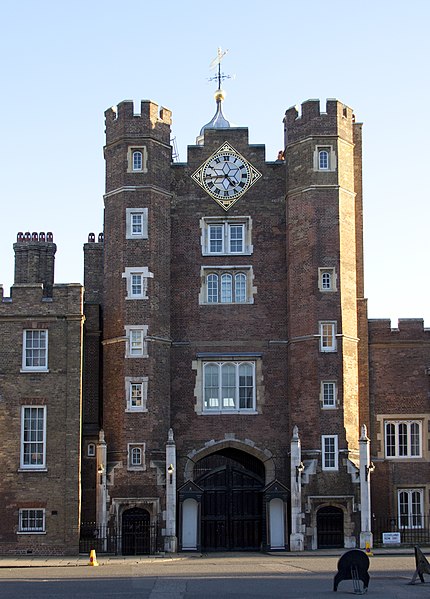
St James Palace
In July Fitzroy fell sick and his condition deteriorated daily; on 23rd July Fitzroy died suddenly, at St James Palace, of an acute pulmonary complaint. Henry was convinced that Anne had poisoned his son by means of a slow-acting poison, a suspicion shared by others. The chronicler Charles Wriothesley wrote;

‘It was thought that he [Richmond] was privily poisoned by the means of Queen Anne and her brother Lord Rochford, for he pined inwardly in his body long before he died. God knows the truth: he was a goodly young lord and [forward] in many qualities and feats.’[xii]

Henry ordered that Norfolk organise the funeral, while Cromwell’s man John Gostwick was to make an inventory of Richmond’s goods and chattels. Most of Richmond’s goods were sent direct to the King’s Jewel House in Westminster.

The day before Fitzroy’s death Chapuys reported to his master;

‘He [Henry] has no hope of the Duke of Richmond, whom he certainly intended to be his heir, living long; so fully did he mean this, that, had he [Richmond] not fallen ill, he would have had him proclaimed by parliament.’[xiii]

Henry appears to have ordered Norfolk to bury the body secretly; Fitzroy’s body was wrapped in lead and hidden under a bundle of straw in a wagon. The body was carried to Thetford, accompanied by two servants dressed in green. Norfolk had Fitzroy buried at Thetford Priory where the Howards were entombed. Surrey was at his father’s side during the funeral of his childhood friend.

Faithful to the End

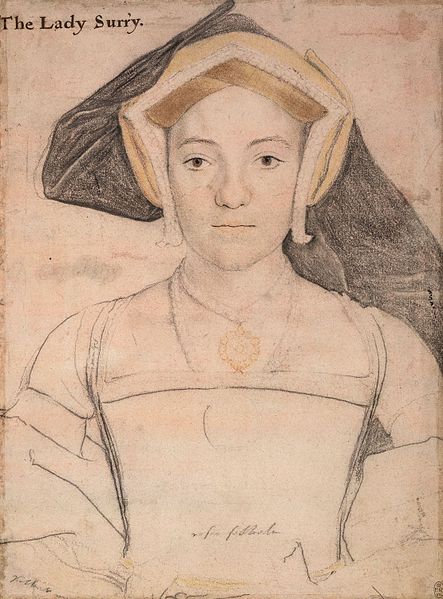
Henry Howard, Earl of Surrey
Surrey grieved for the loss of his friend; over a year later he was still in mourning and, according to his father, was;

‘Very weak, his nature running from him abundantly [whenever Surrey] thought of my lord of Richmond.’[xiv]

The marriage between Mary and Fitzroy had never been consummated and Henry used that excuse to now deny Mary her dower rights. In 1537 Fitzroy’s playmate Surrey was imprisoned in Windsor Castle for treason[xv]. While there he wrote a lament recalling happier days playing with Fitzroy;

‘So cruel prison how could betide, alas!

As proud Windsor? where I in lust and joy,

With a King’s son my childish years did pass,

In greater feast than Priam’s sons of Troy…

O place of bliss! Renewer of my woes!

Give me account! Where is my noble fere [Duke of Richmond]

Whom in thy walls thou didst each night enclose.’[xvi]

Bibliography

The Lisle Letters – Muriel St Clare Byrne (ed), Penguin Books Ltd 1989

The Ebbs and Flows of Fortune – David M Head, University of Georgia Press 2009

House of Treason – Robert Hutchinson, Phoenix 2009

Henry VIII – Robert Lacey, Weidenfeld & Nicholson & Book Club Associates 1972

The Earlier Tudors – J D Mackie, Oxford University Press 1992

Bastard Prince – Beverley A Murphy, Sutton Publishing 2001

Rivals in Power – David Starkey, MacMillan London Ltd 1990

The Six Wives of Henry VIII – Alison Weir, Pimlico 1992

The Lost Tudor Princess – Alison Weir, Vintage 2015

www.wikipedia.en


[i] Promptly deposited in the Jewel House; in today’s prices worth £3,479.80
[ii] Possibly either Canford Heath or Canford Magna
[iv] Bastard Prince - Murphy
[v] The Six Wives of Henry VIII - Weir
[vii] Husband of Henry’s sister
[viii] An office formerly held by one of Anne’s alleged lovers Henry Norris.
[ix] The Lisle Letters - Byrne
[x] Previously held by Anne’s brother George
[xi] It was superseded in 1543 by the Third Succession Act, which returned Henry's daughters into the line of succession to the throne, but did not restore their legitimacy.
[xii] House of Treason - Hutchinson
[xiii] The Lost Tudor Princess - Weir
[xiv] House of Treason - Hutchinson
[xv] Surrey was to find himself in the Tower on a number of occasions due to his rash behaviour and was executed on 19th January 1547, nine days before Henry VIII’s death
[xvi] Rivals in Power – Starkey
Monday, 3 October 2016

Henry Fitzroy – a Tudor Prince IV


Francois I
To France

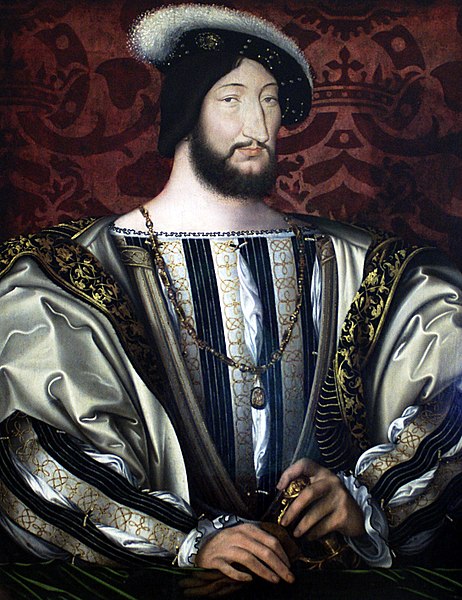
Fitzroy lived at Windsor castle from 1530 until October 1532 when he and Surrey travelled in Henry’s train to Calais and Boulogne to meet François I. Fitzroy was a member of a party that included almost every nobleman of note in the country. Chapuys informed his master that it was planned for Fitzroy to stay in France while Henri d’Orléans visited England.

Henry travelled with Anne Boleyn, who was accoutred as if the reigning queen, while Queen Catherine had been deserted the previous summer at Windsor. The party set sail on 11th October 1532. Fitzroy had 40 attendants travel with him. Fitzroy was left in Calais when Henry travelled on to Boulogne to meet with François[i]. When the two kings travelled back to Calais it was Fitzroy who met them at the town’s edge.

Henry hosted an extraordinary meeting of the Order of the Garter and Fitzroy was sat next to the guest of honour, François. The two kings vied to outdo each other in a miniature version of the Field of the Cloth of Gold, while their ministers attended to the business of the summit.


When François left Calais he took with him Fitzroy and Surrey; the two boys were left in François’ care for a year.

‘The King of England yesterday gave unto the King his bastard son, who is a child of fifteen or sixteen years[ii], and the same day he gave him a present of six horses.’[iii]

Fitzroy struggled to find a home for the servants who had accompanied him to France, but were not to travel on to Paris. The party left in the second week in November; Fitzroy was housed in the dauphin’s lodgings and he dined with the French princes.

The Dauphin Francois
At the French Court

In January 1533 the dauphin, François, arranged a tournament in Fitzroy’s honour. Fitzroy and Surrey were part of circle around the French princes that included the scions of the houses of Lorraine, Bourbon, Cleves and Guise. The French princes retained fond memories of Richmond, lamenting his death at a banquet years later. According to Sir John Wallop, the ambassador to the French court; Prince Henri;

‘Began to speak of my lord of Richmond, lamenting his death greatly, and so did mons d’Orleance[iv] likewise.’[v]

In the summer of 1533 François took his court on a progress through France. The queen and the French princes split off from the main caravan, travelling to Languedoc. Fitzroy and Surrey travelled on to Montpellier in the king’s train.

The situation in England had changed dramatically; Anne was now pregnant and she and Henry had married secretly on 23rd January. In April the English clergy, under the auspices of the new Archbishop of Canterbury, Thomas Cranmer, agreed that Henry’s marriage to Catherine was unlawful. Henry was still hopeful that Pope Clement VII would rule in his favour, but the ruling of 11th July 1533 was not what Henry wanted to hear[vi].

Arthur Plantagenet
He’d sent Norfolk to France to meet with François, in an attempt to have the French pressurise Clement over the divorce. François was not prepared to dance to Henry’s tune and following Clement’s ruling Henry precipitately recalled Norfolk from Lyons and Fitzroy and Surrey from Puy. whence they had accompanied François. The official reason for the recall was the matter of Fitzroy’s marriage.

Fitzroy, Norfolk and Surrey formally took their leave of François in Montpellier on 25th August. Norfolk was back in England by 30th August. Fitzroy and Surrey’s journey home was more leisurely; they arrived in Calais on 25th September. While there the two boys were entertained by Fitzroy’s great-uncle Arthur Plantagenet[vii], Lord Deputy of Calais.

In England Anne had disappointed Henry early in the month by giving birth to a daughter, the Princess Elizabeth. Princess Mary was now informed that she would no longer be able to call herself Princess and was to be known as Lady Mary. Mary’s strong reaction to the news provoked her father into disbanding her household. Now she and Richmond were on a par, both being regarded as illegitimate children of the king.

The Babes in the Wood

Frances de Vere
In 1531 Anne, in conjunction with her uncle Norfolk, had arranged the marriage of Surrey to Frances de Vere, daughter of the Earl of Oxford. At the same time Surrey’s sister Mary’s marriage was arranged to Fitzroy. Norfolk claimed that the marriage was Henry’s idea; Norfolk had his eyes on Lord Bulbeck, the Earl of Oxford’s heir. But he told Chapuys;

‘The King wishes the Duke [Fitzroy] to marry one of my daughters.’[viii]

The couple were engaged in the spring of 1531. By the time they were married Fitzroy was 14 and Mary was the same age; they were related within the bounds of consanguinity. Dispensation for Mary and Fitzroy to marry was granted in November 1533 and the wedding took place on 26th November 1533 at Hampton Court.

Mary had been at court for several months, attending upon the new queen. She had carried a chrism of ‘pearl and stone’ at Elizabeth’s christening. The married couple were not expected to live together until they were sexually mature. Mary returned to her role as a member of the queen’s household while Fitzroy returned to his position at court.

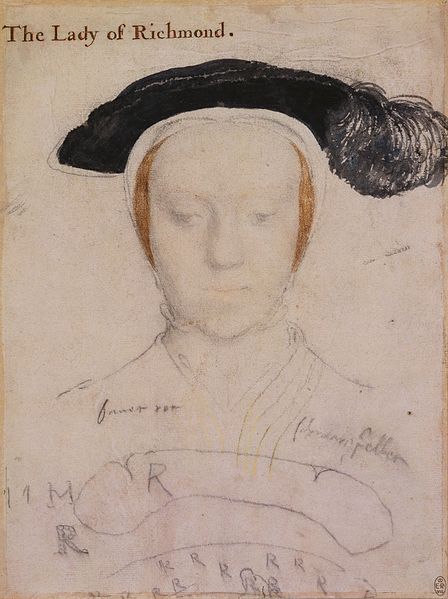
Mary Howard
Norfolk did not have to provide Mary with a large dowry when she married the king’s son; Henry had passed up on the chance to strengthen ties with a foreign court with Fitzroy’s marriage, which strengthened the Howard family’s grip on power.

Like her cousin Anne, Mary had a sharp tongue and a wilful character. These attributes were offset by her beauty and intelligence; ‘too wise for a woman’ her father called her. Mary was also strongly opinionated and not easily swayed. Wisely she rarely exposed anyone bar her exasperated father to her tempestuous temper.

In March 1534 Henry caused the Act of Succession to be passed by parliament. The act made the Princess Elizabeth heir to the throne, by declaring that the former Princess, now Lady Mary, was illegitimate.

An Interlude in Ireland

Earl of Kildare
In Ireland Skeffington had suffered from a lack of support; especially from the Earl of Kildare who did his best to discredit Skeffington. Kildare curried Fitzroy’s favour, giving him a horse worth £8[ix]. Kildare gave Norfolk gifts too and in July 1532 Skeffington was replaced by Kildare. But Kildare’s nemesis was to prove the Earl of Ossory[x], who added to the prevailing unrest in Ireland.

Cromwell proposed that Fitzroy be sent to rule over the country he had been made Lord Lieutenant of. Cromwell was attempting to change the governance of Ireland. Fitzroy regularly solicited Cromwell’s support but Norfolk had no intention of allowing his son-in-law to brave the wild domains across the sea. Chapuys reported;

‘Amongst other accusations which Cromwell brought on that occasion against the Duke [Norfolk], one was….his wishing to keep the Duke of Richmond near him, and near his daughter.’[xi]

The two politicians fell out and in any event Henry was loath to risk his son in a region whose volatility was a byword. Henry was also unwilling to pay for the magnificent household Fitzroy would require and that Henry felt he owed to his own amour propre. If Henry had supported the idea, that wily politician Norfolk would not have risked his own career in an attempt to block the plan.

Eventually Skeffington was given his old job back; but even in 1535 some of the Irish chieftains were hoping that Henry would send his son over to stop the troubles. Skeffington died at the end of the year and he was replaced by Henry’s cousin, Lord Grey.

Bibliography

The Ebbs and Flows of Fortune – David M Head, University of Georgia Press 2009

House of Treason – Robert Hutchinson, Phoenix 2009

Henry VIII – Robert Lacey, Weidenfeld & Nicholson & Book Club Associates 1972

The Earlier Tudors – J D Mackie, Oxford University Press 1992

Bastard Prince – Beverley A Murphy, Sutton Publishing 2001

Rivals in Power – David Starkey, MacMillan London Ltd 1990

The Six Wives of Henry VIII – Alison Weir, Pimlico 1992

The Lost Tudor Princess – Alison Weir, Vintage 2015

www.wikipedia.en

[i] The kings had agreed that François would entertain Henry in Boulogne and then Henry would host François’ visit to Calais
[ii] The French chronicler got Fitzroy’s age wrong; he was only thirteen
[iii] Bastard Prince - Murphy
[iv] By this time Prince François had died and Prince Henri was the heir apparent. His dukedom of Orléans had been passed on to his brother Charles formerly Duc d’Armagnac
[v] Bastard Prince - Murphy
[vi] Failure to take Catherine back as his wife would result in Henry being excommunicated
[vii] Coincidentally another Arthur Plantagenet had been Earl of Richmond as well as Duke of Brittany and at one time had been heir presumptive to Richard I
[viii] Bastard Prince - Murphy
[ix] In 2015 the relative: real price of that commodity is £4,894.00 labour value of that commodity is £44,540.00 income value of that commodity is £152,100.00 www.measuringworth.com
[x] Formerly Earl of Ormond, which title had been given by Henry to Anne’s father Thomas; see The Importance of Being Thomas V.
[xi] Bastard Prince - Murphy