Tuesday, 16 June 2015

Renaissance Italy - At the Court of the Borgia VII

Lucrezia to left and Alfonso to right
A Falling out in the Family

Lucrezia’s husband hated his brother-in-law and his influence over Lucrezia; Cesare returned the compliment. The political reasons behind the marriage to the Duke of Bisceglie had vanished and Alfonso was now a non-person in the family power struggles.
On 15th July 1500 Alfonso was returning from a dinner engagement at the Vatican, where Lucrezia was nursing a convalescent Rodrigo[i] along with her sister-in-law Sancha. Alfonso was on his way home when he and his two men were set upon; Alfonso was beaten unconscious by a group of armed men.
Alfonso was carried back, by his men, to the Vatican where Rodrigo arranged for 16 soldiers to be stationed outside his sickroom. Cesare announced that anyone found carrying arms in the area would be summarily executed. Lucrezia and Sancha stayed with Alfonso night and day trying to ward off further assassination attempts. They even prepared his food, fearing poison.
Alfonso was beginning to recover from his injuries, but on 18th August;
‘He [Alfonso] was strangled in his bed at about eleven o’clock, and later on that same evening, his body was carried to the basilica of Saint Peter……..the doctors who had attended the dead man were seized and sent to the Castel Sant’Angelo…..they were soon released for they were innocent, and the man who had ordered the deed was well known.’[ii]

All Rome believed that Cesare had masterminded the attacks, jealous of the attention Lucrezia bestowed upon Alfonso. A letter from Alfonso’s tutor named the killer as Michelotto Corella , the most feared and hated of all Cesare’s henchmen. Michelotto had been a friend of Cesare’s since the pair were children and was known as ‘Valentino’s executioner’.
Castello Borgia, Nepi
After Alfonso’s death Lucrezia left Rome to mourn her husband at Nepi, where she stayed for four months as Cesare paraded round Rome dressed in black.
‘The pope is in bad humour, possibly because of what happened, possibly because of the King of Naples, or possibly because his daughter is in despair’.[iii]
wrote Gian Lucido Cattanei, a correspondent of Isabella d’Esté[iv], soon to become Lucrezia’s sister-in-law. The only visitor that Lucrezia received at Nepi was Cesare; it would seem that she did not share Roman certainties about her husband’s killer.

Back to War

Modon
Rodrigo spent much of the autumn of 1500 raising funds for Cesare; he sold 13 cardinal’s hats, raising 160,000 ducats[v]. A further 80 posts were established in the Curia and sold off for 780 ducats each[vi]. And the monies from the pilgrim’s chest were probably also diverted into Cesare’s funds.
It is also possible that some, if not all, of a tithing that Rodrigo pressed upon the cardinals, ostensibly to fight the infidel who had taken the Venetian port of Modon[vii] in the Adriatic, was subverted to Cesare’s war chest. The fortune of Cardinal Giovanni Michele, who died suddenly after two days violent illness, was seized. He was popularly believed to have been poisoned by Cesare for his money.
Giovanni Bentivoglio
Cesare rode out from Rome n 2nd October at the head of 10,000 men.
‘Duke Cesare Valentino, son of Pope Alexander VI, has……taken Rimini and the Lord of Rimini has fled, and they have taken Cesena and Pesaro….and because of this the Bolognese are taking up their arms and Giovanni Bentivoglio has surrounded himself with a large armed guard for fear of being driven out of Bologna.’[viii]
On 11th November 1500 Louis of France and Ferdinand of Spain signed the Treaty of Granada, dividing the Kingdom of Naples between their two countries and Venice. This document invited Spain to join France in the dismemberment of an Italian state.
Rodrigo was to give the treaty his seal of approval in June 1501 when he announced that King Frederick was stripped of his authority and his kingdom and that the throne was now given to Louis XII, king of France. The King of Spain was invested with the Duchy of Calabria.

Campaigning in the Romagna
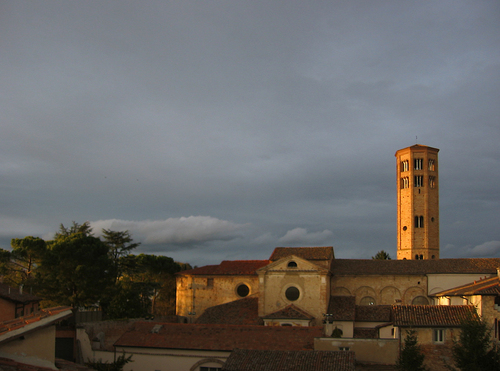
Faenza
Following the fall of Rimini Cesare retired to spend the winter in Cesena to plan the attack on Faenza, whose ruler Astorre III Manfredi had no intention of capitulating peacefully. January saw French troops march to Faenza to assist Cesare in his siege of the city. En route the French passed through Reggio doing much damage to the surrounding countryside and refusing to pay for their food.
In February the beautiful Dorotea Caracciola, lady in waiting to the Duchess of Urbino Elizabetta Gonzaga, was abducted en route to her wedding, by 20 riders in Cesare’s lands.
Duke of Urbino
The
Duke of Urbino asked Cesare to have her released but Cesare denied all knowledge.
Faenza finally fell in April and its Lord was taken to the Castel Sant’Angelo where he mysteriously died the following year[ix]. The Castel Bolognese fell a few days later and Cesare moved his troops on to Capua which he sacked in July when one of its citizens admitted Cesare’s troops into the town.
Rodrigo made Cesare Duke of the Romagna in May; he ordered his son to return to Rome. Cesare complied, but came the indirect route, via Florence. His march on Florence stopped ten miles out of the city where the Florentine emissaries met him with a proposal. They offered to hire Cesare and his troops, many of whom were French[x], for the sum of 36,000 ducats per annum[xi] over a three year period.

Piombino
Cesare quickly accepted as it had never been his intention to besiege Florence and come under attack from his patron. He then moved on and on 4th June prepared to besiege Piombino. Before he could add to his list of conquests Cesare was ordered by Louis to come to the assistance of the French in the conquest of Naples. He left Vitellozzo Vitelli, one of Italy’s first experts in the use of artillery, in charge of the siege of Piombino.
Vitellozzo Vitelli
 
 
‘He [Cesare] is displeased and uncertain because his affairs are held in the air. If the French win, they will not take him into account; if they lose and others defeat the French he will be in a bad way’[xii]
wrote one correspondent who spoke to Cesare when he was in Rome.
Personal Affairs
Cesare’s was depressed not only by his dependence on the fickle Louis and this was heightened by his syphilis which seems to have flared up in July 1501. He was suffering from pains in the groin and had to summons two doctors to attend him. Cesare was now wearing a mask, to hide the pustules on his face, most of the time and conducted most of his business at night.
Cesare’s upside down hours exasperated Rodrigo when Cesare lived at the Vatican; with him resided a small boy believed to have been his son, Giovanni[xiii]. Rumour also referred to Lucrezia and Rodrigo as Giovanni’s parents. Others believed that Giulia Farnese was Giovanni’s mother. On 18th September Giovanni was made Duke of Nepi; at the same time his nephew, Lucrezia and Alfonso’s son Rodrigo was made Duke of Sermonetta.

Bibliography
At the Court of the Borgia – Johan Burchard, Folio Society 1990
Lucrezia Borgia – Rachel Erlanger, Michael Joseph 1979
Florence and the Medici – JR Hale, Phoenix Press 2001
The Rise and Fall of the House of Medici – Christopher Hibbert, Folio Society 2001
The Borgias – Mary Hollingsworth, Quercus Editions 2014
The Borgias – GJ Meyer, Bantam 2013
A History of Venice – John Julius Norwich, Penguin Books 1982
Absolute Monarchs – John Julius Norwich, Random House 2011
The March of Folly – Barbara Tuchman, Cardinal 1990
www.wikipedia.en


[i] He suffered from fainting fits, and this one had been particularly bad
[ii] At the Court of the Borgia - Burchard
[iii] Lucrezia Borgia - Erlanger
[iv] Wife of Francesco II Gonzaga, Marquess of Mantua
[v] In 2013 the relative: historic standard of living value of that income or wealth is £116,200,000.00 economic status value of that income or wealth is £3,295,000,000.00 economic power value of that income or wealth is £46,330,000,000.00 www.measuringworth.com
[vi] Totalling 62,400 ducats; in 2013 the relative: historic standard of living value of that income or wealth is £39,220,000.00 economic status value of that income or wealth is £1,236,000,000.00 economic power value of that income or wealth is £17,310,000,000.00 www.measuringworth.com
[vii] Now Methoni in Greece
[viii] The Borgias - Hollingsworth
[ix] It is assumed that Cesare ordered his death
[x] Louis had promised to protect Florence, but the attack on Naples was taking all his attention
[xi] In 2013 the relative: historic standard of living value of that income or wealth is £22,630,000.00 economic status value of that income or wealth is £712,900,000.00 economic power value of that income or wealth is £9,986,000,000.00 www.measuringworth.com
[xii] Lucrezia Borgia - Erlanger
[xiii] Known as the Infans Romanus in a bull issued by Rodrigo on 1st September 1501, the bull stated that Cesare was the child’s father and failed to name the mother

Tuesday, 9 June 2015

Renaissance Italy - At the Court of the Borgia VI

Leonardo's map of Imola created for Cesare
Dismembering the Romagna

Rodrigo and Cesare now intended a new offensive against the warlords of the papal states. For centuries these lands had evaded control from Rome and their rulers went their own way. Successive popes had failed to bring them back to the fold. Cesare was intending to carve out a principality for himself within the papal states; thus making himself secure once his father died.
On 18th November 1499 Cesare returned to Rome in secret; he stayed with Rodrigo for a week and then rode to Imola with. Louis had provided Cesare with 1,800 cavalry and 4,000 infantry, under the command of Yves d’Alègre, to assist in subduing the Romagna and he used these French soldiers and a force of papal troops to take Imola. Cesare also had a loan of 45,000 ducats[i] from the Milan treasury.
Rocca Sforzesca
On 17th Imola surrendered;
‘This town he [Cesare] assaulted and captured, together with its fortress, seizing and despoiling the sons of the late Duke Girolamo Riario[ii], who were rulers of the city and nephews to Cardinal Raffaele Riario[iii]. On that same day Cardinal Riario……..fled to Monterotondo with only a few attendants.’[iv]
Cardinal Riario used the pretext of going hunting to flee the Holy City. A few days later Riario travelled on to Sarzana, where he took refuge. Forli surrendered on 19th December, but Caterina Sforza, who had ruled the city since the death of her husband Giralamo, remained in possession of the citadel.
Assassination Attempt
On the day that Cardinal Riario fled, one of the pope’s musicians attempted to poison Rodrigo in the hope that Rodrigo’s death would free Forli and Imola from Cesare’s rule.
‘On that evening, a certain Tomasino of Forli, one of the pope’s musicians, was seized with a companion and taken to the castel Sant Angelo where they were both imprisoned. Tomasino had come to Rome with some poisoned letters that he had rolled up in a reed to present to the pope.’[v]
Sistine Chapel
On 8th December Rodrigo attended mass in the Sistine Chapel; he was accompanied by his nephew, Cardinal Juan de Borgia the elder who had not been seen in public for some time. He was suffering from syphilis and had been for the past two years; syphilis was now reaching epidemic proportions[vi].
The closing weeks of 1499 saw Cesare, with French support, undertake a campaign in northern Italy. The intention was to bring the petty lordships of the Romagna under papal control.
Alexander issued a bull declaring that all the lords of the Romagna had forfeited their cities and many important families were excommunicated; the Riarii, the Malatesta, the Manfredi, the Varani and the Montefeltri, along with Giovanni Sforza. All these lords were declared dispossessed and their lands were to be ruled by a new papal vicar; Cesare Borgia.

Jubilee Year

Alexander VI at prayer
Alexander had nominated 1500 as a jubilee year; pilgrims were expected to come to Rome in their thousands. There were to be penitentiaries on duty throughout the year in St Peter’s, to listen to the pilgrims’ confessions. The doors of the church would be open day and night and a huge chest with three different locks had been installed in the basilica to hold the pilgrims’ offerings.
On the night of 14th January rumour ran riot in Rome; the news that Caterina Sforza had been taken prisoner was greatly pleasing to Rodrigo. Cesare had offered a reward of 10,000 ducats[vii] for Caterina’s capture.
‘The rumour spread through Rome that the fortress of Forli, together with the Countess Caterina Sforza…..had been treacherously and violently captured by Don Cesare Borgia and that everyone else there had been put to the sword.’[viii]

Rocca Pesaro
The French demanded a ransom for Caterina which Cesare paid. She was initially imprisoned in the Vatican, but after an escape attempt was moved to the Castel Sant’Angelo[ix]. Having subdued Forli, with French help, Cesare now moved on to Pesaro.
On the 16th January Cardinal Juan de Borgia the younger died; he’d recklessly ridden to Forli to congratulate Cesare, whilst sick, and the fever had worsened. He was buried on 27th without any pomp or ceremony.
On 12th February Lucrezia purchased the papal fief of Sermoneta for 24,000 ducats[x]; she paid the Apostolic Chamber in cash. The money had undoubtedly come from Rodrigo, so in essence the church was paying to give the fief to Lucrezia.
Return of the Sforza
Milan
The French troops were recalled to fight Ludovico Sforza who was nearing Milan with troops loaned by his brother-in-law Maximilian. In early February the Milanese revolted against their French overlords and Ludovico Sforza re-entered his capital in triumph.
Ludovico’s triumph was short lived as his hired Swiss troops refused to fight against Louis’ Swiss troops and returned home. Ludovico and his brother Cardinal Ascanio were taken prisoner and were removed to France following Louis’ victory at Novara on 8th April. The Sforza
Francesco Sforza
heir, the nine year old
Francesco Sforza[xi], was taken into Louis’ custody and was forced into the priesthood.
The attack on Pesaro had to be postponed and Cesare returned to Rome to an ecstatic welcome from his father who ordered that the city turn out to greet the conquering hero, who succumbed to a bad attack of hubris and started considering himself the equal of his namesake Julius Caesar.
‘His Holiness wished to create Don Cesare the Captain-General and Gonfalier of the Holy Roman Church and therefore, on March 29th, he ordered that he should be invested with the Golden Rose.’[xii]
Rodrigo bestowed on his son the Golden Rose, an honour normally reserved for royalty. At one point Cesare’s campaign, to subdue the Romagna, was costing the Holy See half its income; 132,000 ducats[xiii] over a two month period. Fortunately for Cesare’s ambitions, Rodrigo’s reforms had resulted in increased revenues and Rodrigo was able to send money to Hungary to aid their fight against the infidel.
The Prince of Rome
Caterina Sforza
Cesare was lord and master of Rome as well as the battlefield. Like his father Cesare loved art and patronised poets and painters. Served by spies and informers, Cesare ably administered Rome, but the death toll was sowing the seeds of his future downfall;
‘Every night four or five murdered men are discovered, bishops, prelates and others, so that all Rome trembles for fear of being murdered by the Duke’[xiv]
wrote the Venetian ambassador. Although skilled in martial arts and strong enough to behead a bull with one blow, Cesare never left his palace unless he wore a mask. This may have been meant as a disguise or to hide the blemishes left on his face by the syphilis.
Around this time Cesare was informed by Charlotte d’Albret that she was pregnant with his child. Charlotte had remained in France, possibly held hostage for Cesare’s good behaviour. On 17th May 1500 Charlotte d’Albret gave birth to a girl who was named Louise.
Cesare was not worried by his wife’s absence; his latest mistress was a Florentine courtesan named Fiametta, but he never remained faithful to any one woman. His proclivities were well-known in Roma and it was rumoured that he had raped Caterina Sforza on numerous occasions since she had been taken captive.
On 24th June Cesare took part in the Vatican’s celebration of the Feast of St John the Baptist. He displayed his bullfighting skills, killing five bulls from horseback and the sixth on foot with a single blow of his sword.
Bibliography
At the Court of the Borgia – Johan Burchard, Folio Society 1990
Lucrezia Borgia – Rachel Erlanger, Michael Joseph 1979
Florence and the Medici – JR Hale, Phoenix Press 2001
The Rise and Fall of the House of Medici – Christopher Hibbert, Folio Society 2001
The Borgias – Mary Hollingsworth, Quercus Editions 2014
The Borgias – GJ Meyer, Bantam 2013
A History of Venice – John Julius Norwich, Penguin Books 1982
Absolute Monarchs – John Julius Norwich, Random House 2011
The March of Folly – Barbara Tuchman, Cardinal 1990
Niccolo’s Smile – Maurizio Viroli, IB Tauris & Company Ltd 2001
www.wikipedia.en


[i] In 2013 the relative: historic standard of living value of that income or wealth is £30,880,000.00 economic status value of that income or wealth is £871,900,000.00 economic power value of that income or wealth is £12,290,000,000.00 www.measuringworth.com
[ii] Former Captain-General of the Church and a nephew of Sixtus IV
[iii] A witness to the murder of Giulano de’ Medici; Riario’s uncle was one of the leaders in the Pazzi Conspiracy. Riario was also a relative of Rodrigo’s opponent Cardinal della Rovere
[iv] At the Court of the Borgia - Burchard
[v] Ibid
[vi] It was brought into Italy in 1494 in the wake of the invading French army
[vii] In 2013 the relative: historic standard of living value of that income or wealth is £7,264,000.00 economic status value of that income or wealth is £206,000,000.00 economic power value of that income or wealth is £2,896,000,000.00 www.measuringworth.com
[viii] At the Court of the Borgia - Burchard
[ix] Caterina was released on 30th June 1501 by the French, having been held prisoner on the grounds that she had instigated Tomasino of Forli’s attempt to poison Rodrigo. It is still uncertain whether she was involved in the attempt.
[x] In 2013 the relative: historic standard of living value of that income or wealth is £17,430,000.00 economic status value of that income or wealth is £494,300,000.00 economic power value of that income or wealth is £6,949,000,000.00 www.measuringworth.com
[xi] He died in 1512 in Angoulême after falling from a horse
[xii] At the Court of the Borgia – Burchard
[xiii] In 2013 the relative: historic standard of living value of that income or wealth is £95,890,000.00 economic status value of that income or wealth is £2,719,000,000.00 economic power value of that income or wealth is £38,220,000,000.00 www.measuringworth.com
[xiv] The March of Folly - Tuchman

Tuesday, 2 June 2015

Renaissance Italy - At the Court of the Borgia V


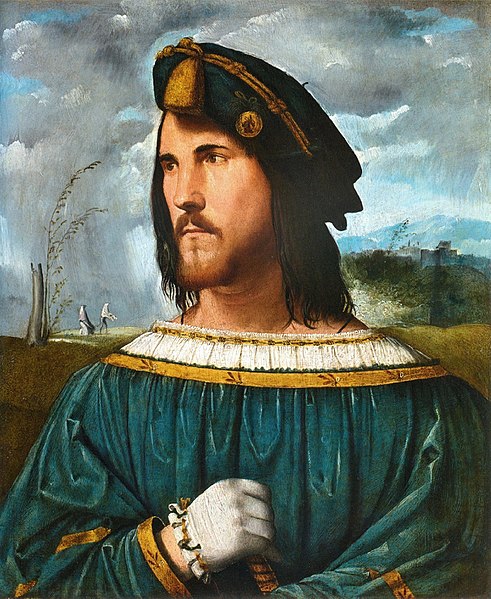
Portrait of a man believed  be Cesare Borgia
The Loss of a Cardinal
Over the past six years Cesare had been working on his father in his attempts to discard his role as a prince of the church. In August 1498 Rodrigo finally agreed to release Cesare from the cardinalate and his priestly vows. On 14th August Cesare appeared before the sacred college in full regalia, robes he very rarely wore, and asked for his release from his vows.
‘Thus now in God’s church everything is upside down’[i]
wrote one Venetian diarist. Cesare could forge a new career and reputation for himself as the soldier he had always wanted to be.
But to allay Ferdinand and Isabella’s wrath Alexander gave them increased authority over the church in Spain, freeing them to use their Inquisition as they pleased, with tragic consequences for Spanish Jews, Muslims and even suspect Christians. In return Ferdinand and Isabella allowed Rodrigo his choice of nominee for the Archbishopric of Valencia, vacant following Cesare’s resignation. Rodrigo, always looking to further Borgia interests, gave the post to Juan de Borgia the younger.
Another Annulment
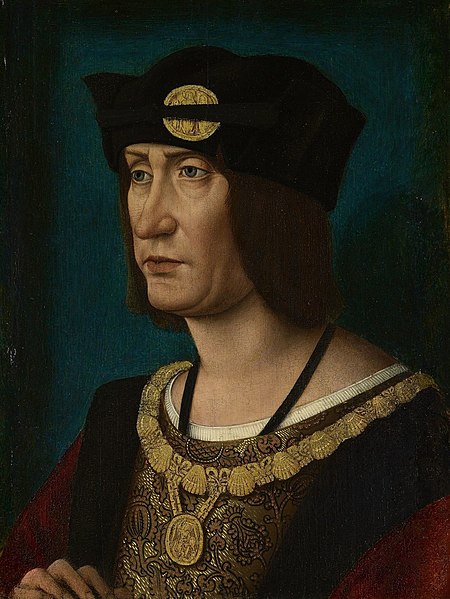
Louis XII
Following the death of Charles VIII in April 1498, the new king of France Louis XII[ii] applied for an annulment of his marriage to his wife Jeanne[iii]. Louis had his eye on the widowed queen, Anne, Duchess of Brittany; marriage to her would confirm the annexation of Brittany as part of the kingdom of France[iv]. As an inducement to Rodrigo, Louis was moved to bestow on Cesare the title of Duke of Valentinois[v].
Cesare travelled to France with the coveted annulment and a dispensation for Louis to marry Anne[vi]. He arrived;
‘Mounted on a great charger richly harnessed with a robe of parti-coloured red satin and gold brocade and bordered with many pearls. In his bonnet in two rows there were five or six rubies as large as beans…..at the edge of his biretta he also had a large quantity of jewels down to his boots.’[vii]
The French court found the excessive display of wealth ridiculous.

At The Court of France
Chateau de Chinon
The royal marriage took place on 1st January 1499 with Cesare present. He discussed with Louis the projected invasion of Italy to be supported by the papacy. Cesare had his eye on Carlotta of Aragon as a bride; Carlotta was the daughter of Ferrante of Naples and a ward at Louis’ court.
The projected marriage with Carlotta fell through as the princess had an aversion to Cesare that could not be overcome[viii]. Cesare was already showing the marks of secondary stage of the French disease as it was known in Italy, or syphilis, on his face. Even so he was still very attractive to women; perhaps his reputation put her off.
Cesare stayed at the court at Chinon, almost a hostage. Louis appeared to like Cesare, seeming to enjoy his company and wanting to help him. After all Cesare enjoyed the same bright good nature as his father and sister. Even so, he was urgent to leave knowing that he depended entirely upon his father’s goodwill.
Chateau de Blois
Cesare married Charlotte d’Albret; the beautiful daughter of Alain, Count of Graves and Castres. Charlotte’s brother was King John III[ix] of Navarre. The bride was not eager for the match, but was persuaded by Louis, the new queen and her own family. But Rodrigo’s bribe of 200,000 ducats[x] could not be gainsaid.
The couple were married on 10th May 1499 in the queen’s apartments in the chateau of Blois. According to Louis there could be no doubt that the marriage had been consummated; Cesare had ‘broken his lance’ no fewer than eight times on the wedding night.
‘A courier arrived from France………announcing that he [Cesare] had….contracted a marriage to Charlotte d’Albret and that the marriage had been consummated on the Sunday of the same month, 12 May, when he had managed to give her eight proofs of his virility. Another courier arrived at Pentecost, on 19th May, to say that the king had admitted the duke to the Order of St Michael[xi].’[xii]
 Rodrigo was overjoyed by the marriage, so much so, that he endorsed Louis’ claim to Milan.

A Falling Out with Spain
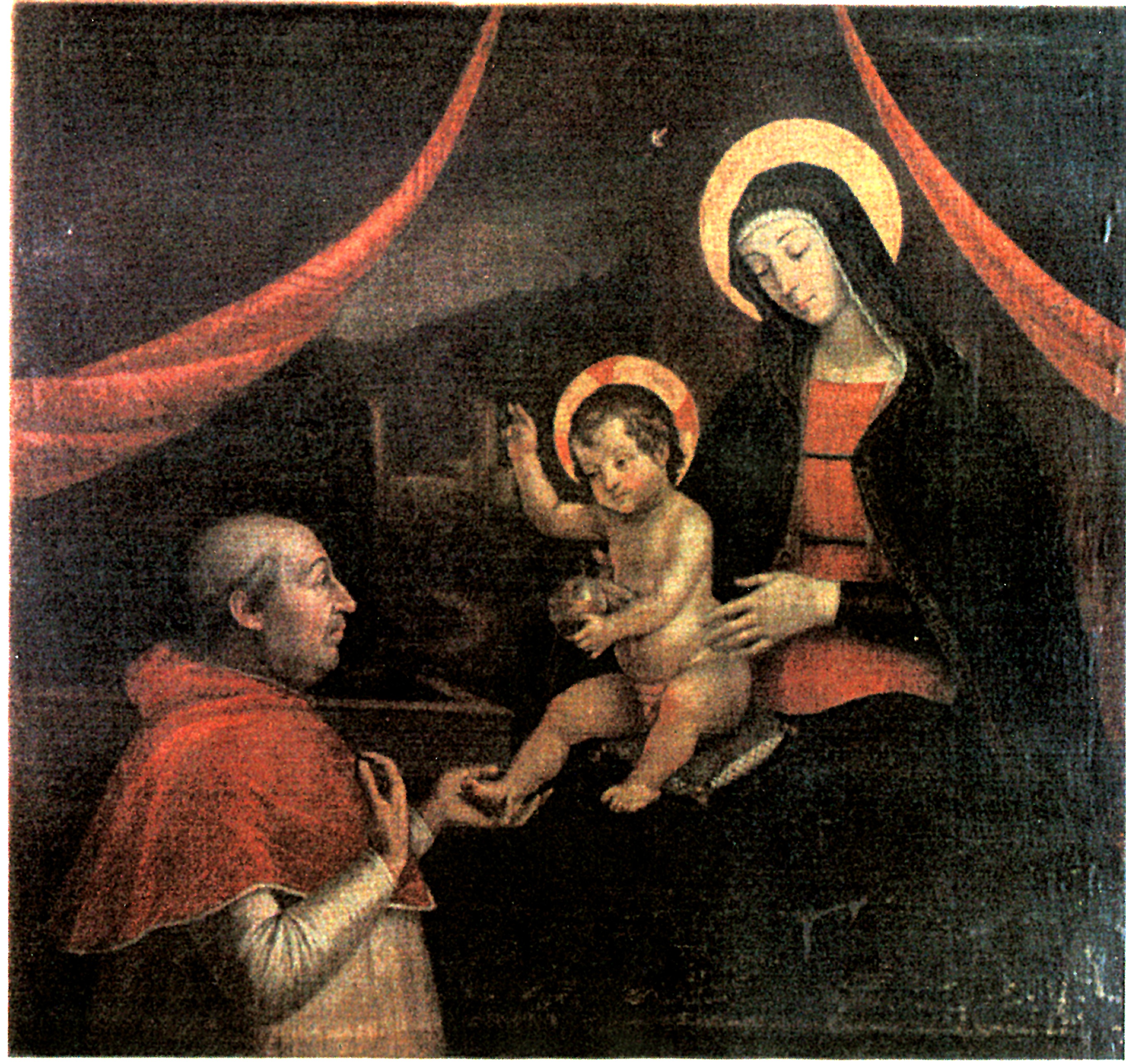
Alexander and possibly Giulia Farnese as the Virgin
Rodrigo’s alliance with France, on Cesare’s behalf, lost him the support of Spain. When Ferdinand learned of the French-Venetian treaty he recalled his ambassadors from Venice and Rome. Ferdinand took the position that Rodrigo’s election was invalid and that a council must be called to rectify matters. In response
‘Alexander threatened to have him [the Spanish envoy] thrown into the Tiber, and scolded the Spanish King and Queen in insulting terms for their interference.’[xiii]
In an attempt to appease Ferdinand, who was also objecting to the huge amounts of church revenue being used to enrich the Borgia family, Rodrigo restored papal rule in Benevento, removing the duchy from the rule of his young 5 year old grandson Juan.
To address concerns that his children were directing papal policy Rodrigo ordered Lucrezia and Jofré to leave Rome and take up residence in Spoleto, which they duly did on 8th August. Lucrezia was installed as governor of the city. Alfonso was not as biddable as Lucrezia and had left Rome six days earlier to join his father, without Rodrigo’s permission. Six days after his children’s departure Giulia Farnese was reinstalled as Rodrigo’s mistress.
The Fall of Milan
Gian Giacomo Trivulzio
Like his predecessor Louis XII had his eye on Milan, to which Louis had a claim through his grandmother Valentina Visconti[xiv]. In February 1499 Louis came to an agreement with Venice to dismember the duchy of Milan.
By early summer Louis had an army on the march en-route to Milan; led by a former Sforza employee, Gian Giacomo Trivulzio, a man who felt he had something to prove. His army was followed more leisurely by Louis, who had not only Cesare but also Cardinal della Rovere in his train.
The Orsini and the Colonna were so concerned about the implications of the French alliance with the papacy that they ceased their vicious squabbling and along with Naples, allied themselves with Milan. Alexander assured the allies that his agreement with Louis was a personal matter to help Cesare find his way in the world.
In early September Ludovico Sforza fled Milan with his two sons and Cardinal Ascanio and joined his brother-in-law Emperor Maximilian, taking with him a fortune in gold and jewels. Trivulzio took possession of the city on 11th September and Louis made his official entrance into Milan in early October.
The After Shock
Lucrezia Borgia
Louis’s invasion of Italy increased his standing in Europe; Ferdinand of Spain made haste to make protestations of friendship to France[xv]. This, coupled with Louis’ friendship to Cesare and his appreciation of Rodrigo’s help, led Louis to become a patron of the Borgias. This gave Rodrigo a freedom of action that he had not had hitherto.
On 14th October Lucrezia and Alfonso returned to Rome. Just over a year after Lucrezia’s marriage to Alfonso she presented him with an heir, Rodrigo who was born on 1st November. On 11th November Rodrigo was baptised in the Pope Sixtus chapel in St Peter’s Basilica.
‘On arriving at the door of Pope Sixtus’s Chapel, Cervillon gave the child to Don Francisco Borgia[xvi]…..Cardinal Caraffa came to the door, catechized the child, and then had him brought into the chapel….Cardinal Podocathro[xvii] of Capaccio, and the datary, Cardinal Ferrari placed their hands on the child’s head as Godfathers.’
Bibliography
At the Court of the Borgia – Johan Burchard, Folio Society 1990
Lucrezia Borgia – Rachel Erlanger, Michael Joseph 1979
The Borgias – Mary Hollingsworth, Quercus Editions 2014
The Borgias – GJ Meyer, Bantam 2013
A History of Venice – John Julius Norwich, Penguin Books 1982
Absolute Monarchs – John Julius Norwich, Random House 2011
The March of Folly – Barbara Tuchman, Cardinal 1990
Niccolo’s Smile – Maurizio Viroli, IB Tauris & Company Ltd 2001
www.wikipedia.en


[i] The March of Folly - Tuchman
[ii] Son of Charles, Duke of Orléans
[iii] Who was incapable of bearing a child due to her heavy disabilities; the couple had been forcibly married by Charles VIII in an attempt to eliminate this cadet branch of the royal family
[iv] Louis’ third marriage was to Mary Tudor, sister of Henry VIII
[v] The title, which fell into abeyance after Cesare’s death, was next given to Diane de Poitiers, mistress of Henry II of France
[vi] Louis was forbidden to marry Anne, the widow of his brother Charles
[vii] Lucrezia Borgia - Erlanger
[viii] Carlotta married Guy, Count of Laval
[ix] King Consort to Catherine of Navarre
[x] In 2013 the relative: historic standard of living value of that income or wealth is £137,300,000.00 economic status value of that income or wealth is £3,875,000,000.00 economic power value of that income or wealth is £54,620,000,000.00 www.measuringworth.com
[xi] Instituted by Louis XI in response to the creation of the Order of the Golden Fleece by the Duke of Burgundy
[xii] The Borgias - Hollingsworth
[xiii] The March of Folly - Tuchman
[xiv] Daughter of Gian Galeazzo Visconti, the first Duke of Milan; Valentina’s two brothers had inherited the title from their father, both dying without issue. Valentina’s marriage contract with the Duke of Orleans stipulated that in failure of male heirs, she would inherit the Visconti dominions. The title was, after a short lived republic, assumed by Francesco, the first of the Sforza dukes
[xv] And as Rodrigo was Louis’ ally, to put aside his grievances about Rodrigo and his family
[xvi] Newly appointed Archbishop of Cosenza
[xvii] Probably Ludovico Prodocator, Rodrigo’s secretary