Tuesday, 13 September 2016

Henry Fitzroy – a Tudor Prince


Henry VIII (L), Pope Leo X  (C) & Charles V (R)
 Birth of a Bastard

Henry VIII, king of England, had never been sexually continent, so it can have been no surprise to anyone when, in 1514, he took up with Bessie Blount, daughter of Sir John Blount of Kinlet, Shropshire. Bessie was a distant relative of the Queen’s Chamberlain, Lord Mountjoy[i]. In the autumn of that year one Fray Diego was complaining of Henry having ‘badly used’ Katherine of Aragon. News of Henry’s dalliance with Bessie had clearly been broadcast.

Bessie joined the Tudor court in 1512 at the age of 12. She received the sum of 100s per annum[ii] as one of the Queen’s household. By Michaelmas Bessie had been raised to be one of Katherine’s maids of honour and her salary was doubled. It was not surprising that the young Bessie should be swept away by a man described by the Venetian Ambassador as;

‘The handsomest potentate I ever set eyes on: above the usual height with an extremely fine calf to his leg, his complexion fair and bright and his auburn hair combed straight….a round face so very beautiful that it would become a pretty woman.’[iii]


St Lawrence Priory church
The affair continued for at least five years, but well out of sight of Katherine’s eyes. Bessie shared with Henry a love of singing, dancing and ‘goodly’ pastimes. In 1519 Bessie disappeared from court for several months; Henry arranged for Bessie to stay at Jericho[iv], a house he leased from St Lawrence Priory in Blackmore[v], Essex. Henry maintained a private suite in the house where he entertained female friends.

Henry visited Bessie a number of times during her stay and was overjoyed when she produced him a son, who was named Henry after his father. Henry Fitzroy was born on 15th June 1519. The affair finished with the birth of her son, but Henry had Cardinal Wolsey arrange for Bessie to marry Gilbert Tailboys, Baron Tailboys of Kyme. The marriage took place no later than June 1520[vi].

A Short Childhood


Cardinal Wolsey
With his red hair and wilful Tudor personality Fitzroy was clearly the king’s son; he was called Lord Henry Fitzroy. Wolsey stood as godfather to the baby at his christening, Fitzroy having been openly and proudly acknowledged by the king. As godfather, honouring the tradition of New Year gifts, in January 1525 Wolsey gave Fitzroy a gold collar with a hanging pearl worth £6 18s 8d[vii]. Bessie gave Fitzroy presents from time to time including two horses and a doublet of white satin.

In 1519 it is possible that Margaret Bryan, formerly Mistress of Princess Mary’s household, was made responsible for Fitzroy, following the reorganisation of Princess Mary’s’ household. Henry himself was an affectionate father who took an active interest in Fitzroy’s welfare. Henry declared that;

‘[Fitzroy] is my jewel.’[viii]

Princess Mary
Henry was becoming desperate for a male heir; Katherine had born Princess Mary in February 1516, but had given birth to no living child since[ix]. Now that the queen was pronounced to be beyond her child bearing years Henry panicked. He already had a son who looked very much like him and Henry now debated whether to have Fitzroy named legitimate and/or to wed him to his half-sister Mary. Even the pope was prepared to grant a dispensation so that the two children could marry.

Henry may have made the decision to elevate Fitzroy to the nobility after Charles V[x], Holy Roman Emperor, broke off his engagement with Princess Mary earlier in the June of that year[xi]. However a letter from Wolsey in May refers to preparations for the ceremony which would imply that plans for Fitzroy’s elevation had been in train for some time previously.

A Noble Prince

Bridewell Palace
On 18th June 1525, at the age of six, at a ceremony at the Palace of Bridewell and in the presence of his father and assembled peerage, young Henry Fitzroy was made Earl of Nottingham, Duke of Richmond and Somerset[xii]. Henceforth Fitzroy was to be referred to in all formal correspondence as the ‘right high and noble prince Henry, Duke of Richmond and Somerset’.

On 25th June Fitzroy was inducted into the Order of the Garter and on 16th July was made Lord High Admiral[xiii] and Warden General of the Marshes. In addition he was made Captain of the Town and Castle of Berwick upon Tweed and Keeper of the City and Castle of Carlisle. By the time Fitzroy was elevated to the peerage he was living at Wolsey’s mansion at Durham Place[xiv]. Fitzroy was generally considered to be;

‘Very personable and of great expectation, insomuch that he was thought of not only for the ability of body but mind to be one of the rarest of his time.’[xv]


Tattershall Caslte
It is not known where Fitzroy spent the first six years of his life, possibly living with his mother or there is some suggestion that he was incorporated into the royal nursery. From now on Fitzroy was to be;

‘Well brought up like a prince’s child….[and] furnished to keep the state of a great prince.’[xvi]

In addition to all Richmond’s noble titles, Bessie and her husband received gifts; Gilbert was made Bailiff and Keeper of Tattershall Castle and was raised to the rank of Knight. To the Tudor court the implication was obvious; if Henry could not get a boy by Katherine he would put his illegitimate son on the throne after him. The queen was deeply offended by Fitzroy’s ennoblement and could not hide her disapproval, considering that Henry’s actions were a snub to her.

 
From Stoke Newington
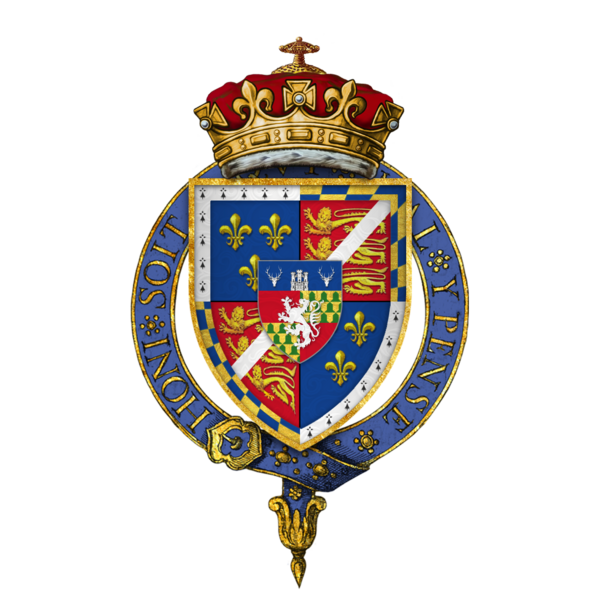
Henry Fitzroy's arms
On 26th July 1525 Fitzroy began his journey north from Stoke Newington along with the 245 people of his household. His furniture included hangings for six chambers, a closet, a chapel and a hall[xvii]; furnishings including 25 carpets and 21 beds; most of his new goods and chattels had been paid for out of Fitzroy’s purse. It required a chariot and seven horse-draughts to transport Fitzroy’s possessions.

Fitzroy’s men wore his livery of blue and yellow emblazoned with the new dukes’ badge; a demi-lion rampant bursting out of the Tudor rose. Even the horses were elaborately embellished with cloth of gold or silver and satins and velvets. Henry meant for his subjects to be impressed by his son’s train.

Fitzroy travelled in a horse litter provided by Wolsey; an extravagant affair padded in crimson velvet and cloth of gold, but Fitzroy, already a determined child used to getting his own way, did not care for the litter;

In all which journey my lord’s grace rode not in his horse litter, but only from William Jekyll’s house 3 or 4 miles, which riding in his said horse-litter his grace liked nothing; but ever since his grace hath ridden upon his hobby [pony], and hath been very well at ease.’ [xviii]

The journey north was broken by stops at the homes of the great and good;

‘My Lord of Richmond departed….unto my Lady Parr[xix]’s, where his grace was marvellously well intreated and had good cheer….at Huntingdon the Abbot of Ramsey sent unto his Grace certain swans, cranes and other wild fowl, in a present.’[xx]

Bibliography

The Ebbs and Flows of Fortune – David M Head, University of Georgia Press 2009

House of Treason – Robert Hutchinson, Phoenix 2009

Henry VIII – Robert Lacey, Weidenfeld & Nicholson & Book Club Associates 1972

The Earlier Tudors – J D Mackie, Oxford University Press 1992

Cardinal Wolsey – Mandell Creighton, MacMillan & Co 1891

Bastard Prince – Beverley A Murphy, Sutton Publishing 2001

Six Wives – David Starkey, Chatto & Windus 2003

Henry VIII – David Starkey (ed), Collins & Brown 1991

The Six Wives of Henry VIII – Alison Weir, Pimlico 1992

The Lost Tudor Princess – Alison Weir, Vintage 2015

www.wikipedia.en

[ii] In 2014 the relative: historic standard of living value of that income or wealth is £3,408.00 labour earnings of that income or wealth is £30,450.00 economic status value of that income or wealth is £116,900.00 economic power value of that income or wealth is £1,822,000.00 www.measuringworth.com
[iii] Bastard Prince - Murphy
[iv] So named because this was where Henry conducted his illicit relations out of the Queen’s purview
[vi] Bessie and Gilbert had three children Elizabeth Tailboys, 4th Baroness Tailboys of Kyme, George Tailboys, 2nd Baron Tailboys of Kyme, Robert Tailboys, 3rd Baron Tailboys of Kyme and Lady Bridget Dymoke, Bessie’s second marriage to Edward Clinton, Earl of Lincoln produced Katherine Clinton, Baroness Burgh, Margaret Clinton, Baroness Willoughby of Parham.
[vii] In 2014 the relative: real price of that commodity is £4,616.00 income value of that commodity is £139,900.00 www.measuringworth.com
[viii] House of Treason - Hutchinson
[ix] On 10 November 1518 she gave birth to a daughter, but the child was weak and lived either only a few hours or at most a week
[x] Katherine’s nephew
[xi] The engagement had been arranged in 1522
[xii] Two titles reserved for the royal family; Henry VII had been Earl of Richmond prior to his seizure of the throne and his son Edmund had been made Duke of Somerset
[xiii] The previous holder, the Duke of Norfolk, was so incensed that it took him a month to surrender his patent; Norfolk’s other patents were also removed and handed to Fitzroy; a piece of spite on Wolsey’s part. Norfolk continued as vice-Admiral
[xiv] Built by Bishop Thomas Hatfield in about 1345
[xv] Bastard Prince - Murphy
[xvi] The Six Wives of Henry VIII - Weir
[xvii] At a cost of £63; in 2014 the relative: real price of that commodity is £41,940.00 labour value of that commodity is £419,400.00 income value of that commodity is £1,271,000.00 www.measuringworth.com
[xviii] Bastard Prince - Murphy
[xx] Bastard Prince - Murphy

Monday, 29 August 2016

Geoffrey Plantagenet – the King’s Bastard V

Nottingham Castle (Victorian reconstruction)
The King Departs

On 30th March 1194 Richard presided at a meeting of the Great Council at Nottingham Castle; Geoffrey was present along with his stepmother, Hugh de Puiset, William Longchamp and Hugh of Lincoln. The great matter before the council was what to do with Prince John who was in cahoots with Philip of France. Longchamps was given back his old job as Chancellor while Richard paid a ransom for the return of Walter de Coutances

On 12th May 1194 Richard and Eleanor set sail for Barfleur with one hundred ships;

‘Laden with men, horses and arms.’[i]

Richard intended to win back his lands in Normandy, seized by Philip while Richard was in custody. Neither Richard nor his mother were to return to England. Instead he was to be embroiled fighting Philip and draining money from England in times of economic difficulty. Before Richard left England he appointed Walter as Justiciar.

In the summer, very possibly as a result of Geoffrey’s attempts to claim seniority of York over Canterbury, Walter began an investigation into Geoffrey's actions. Walter’s commission reported back that very little of Geoffrey’s time was wasted on clerical affairs, instead he spent his time hawking or hunting.

Geoffrey’s quarrels with his cathedral clergy had worsened to the point that, in one instance a member of the cathedral chapter threw the chrism on a dungheap in protest. The canons also objected to Geoffrey giving a large part of York's treasury toward Richard's ransom and they objected to some of his appointments in the church of York.

This led to Geoffrey's estates being confiscated once again. The canons Geoffrey had excommunicated were reinstated and Geoffrey was ordered not to issue sentences against canons without the consent of the whole body of canons.

At the end of 1194 Geoffrey left England to appeal directly to the king who by then was in Maine. Richard over-ruled Walter, restored Geoffrey's estates, and pardoned him in return for a payment of 1,000 marks and the promise of 1,000 more to follow.

A Disputatious Cleric

In January 1195 Geoffrey was ordered to appear in Rome to answer charges of simony, extortion, and neglect of his duties lodged against Geoffrey by Puiset’s supporters. The ringleaders had been excommunicated by Geoffrey who had also locked the canons out of the Minster. Geoffrey was threatened with suspension from office if he did not appear by 1st June.

Geoffrey complained to the king, who was sympathetic until Geoffrey started rebuking Richard for his immoral life. Richard flew into a rage and confiscated Geoffrey’s estates once again. This loss of his estates left Geoffrey vulnerable when Walter held a legatine council at York in June 1195.

Geoffrey had managed to secure a postponement of his case at Rome until 1st November, but was still unable to attend, which led Pope Celestine to order that Geoffrey's suspension should be actioned by Hugh of Lincoln. Hugh protested, and as a result Celestine himself suspended Geoffrey on 23rd December 1195, finally forcing Geoffrey to answer the charges against him. He travelled to Rome in 1196, where his accusers were unable to substantiate their claims and he was restored to office by the pope.

News of Import

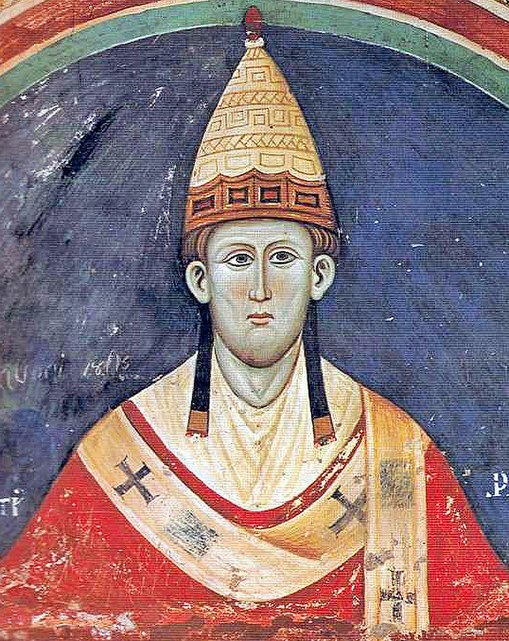
Innocent III
Geoffrey quarreled with Richard in 1196 in Normandy while en route home to England. Richard forbade him from administering York, and Geoffrey returned to Rome until 1198. An attempt at reconciliation with Richard came to nothing, after Geoffrey refused to approve the king's appointments in the diocese of York without some guarantees that they would be approved by the papacy.

Eventually the new Pope Innocent III ordered on 28 April 1199 that Geoffrey was to be restored to his lands as soon as he had paid his debts to the king. Innocent further stipulated that any royal appointments in York would require papal approval.

Geoffrey’s canons were mixed in their response to the return of their archbishop. One, Simon Murdac announced that he would be happy to see Geoffrey return to his archdiocese. But Murdac was immediately excommunicated by the Dean, Simon of Apulia.

Before the pope could make any new rulings on the dissension between Geoffrey and his canons, the news arrived; Richard was dead. Richard died on 7th April 1199, after a wound from a stray quarrel turned gangrenous. The lucky shot came from one of the defenders of the chateau of Châlus- Chabrol, that Richard was besieging,. It was now the turn of Henry II’s youngest son to reign over the empire he had wrought.

John defies the Pope
Stephen Langton
In July 1205 Hubert Walter died and John tried to replace him with one of his own supporters[ii] who was rejected by the cathedral chapter. The stalemate continued until the end of 1206 when Innocent III nominated Stephen Langton. John refused Langton entry to the country[iii]. John threw out the monks of Canterbury and seized the cathedral revenues.

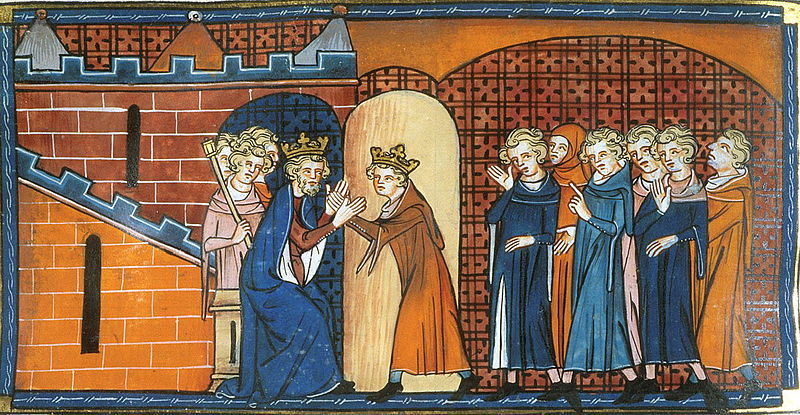
John and Geoffrey had enjoyed a relatively benign relationship when they were both younger and when he came to the throne John was prepared to be conciliatory to Geoffrey. He had enough on his plate with Arthur of Brittany also claiming his throne[iv]. Caught between John and Philip Arthur ended up flip-flopping to pay homage to Philip.

In an attempt to sort the problems emanating from York, John summonsed Simon of Apulia to attend his court at Westminster. Simon was persuaded to accept Geoffrey as his archbishop. In return Geoffrey recognised Simon as Dean of the chapter. On their return to York, when the Archdeaconry of Cleveland[v] fell vacant, the two men fell out again.

Geoffrey nominated one of his followers, but Simon nominated Hugh Murdac. Infuriated and his Angevin temper soaring, Geoffrey excommunicated the hapless Murdac. Both sides appealed to John who summonsed his brother to accompany him to France. Stupidly Geoffrey ignored the summons.

Arthur pays homage to Philip
Around the same time Geoffrey fell out with John over taxation issues and refused to allow his clergy to pay John’s latest tax raising whiz. The church’s lands were seized and Geoffrey and his clergy knelt before John to plead with him for a reversal of the seizures. Gervase of Canterbury recorded;

‘The king, in truth, threw himself at the archbishop’s [Geoffrey] feet and laughing and jeering said “Look my lord archbishop, even as you do so do I.”’[vi]

In the summer of 1207 Geoffrey fled abroad, followed by a number of the senior bishops. John seized his brother’s estates. Innocent III put the country under an interdict forbidding the clergy to take services[vii]. He also threatened to excommunicate John.

Under Interdict
King John
On 17th March 1208 John’s officers commenced their task of seizing church properties. By September the king was taking hostages from nobles whose loyalty was suspect. Roger of Wendover wrote;

‘King John….was afraid that, after the interdict, our lord pope would excommunicate him or absolve the nobles of England from allegiance to him. He therefore sent an armed force to all men of rank….and demanded hostages of them.’[viii]

On 27th May 1208 Innocent ordered an interdict on York should John fail to restore Geoffrey’s property. In August he wrote to both John and Geoffrey deploring their quarrel. Because of Geoffrey’s stance Geoffrey of Coldingham, a chronicler, claimed that the church in England church considered Geoffrey a martyr.

Otto IV greets Innocent III
Innocent excommunicated John in November 1209. John retaliated by taking over £100,000 worth of money from the clergy over the next two years. John’s treasury appropriated the revenues of the empty benefices and managed to raise enough money[ix] to fund ill-advised adventures abroad.
As well as raising the country’s military state of readiness, John set up a series of alliances to help defend his continental possessions. He allied with his nephew Otto IV the Holy Roman Emperor, Charles I, the Count of Flanders and a number of northern European Dukes.

Geoffrey’s final years were spent in exile; Geoffrey died on 12th December 1212[x], at the monastery[xi] at Notre Dame du Parc near Rouen. He was buried there. Geoffrey was a disappointed man whose arrogance had cost him dear.
Bibliography

Philip Augustus – Jim Bradbury, Longman 1998

King John – Stephen Church, MacMillan 2013

Early Medieval England – MT Clanchy, The Folio Society 1997

Richard the Lionheart – John Gillingham, George Weidenfeld and Nicholson 1989

The Royal Bastards of Medieval England – Chris Given- Wilson and Alice Curteis, Barnes & Noble Books 1995

The Plantagenets – Dan Jones, William Collins 2012

Absolute Monarchs – John Julius Norwich, Random House 2011

King John – WL Warren, Yale University Press 1997

Eleanor of Aquitaine – Alison Weir, Jonathan Cape 1999

The Plantagenets – Derek Wilson, Quercus Editions Ltd 2014


[i] Philip Augustus - Bradbury
[ii] The monks nominated Reginald, the Sub-Prior, who was set aside by John. They then nominated John de Gray, Bishop of Norwich, who was set aside by the pope.
[iii] It was not until six years later that Langton was allowed into the country
[iv] As the only child of one of John’s older brothers. In 1202, in conjunction with Philip, Arthur waged war on Normandy
[v] One of the riches benefices in the York Archdiocese
[vi] King John - Warren
[vii] No-one could get christened, married or buried in consecrated ground.
[viii] King John - Church
[ix] Over £100,000; Comparisons of wealth are not calculated for before the year 1270, if these monies had been extracted then not in 1211-12, then In 2014 the relative: historic standard of living value of that income or wealth is £85,460,000.00 labour earnings of that income or wealth is £1,508,000,000.00 economic status value of that income or wealth is £3,572,000,000.00, economic power value of that income or wealth is £29,120,000,000.00 www.measuringworth.com
[x] The month before Geoffrey died John had agreed to accept Langton as his archbishop of Canterbury.
[xi] The monastery was of the Grandmontine order; Henry II had encouraged the order to set up the monastery there and tend to the leper house which he had set up on the site of his old hunting lodge